
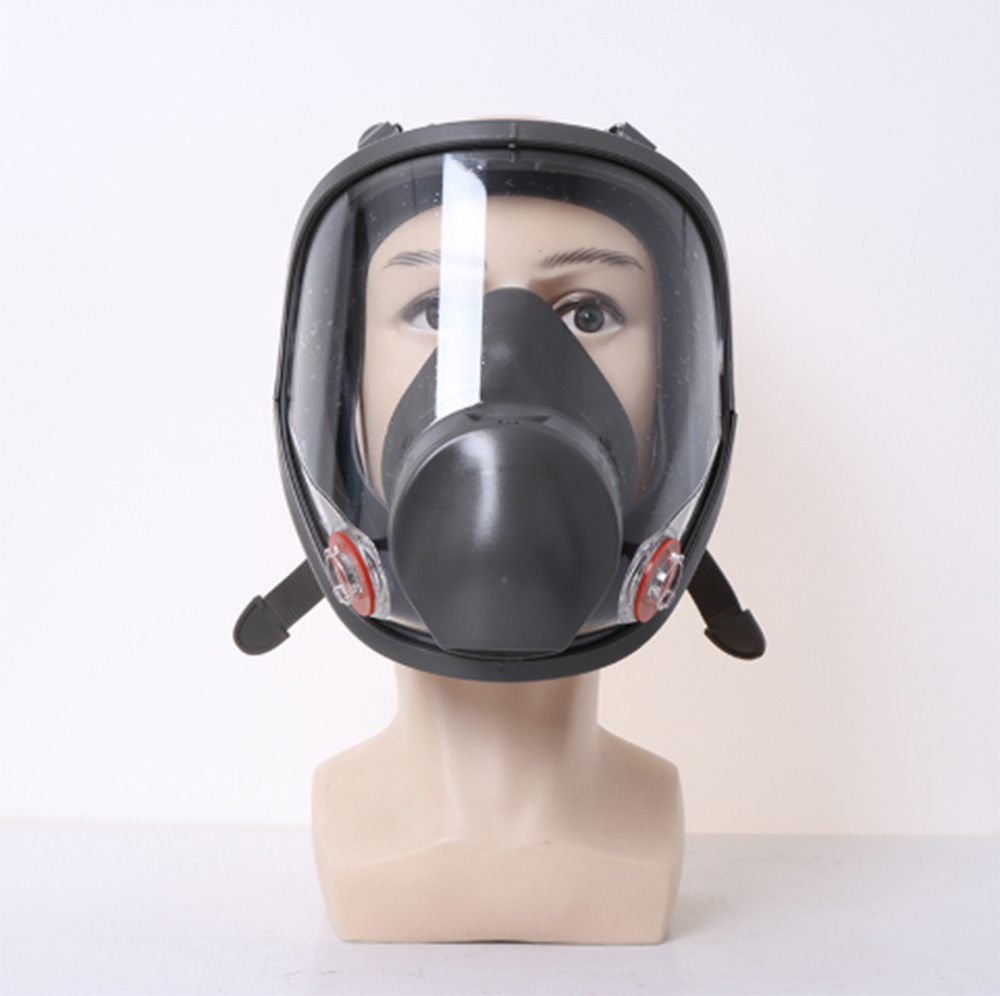
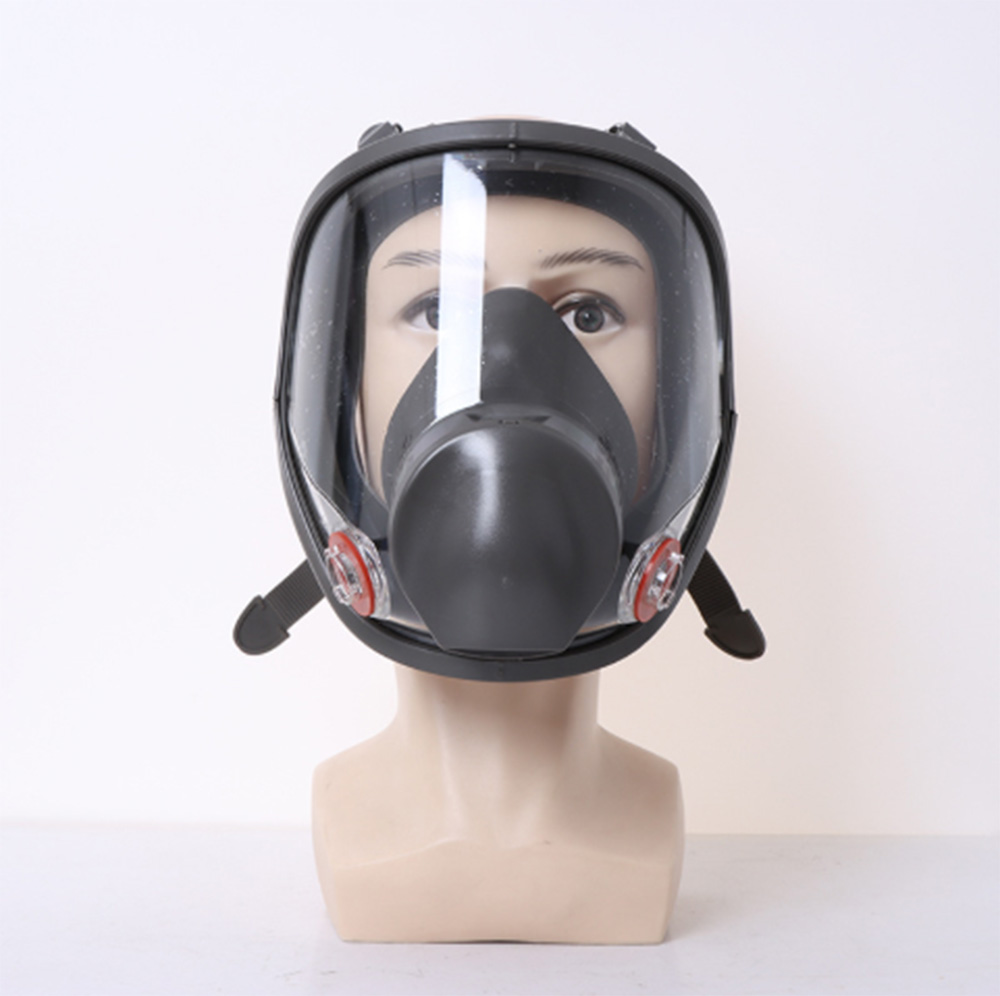
A full facepiece respirator is a significant investment in worker safety. With prices ranging from $150 to $300 per unit, and with workers depending on these devices for their health, you want to make the right choice.
But walking into a safety equipment catalog blind is risky. Different full facepieces look similar but perform very differently in real-world conditions. Some are comfortable for 8-hour shifts. Others become unbearable after two hours. Some seal reliably on most face shapes. Others leak unless the face is a perfect match.
At Junsee Group, we have helped hundreds of customers select full facepiece respirators. We have seen every mistake. And we have distilled the selection process down to 5 key parameters you must check before buying.
Ignore any of these, and you risk wasting money—or worse, providing inadequate protection to your workers.
The material of the facepiece determines comfort, durability, chemical resistance, and seal quality.
| Material | Properties | Best For | Lifespan |
|---|---|---|---|
| Silicone | Soft, flexible, hypoallergenic, excellent seal, easy to clean, comfortable for long wear | Long shifts, daily use, workers with sensitive skin | 3-5 years |
| Rubber / Elastomer | Stiffer than silicone, very durable, lower cost, good chemical resistance | General industrial use, occasional use, chemical environments | 3-5 years |
| Thermoplastic Elastomer (TPE) | Lightweight, good chemical resistance, moderate cost | Specialized applications, cold environments | 2-4 years |
| Factor | Silicone | Rubber | TPE |
|---|---|---|---|
| Comfort for 8-hour shifts | Excellent | Moderate (stiffer) | Good |
| Seal conforms to face shape | Excellent—very flexible | Good—less flexible | Good |
| Chemical resistance | Good (resists many chemicals) | Excellent (very chemical-resistant) | Moderate |
| Durability against abrasion | Good | Excellent | Moderate |
| Cleaning ease | Excellent (non-porous) | Good | Good |
| Cost | Higher | Lower | Moderate |
| Checkpoint | What to Inspect |
|---|---|
| Sealing surface | Should be smooth, no mold lines or imperfections |
| Flexibility | Material should be supple—not stiff or brittle |
| Thickness | Consistent throughout; no thin spots |
| Color | Should be uniform; discoloration may indicate chemical damage or aging |
✅ Junsee Group recommendation: For workers who wear respirators daily or for long shifts (4+ hours), choose silicone. The comfort difference is significant. For occasional use or harsh chemical environments where silicone may degrade, choose rubber/elastomer.
The visor is your window to the workplace. A poor visor compromises vision—and vision compromises safety.
| Material | Impact Resistance | Chemical Resistance | Scratch Resistance | Optical Clarity | Best For |
|---|---|---|---|---|---|
| Polycarbonate | Excellent | Poor (attacked by many solvents) | Poor (scratches easily) | Good | Impact hazards (grinding, construction) |
| Polyacetate (Cellulose acetate) | Good | Good (resists many chemicals) | Moderate | Excellent | Chemical splash, laboratory |
| Treated polycarbonate (with anti-scratch/anti-fog coating) | Excellent | Moderate (coating adds protection) | Good | Good | General industrial with coatings |
| Glass | Poor (can shatter) | Excellent | Excellent | Excellent | Specialty (rare—heavy and dangerous if broken) |
| Coating | Benefit | When Essential |
|---|---|---|
| Anti-fog | Prevents condensation on visor | Humid environments, temperature changes, high exertion work |
| Anti-scratch | Extends visor life in abrasive environments | Dusty work, construction, sanding, grinding |
| Anti-UV | Protects eyes from ultraviolet radiation | Outdoor work, welding nearby (not for direct welding) |
| Anti-static | Reduces dust attraction | Cleanrooms, pharmaceutical manufacturing |
| Checkpoint | What to Inspect |
|---|---|
| Optical clarity | No distortion, waves, or bubbles in the material |
| Field of view | Wide—should not restrict peripheral vision significantly |
| Coating uniformity | Anti-fog coating should be uniform with no peeling or bubbles |
| Impact rating marking | Look for "Z87+" (ANSI) or "EN 166" markings |
✅ Junsee Group recommendation: For most industrial applications, choose treated polycarbonate with anti-fog and anti-scratch coatings. For chemical laboratories where solvent exposure is common, choose polyacetate (better chemical resistance).
The head harness holds the facepiece against the face. A poor harness—even on a perfect facepiece—will cause leaks.
| Configuration | Description | Best For |
|---|---|---|
| 4-strap (two upper, two lower) | Most common; provides even tension distribution | General industrial use |
| 5-strap (three upper, two lower) | Additional forehead strap for more tension | Large facepieces, high negative pressure applications |
| Ratchet harness | Adjustable dial at back of head for quick tightening/loosening | Multiple users sharing respirator; quick donning/doffing |
| Material | Properties |
|---|---|
| Elastic | Stretches for comfort; loses elasticity over time (replace every 1-2 years) |
| Non-elastic fabric (nylon/polyester) | Does not stretch; must be adjusted precisely; more durable |
| Checkpoint | What to Inspect |
|---|---|
| Adjustability | Straps should have ample length adjustment range for different head sizes |
| Buckle quality | Buckles should hold position firmly—not slip during use |
| Strap attachment | Straps should attach securely to facepiece; some are replaceable, some are not |
| Head cradle (if present) | Should be comfortable and keep straps separated for easy donning |
| Step | Action |
|---|---|
| 1 | Loosen all straps fully |
| 2 | Place facepiece on face |
| 3 | Pull lower straps first—tighten evenly |
| 4 | Pull upper straps—tighten evenly |
| 5 | Perform user seal check (cover filter inlets and inhale—facepiece should collapse) |
| 6 | Adjust as needed—over-tightening distorts the facepiece and can cause leaks |
✅ Junsee Group tip: Over-tightening is a common mistake. Straps should be snug but comfortable. If the facepiece distorts or you feel pressure points, loosen slightly. A properly adjusted harness distributes tension evenly across the face.
You are buying a facepiece—but the facepiece is useless without compatible filters for your specific hazards.
| Mount Type | Description | Common In |
|---|---|---|
| Bayonet (push-and-twist) | Two or three prongs that lock into facepiece | North America (3M, MSA, Honeywell) |
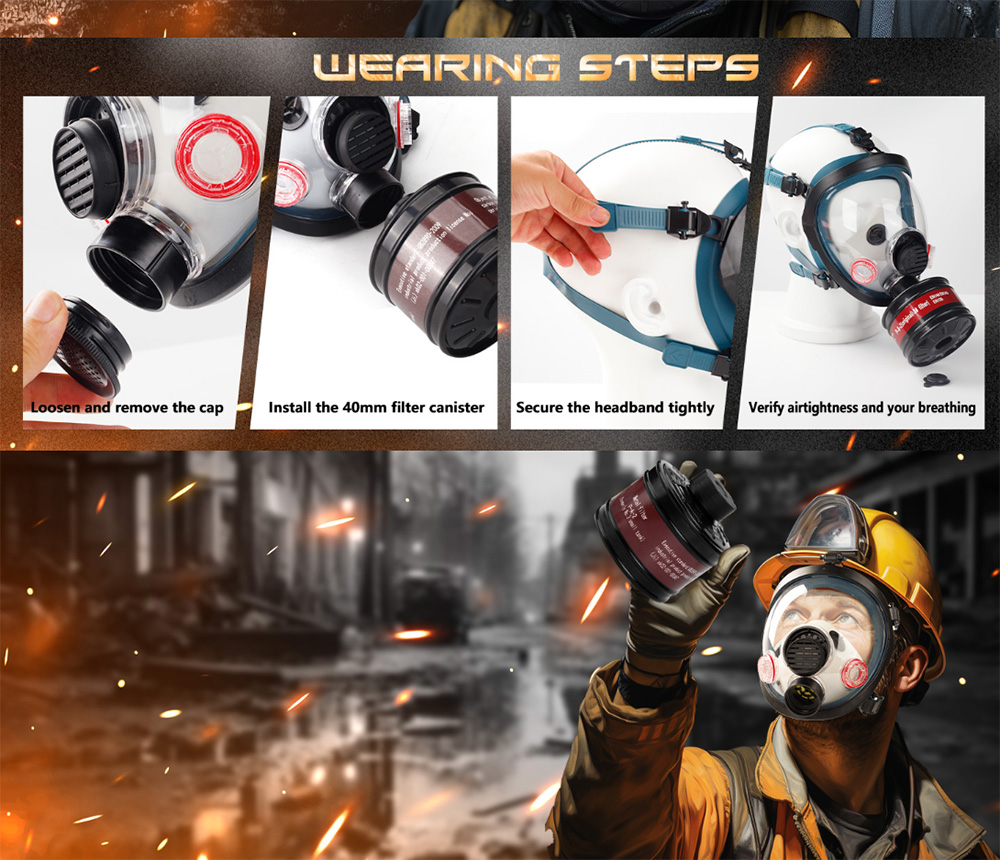
| Threaded (40mm) | Screw-on connection | Europe (EN 148-1 standard); some universal systems |
| Proprietary | Manufacturer-specific connection | Some brands—locks you into their filter line |
| Question | Why It Matters |
|---|---|
| Does the facepiece accept particulate filters (P100, HEPA)? | Needed for dust, fumes, mists |
| Does it accept gas cartridges? | Needed for solvents, acids, ammonia |
| Does it accept combination filters? | Needed for mixed hazards (dust + gas) |
| Are filters widely available? | Proprietary filters may be expensive and hard to source |
| Does it accept both single and dual cartridges? | Dual cartridge provides balanced weight and higher capacity |
| Hazard Type | Required Filter Capability |
|---|---|
| Dust only (wood, concrete, grain) | Particulate filters (P95, P100, P3) |
| Organic vapors (solvents, paints) | Organic vapor cartridges (A type – brown) |
| Acid gases (chlorine, SO₂) | Acid gas cartridges (B type – grey) |
| Ammonia | Ammonia cartridges (K type – green) |
| Mixed hazards (dust + gas) | Combination filters (e.g., A2P3) |
| Unknown or variable hazards | Multi-gas cartridges (ABEK – olive) |
⚠️ Critical warning: Not all full facepieces accept all filter types. Some are designed for particulates only. Verify compatibility before purchase—especially if you need gas protection.
✅ Junsee Group recommendation: Choose a facepiece with standardized filter mounting (bayonet or 40mm threaded) rather than proprietary connections. This gives you flexibility in filter sourcing and avoids vendor lock-in.
The most expensive, feature-rich full facepiece provides zero protection if it does not seal on the wearer's face.
| Brand/System | Sizes Available |
|---|---|
| Most manufacturers | Small, Medium, Large |
| Some manufacturers | Small/Medium, Medium/Large (two sizes) |
| Universal fit (rare) | One size (rarely works well for diverse populations) |
| Factor | Impact on Seal |
|---|---|
| Face length | Longer faces may need larger size; shorter faces smaller size |
| Face width | Wide faces may need larger size; narrow faces smaller |
| Nose bridge height | High nose bridges may need larger size; low bridges smaller |
| Chin shape | Receding or prominent chins affect lower seal |
| Temple width | Affects forehead seal |
| Facial hair | Any hair under the seal line prevents sealing—full stop |
| Requirement | Detail |
|---|---|
| OSHA requirement | Annual fit testing required for all tight-fitting respirators (including full facepieces) |
| Before first use | Worker must be fit tested on the specific model and size they will use |
| After changes | Re-test if worker gains/loses significant weight, has dental changes, or facial surgery |
| Facial hair | Workers must be clean-shaven where the seal contacts the skin |
| Checkpoint | What to Verify |
|---|---|
| Size range availability | Does the manufacturer offer enough sizes to cover your workforce? |
| Fit test adapters | Are adapters available for quantitative fit testing (PortaCount, etc.)? |
| Replacement parts availability | Can you buy replacement seals, head harnesses, and visors? |
✅ Junsee Group recommendation: Before committing to a large purchase, conduct a fit testing trial with 5-10 workers representing your workforce's face shape diversity. Have them try multiple sizes and models. Document which sizes and models pass fit testing. Then purchase accordingly.
| Parameter | What to Check | Red Flag | Green Flag |
|---|---|---|---|
| 1. Facepiece Material | Silicone for long shifts; rubber for chemicals | Stiff, cracked, or discolored material | Supple silicone; consistent color and thickness |
| 2. Visor Material & Coatings | Anti-fog, anti-scratch, impact rating | No anti-fog coating; polycarbonate for chemical work | Treated polycarbonate with anti-fog/anti-scratch |
| 3. Head Harness | Adjustability, strap quality, comfort | Straps slip; buckles break; uncomfortable pressure points | 4-5 strap design; smooth adjustment; comfortable for 8 hours |
| 4. Filter Compatibility | Accepts filters for your hazards | Proprietary filters only; limited filter types | Standard bayonet or 40mm thread; wide filter selection |
| 5. Fit & Sizing | Multiple sizes; fit testing possible | One size only; no fit test adapters | S, M, L sizes; fit test adapters available; trial units |
Have you identified all airborne hazards (particulates, gases, or both)?
Have you measured or estimated hazard concentration vs PEL?
Have you confirmed that APF 50 is adequate for your concentration?
Have you confirmed that workers can be clean-shaven?
Have you budgeted for annual fit testing?
Does the facepiece material match your use case (silicone for long shifts, rubber for chemicals)?
Does the visor have anti-fog coating? Anti-scratch?
Is the visor material appropriate for your hazards (polycarbonate for impact, polyacetate for chemicals)?
Does the head harness adjust easily and stay in place?
Does the facepiece accept the filter types you need (particulate, gas, combination)?
Are filters available from multiple sources (standard mount vs proprietary)?
Have you conducted fit testing trials with actual workers?
Has every worker received initial fit testing on their assigned size/model?
Has every worker received training on proper donning, doffing, and seal checks?
Have you established a cleaning and maintenance schedule?
Have you scheduled annual fit testing reminders?
Do you have spare parts (valve flaps, head straps, visors) in inventory?
| Mistake | Consequence | Solution |
|---|---|---|
| Buying only one size | Many workers cannot achieve a seal | Stock multiple sizes; fit test before assigning |
| Skipping fit testing | Workers may have leaks without knowing | Conduct initial and annual fit testing |
| Ignoring anti-fog coating | Visor fogs in humid conditions; worker removes facepiece | Choose models with anti-fog coating |
| Using polycarbonate for chemical work | Solvents attack polycarbonate—visor crazes and cracks | Choose polyacetate for chemical exposure |
| Buying proprietary filter systems | Locked into expensive, hard-to-source filters | Choose standard bayonet or 40mm threaded |
| Over-tightening straps | Distorts facepiece, creates leaks, causes discomfort | Train workers on proper adjustment |
| Neglecting replacement parts | Worn valve flaps or straps cause seal failure | Stock spare parts; replace on schedule |
Choosing a full facepiece respirator is not about picking the cheapest option or the most popular brand. It is about matching 5 key parameters to your specific workplace:
Material – Silicone for long shifts; rubber for chemicals
Visor – Anti-fog, anti-scratch, right material for your hazards
Head harness – Comfortable, adjustable, stays in place
Filter compatibility – Accepts the filters you need (particulate, gas, or both)
Fit and sizing – Multiple sizes available; fit testing confirms seal
Get these five right, and your full facepiece program will protect workers effectively. Get any of them wrong, and you waste money—or worse, expose workers to hazards because they cannot or will not wear the respirator correctly.
At Junsee Group, we provide:
✅ Full facepiece respirators from trusted manufacturers
✅ Multiple sizes (Small, Medium, Large) for diverse workforces
✅ Replacement visors, valve flaps, and head harnesses
✅ Genuine filter cartridges for all common hazards (particulate, gas, combination)
✅ Fit testing guidance and technical support
The bottom line: Take the time to evaluate these 5 key parameters before you buy. Your workers' health—and your compliance record—depends on getting the right full facepiece for the job.
Need help selecting the right full facepiece for your workforce?
Contact Junsee Group today. We will help you evaluate these 5 key parameters against your specific hazards, workforce, and budget—and recommend the right solution.


Your email address will not be published. Required fields are marked