
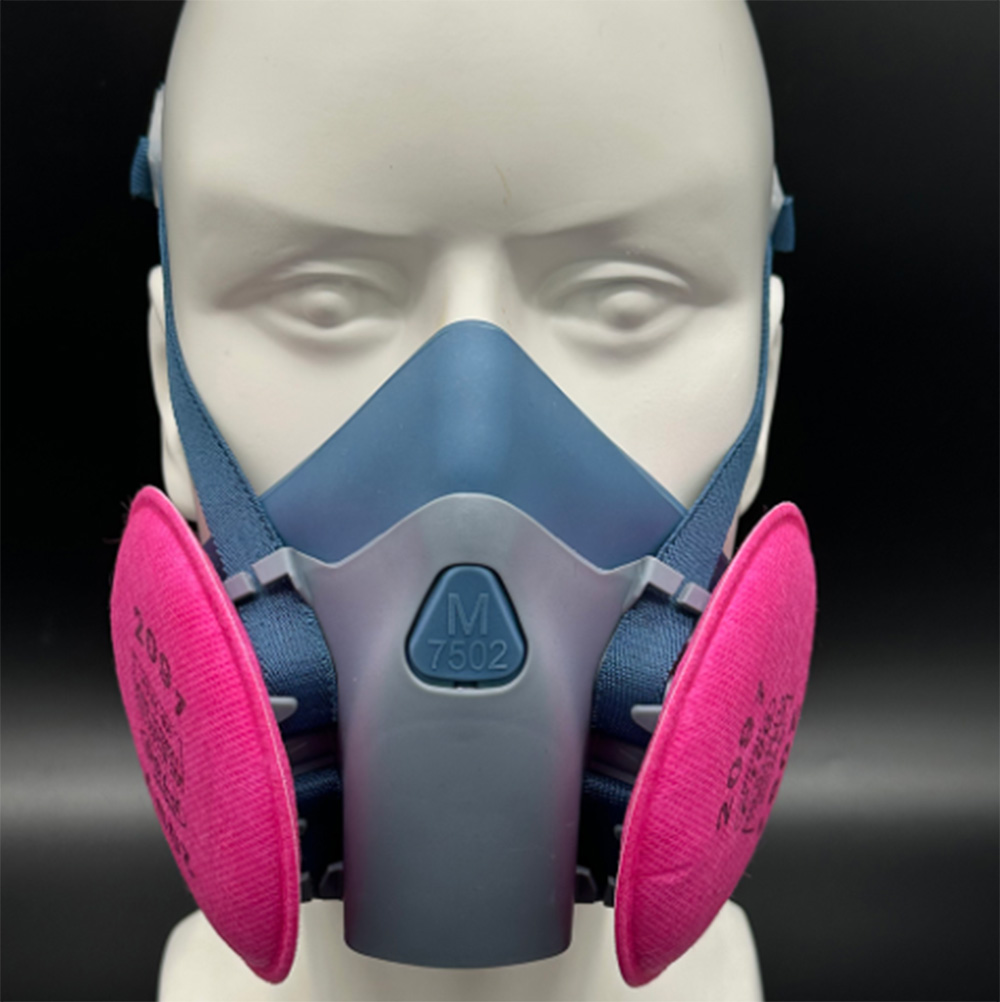
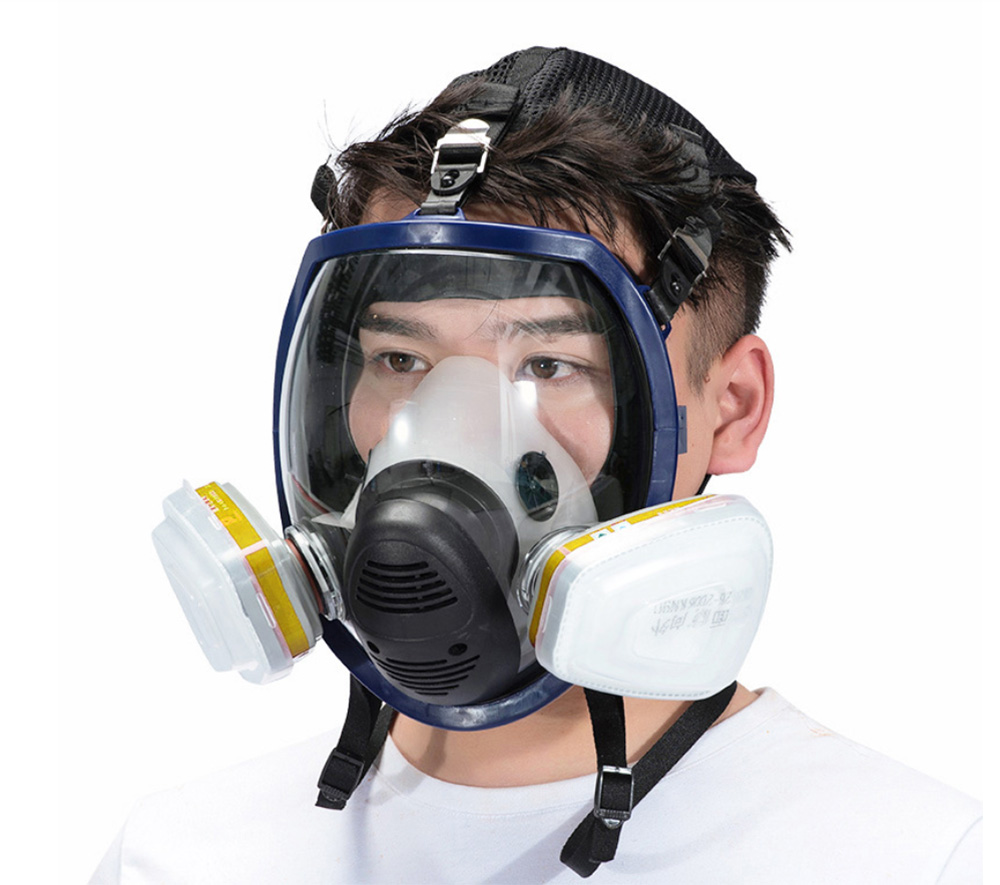
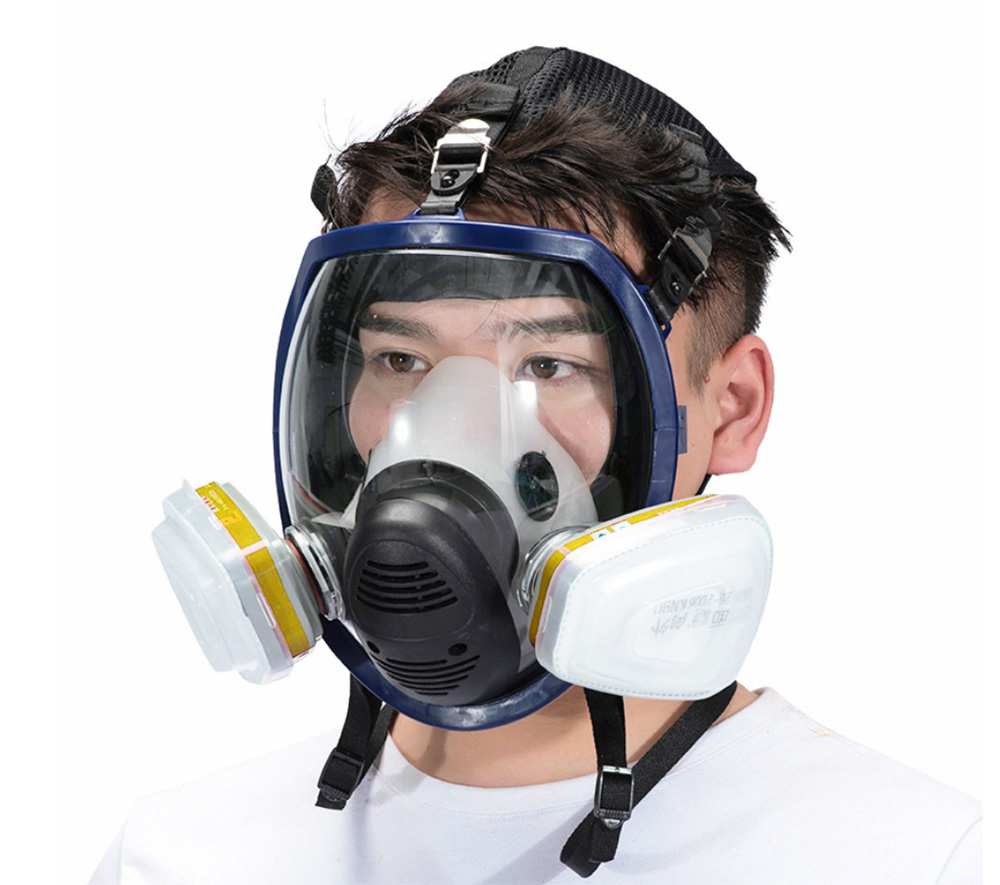
When a half mask respirator is not enough, safety managers turn to high-level respiratory protection. The two most common options are:
Full facepiece respirator (negative pressure, APF 50)
Powered Air Purifying Respirator (PAPR) (positive pressure, APF 25-1000+)
Both provide significantly better protection than a half mask. Both can handle particulates, gases, and vapors with the right filters. But they work very differently—and each has distinct advantages and disadvantages.
At Junsee Group, we help customers choose between these two high-level solutions every day. This article compares full facepiece vs PAPR across seven key dimensions: protection factor, breathing comfort, heat management, fit requirements, cost, maintenance, and application fit.
| Feature | Full Facepiece Respirator | PAPR (Powered Air Purifying Respirator) |
|---|---|---|
| Airflow type | Negative pressure (user pulls air through filters) | Positive pressure (fan pushes air through filters) |
| Assigned Protection Factor (APF) | 50 | 25 - 1000+ (depending on headpiece) |
| Breathing resistance | Present—increases as filters clog | None—fan does all the work |
| Power source | None—fully mechanical | Battery-powered blower |
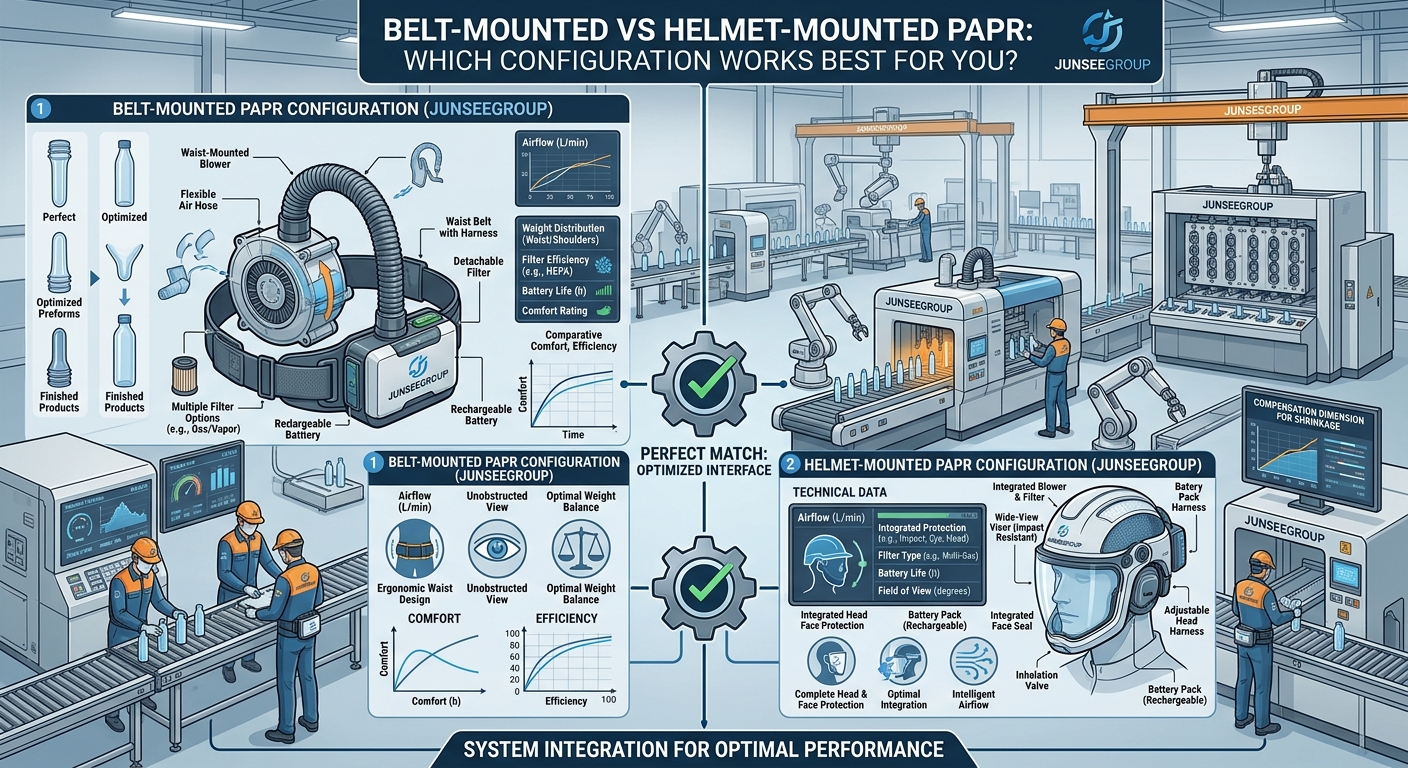
| Weight on head | 12-20 oz (350-600g) | Belt-mounted: headpiece light (4-8 oz); Helmet-mounted: 1.5-2.5 lbs (700-1200g) |
| Fit testing required | Yes—annual fit testing mandatory | No—for loose-fitting hoods/helmets |
| Facial hair allowed | No—must be clean-shaven where seal contacts skin | Yes—with loose-fitting headgear |
| Eye protection from gases | Yes—built-in visor | Yes—visor on hood or helmet |
| Heat comfort | Poor to moderate (traps heat and moisture) | Excellent (constant airflow cools face) |
| Typical cost | $150 - $300 | $600 - $1,500 |
| Filter replacement cost | Low to moderate | Moderate (same or slightly higher than full face) |
The Assigned Protection Factor (APF) tells you how much the respirator reduces contaminant concentration.
| Respirator Type | APF | Meaning |
|---|---|---|
| Full facepiece | 50 | Reduces concentration by 50x (e.g., 100 ppm outside → 2 ppm inside) |
| PAPR (loose-fitting hood) | 25 - 50 (EN 12941 TH1/TH2) | Reduces concentration by 25-50x |
| PAPR (tight-fitting full facepiece) | 50 - 1000+ (EN 12942) | Reduces concentration by 50-1000x |
| PAPR (high-performance hood) | 1000+ (EN 12941 TH3) | Reduces concentration by 1000x or more |
| Outside Concentration | Full Facepiece (APF 50) Inside | PAPR TH3 (APF 1000) Inside |
|---|---|---|
| 100 ppm | 2 ppm | 0.1 ppm |
| 500 ppm | 10 ppm | 0.5 ppm |
| 1,000 ppm | 20 ppm | 1.0 ppm |
✅ Junsee Group takeaway: For high-concentration hazards (>50x PEL), a full facepiece (APF 50) may not provide adequate protection. PAPR with TH3 rating (APF 1000+) is required.
| Hazard Concentration vs PEL | Required APF | Recommended Solution |
|---|---|---|
| < 10x PEL | 10 | Half mask may suffice |
| 10x - 50x PEL | 50 | Full facepiece OR PAPR |
| 50x - 1000x PEL | >50 | PAPR (TH2 or TH3) required |
| > 1000x PEL | >1000 | SCBA (not air-purifying) |
This is one of the most noticeable differences between full facepiece and PAPR.
| Aspect | Experience |
|---|---|
| Inhalation | User must pull air through filter cartridges. Resistance increases as filters clog with dust. |
| Exhalation | Easy—through exhalation valve |
| Effect on work | Moderate to heavy work becomes more difficult. User may experience "air hunger" during high exertion. |
| Fatigue | Breathing resistance contributes to overall fatigue, especially in long shifts |
| Aspect | Experience |
|---|---|
| Inhalation | Fan pushes air through filters. User breathes normally—no resistance. |
| Exhalation | Exhaled air mixes with constant airflow and exits through hood vents or exhalation valve |
| Effect on work | No impact—user can work at full intensity without breathing effort |
| Fatigue | Significantly lower fatigue from breathing—fatigue comes only from the job itself |
✅ Junsee Group takeaway: For high-exertion work (welding, construction, firefighting, emergency response), PAPR provides a dramatic comfort and safety advantage over full facepiece.
Heat is a major factor in respirator compliance. Workers remove hot, uncomfortable PPE.
| Issue | Explanation |
|---|---|
| Trapped heat | Exhaled breath is warm and humid. It has nowhere to go except out the exhalation valve—but much remains inside the facepiece. |
| Visor fogging | Temperature difference between warm exhaled breath and cool visor creates condensation. Anti-fog coatings help but do not eliminate the problem. |
| Skin contact | Silicone or rubber seals against the face trap sweat and heat. |
| Effect on worker | After 1-2 hours in hot environments, workers often remove the facepiece to cool down—destroying protection. |
| Feature | Benefit |
|---|---|
| Constant airflow | 6-8 CFM (170-220 L/min) of air moves across the face continuously. This provides evaporative cooling—like a personal fan. |
| No trapped moisture | Exhaled breath is immediately swept away by the constant airflow. |
| No visor fogging | Moving air prevents condensation. |
| Hood design | Loose-fitting PAPR hoods are made of lightweight, breathable fabric. They cover the head but do not seal tightly against the skin. |
| Effect on worker | Workers report feeling cooler with PAPR than with no respirator at all—the airflow is that effective. |
✅ Junsee Group takeaway: For hot environments (foundries, summer construction, welding, outdoor work), PAPR is dramatically more comfortable than full facepiece. This translates directly to higher compliance rates.
This dimension often determines which solution is even possible for a given workforce.
| Requirement | Detail |
|---|---|
| Fit testing | Required annually. User must demonstrate a proper seal. |
| Facial hair | Not allowed. Any hair between the skin and the sealing surface breaks the seal. This includes beards, goatees, stubble, and sideburns that extend into the seal area. |
| Face shape | Must match one of the available sizes. Some face shapes cannot achieve a seal with any commercially available facepiece. |
| Glasses | Prescription lens inserts required. Standard glasses break the seal. |
| Fit test pass rate | 70-90% of general population (depending on face shape distribution) |
| Requirement | Detail |
|---|---|
| Fit testing | Not required for loose-fitting hoods/helmets (NIOSH and OSHA). |
| Facial hair | Allowed. The hood does not seal against the skin—positive pressure prevents contaminant entry. |
| Face shape | No restriction. One hood size fits virtually all head shapes. |
| Glasses | Can be worn normally under the hood. |
| Fit test pass rate | 100% (no fit testing required) |
✅ Junsee Group takeaway: If your workforce includes workers with beards, stubble, or diverse face shapes, PAPR is often the only practical solution—full facepiece will not seal properly.
Let us compare costs over 5 years for a workplace with 50 workers.
| Assumption | Full Facepiece | PAPR (Belt-Mounted + Hood) |
|---|---|---|
| Initial equipment per worker | $220 | $1,000 |
| Equipment lifespan | 3 years (facepiece degrades) | 5 years (blower unit) |
| Annual filter cost per worker | $100 | $125 |
| Annual fit testing per worker | $75 | $0 |
| Annual battery cost (PAPR only) | $0 | $50 (prorated battery replacement) |
| Headpiece replacement (PAPR hood) | N/A | $30 per year (hood wears out) |
| Visor replacement (full face) | $20 per year | $0 (hood visor part of hood replacement) |
| Compliance enforcement cost | Moderate ($20/worker/year) | Low ($5/worker/year) |
| Cost Category | Full Facepiece | PAPR |
|---|---|---|
| Initial equipment | 50 × $220 = $11,000 | 50 × $1,000 = $50,000 |
| Mid-cycle replacement (year 3) | 50 × $220 = $11,000 | $0 (PAPR lasts 5 years) |
| Filters (5 years) | 50 × $100 × 5 = $25,000 | 50 × $125 × 5 = $31,250 |
| Fit testing (5 years) | 50 × $75 × 5 = $18,750 | $0 |
| Batteries (5 years) | $0 | 50 × $50 × 5 = $12,500 |
| Hood replacement (PAPR) | $0 | 50 × $30 × 5 = $7,500 |
| Visor replacement (full face) | 50 × $20 × 5 = $5,000 | $0 |
| Compliance enforcement (5 years) | 50 × $20 × 5 = $5,000 | 50 × $5 × 5 = $1,250 |
| Total 5-Year TCO | $75,750 | $102,500 |
| Full Facepiece | PAPR | |
|---|---|---|
| 5-year TCO (50 workers) | $75,750 | $102,500 |
| Annual cost per worker | $303 | $410 |
| 5-year difference | — | +$26,750 (35% higher) |
✅ Junsee Group finding: PAPR costs approximately 35% more over 5 years than full facepiece—not 5x more as upfront prices suggest. The gap is smaller than it first appears because full facepiece requires ongoing fit testing and more frequent equipment replacement.
| Factor | Effect on PAPR Cost Gap |
|---|---|
| High worker turnover (temp workers) | PAPR gap shrinks (no fit testing for each new worker) |
| Low fit test pass rate (<80% with full face) | PAPR gap shrinks (full face requires failed workers to be reassigned or use PAPR anyway) |
| High heat environment (productivity loss with full face) | PAPR gap shrinks (productivity gains offset cost) |
| Workers with facial hair (cannot use full face) | PAPR gap irrelevant—full face not an option |
| Aspect | Effort Level |
|---|---|
| Daily cleaning | Moderate—must clean facepiece, visor, valve |
| Filter changes | Easy—screw on/off |
| Parts replacement | Visor, valve flap, head straps (all user-replaceable) |
| Inventory management | Multiple sizes (S, M, L) for different face shapes |
| Fit testing program | Requires trained administrator, test equipment, recordkeeping |
| Worker training | Moderate—donning, doffing, seal checks, filter selection |
| Aspect | Effort Level |
|---|---|
| Daily cleaning | Moderate—clean hood exterior, breathing tube (outside only), blower exterior |
| Filter changes | Easy—replace on blower unit |
| Battery management | Requires charging station, battery rotation, spare batteries for long shifts |
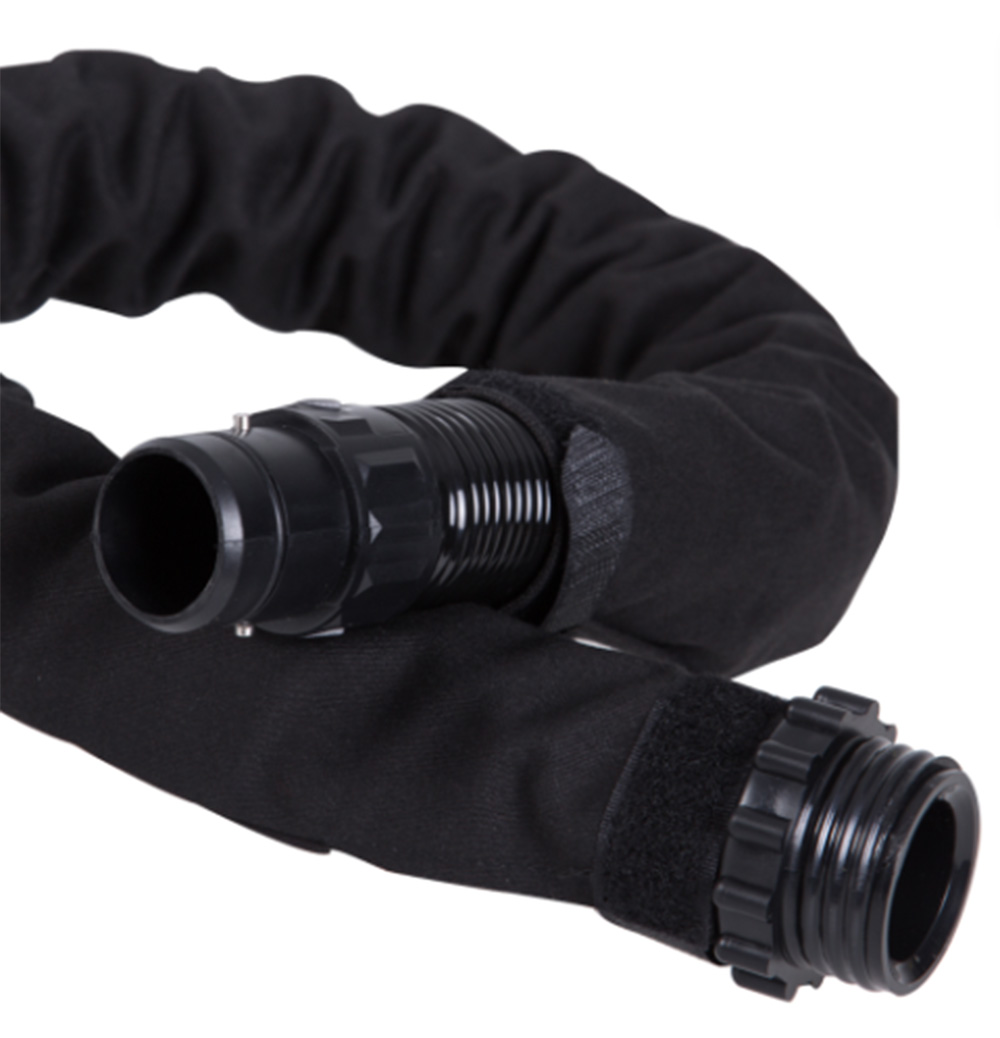
| Parts replacement | Hood, breathing tube, battery, filters (all user-replaceable) |
| Inventory management | One size fits all (for hoods)—simpler |
| Fit testing program | None required (for loose-fitting hoods)—significant administrative savings |
| Worker training | Moderate—battery charging, donning, filter selection, flow checks |
✅ Junsee Group takeaway: PAPR eliminates the fit testing program entirely—a significant administrative and cost saving. However, PAPR adds battery management complexity.
| Condition | Why |
|---|---|
| Hazard concentration 10x-50x PEL | APF 50 is adequate |
| Budget is tight | Lower upfront and 5-year TCO |
| Workers are clean-shaven and pass fit testing | Full facepiece works well for this population |
| Short to moderate shifts (<4 hours) | Comfort difference with PAPR is less noticeable |
| No battery charging infrastructure | Full facepiece requires no power |
| Mobile workforce (climbing, confined space with no snag hazards) | No battery pack on belt; no hose to snag |
| Workplace has reliable fit testing program already | No new program to build |
| Low to moderate heat environment | Heat is not a major factor |
| Condition | Why |
|---|---|
| Hazard concentration >50x PEL | APF 50 insufficient—need PAPR TH2/TH3 |
| Workers have facial hair | Full facepiece will not seal—PAPR hood works perfectly |
| Workers cannot pass fit testing with full face | PAPR requires no fit testing |
| High worker turnover (temp workers) | Fit testing each new worker is expensive and time-consuming |
| High heat environment | PAPR provides cooling airflow—much more comfortable |
| Long shifts (8+ hours) | Zero breathing resistance reduces fatigue |
| High physical exertion | Breathing resistance with full face limits work capacity |
| Workers wear prescription glasses | PAPR hood fits easily over glasses |
| You want highest possible compliance | PAPR is more comfortable—workers keep it on |
| You want to eliminate fit testing program | Significant administrative and cost saving |
| Dimension | Full Facepiece | PAPR | Winner |
|---|---|---|---|
| APF | 50 | 25-1000+ | PAPR (higher protection available) |
| Breathing resistance | Present (moderate to high) | None | PAPR |
| Heat comfort | Poor to moderate | Excellent | PAPR |
| Facial hair allowed | No | Yes (loose hood) | PAPR |
| Fit testing required | Yes (annual) | No | PAPR |
| Glasses compatibility | Poor (inserts required) | Excellent (worn under hood) | PAPR |
| Upfront cost | Lower ($150-300) | Higher ($600-1,500) | Full facepiece |
| 5-year TCO (per worker) | ~$300/year | ~$410/year | Full facepiece |
| Battery management | Not required | Required | Full facepiece |
| Hose snag hazard | None | Present (belt-mounted models) | Full facepiece |
| Weight on head | Moderate | Belt-mounted: low; Helmet-mounted: high | Full facepiece (vs helmet PAPR) |
| Donning time | 1-2 minutes | 1-2 minutes | Tie |
| Factor | Assessment |
|---|---|
| Hazard | Organic vapors + acid gases (moderate concentration, 15x PEL) |
| Shift length | 8 hours |
| Environment | Hot (35°C / 95°F) |
| Workforce | Mix of clean-shaven and light stubble |
| Recommendation | PAPR with combination filters |
| Rationale | Heat comfort and zero breathing resistance for 8-hour shifts outweigh higher cost. Stubble not an issue with PAPR hood. |
| Factor | Assessment |
|---|---|
| Hazard | Silica dust (concentration <10x PEL) |
| Shift length | 4 hours of actual respirator use |
| Environment | Variable—outdoor, can be hot |
| Workforce | Many workers have beards/stubble |
| Recommendation | PAPR with loose hood OR disposable N95 + engineering controls |
| Rationale | Facial hair prevents full facepiece use. PAPR works, but cost may be high for casual use. Better option: reduce dust with water suppression (engineering control) so N95 is adequate. |
| Factor | Assessment |
|---|---|
| Hazard | Potent API powder (OEL <1 µg/m³, >1000x PEL) |
| Shift length | 6 hours |
| Environment | Cleanroom, climate-controlled (moderate temperature) |
| Workforce | Clean-shaven (cleanroom requirement) |
| Recommendation | PAPR TH3 with HEPA filters |
| Rationale | Hazard concentration >50x PEL requires APF >50—full facepiece (APF 50) insufficient. TH3 PAPR (APF 1000+) required. |
| Factor | Assessment |
|---|---|
| Hazard | Welding fume (manganese, chromium) |
| Shift length | 8 hours |
| Environment | Warm (30°C / 86°F) with fume extraction |
| Workforce | Mixed (some beards for heat protection) |
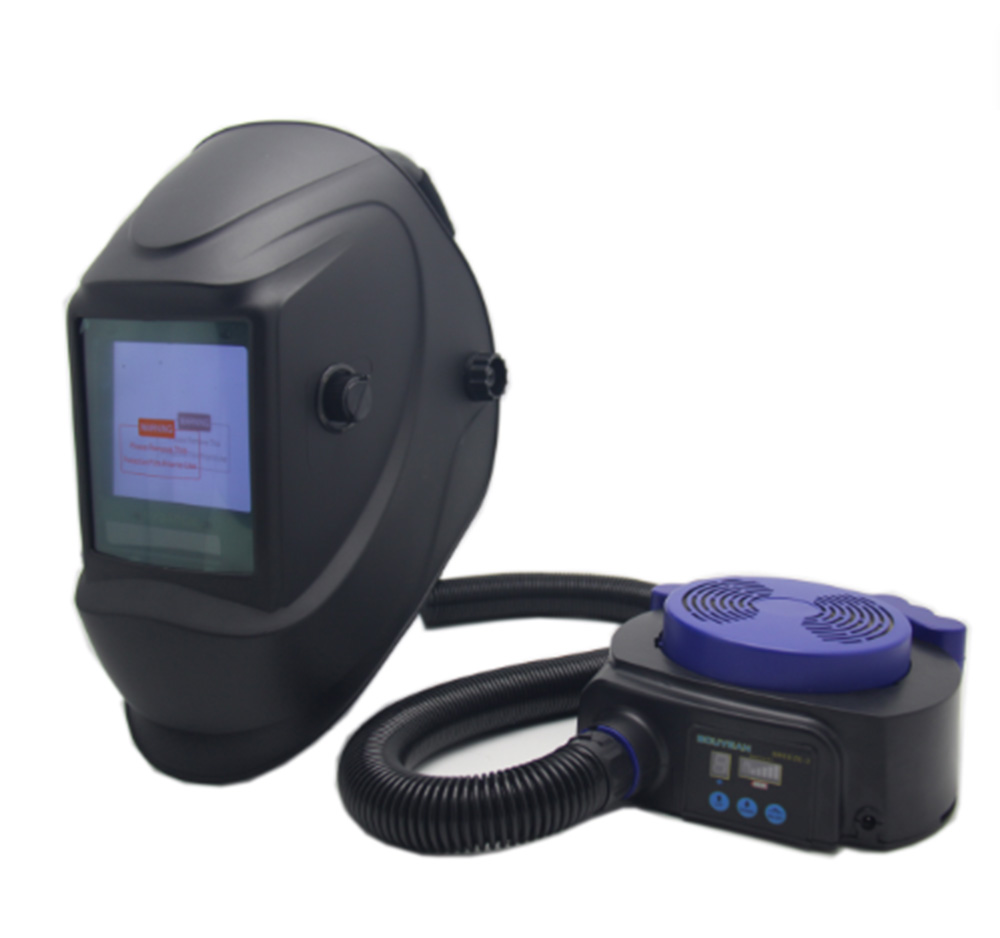
| Recommendation | PAPR welding helmet or full facepiece with welding adapter |
| Rationale | If beards present, PAPR required. If clean-shaven, full facepiece with welding adapter is lower cost but less comfortable in heat. Many welders prefer integrated PAPR welding helmet. |
| If Your Priority Is… | Choose… |
|---|---|
| Lowest cost (upfront and 5-year TCO) | Full facepiece (if hazard allows and workers are clean-shaven) |
| Highest protection factor (APF) | PAPR TH3 (APF 1000+) |
| Best comfort in heat | PAPR (cooling airflow) |
| Zero breathing resistance for heavy work | PAPR |
| No fit testing program | PAPR (loose hood) |
| Works with facial hair | PAPR (loose hood) |
| No batteries to manage | Full facepiece |
| Mobile work with no snag hazards | Full facepiece (no hose) |
| Long shifts (8+ hours) | PAPR (reduced fatigue) |
| Mixed workforce (temp workers, diverse face shapes) | PAPR (no fit testing, one size fits all) |
The bottom line: Full facepiece and PAPR are both high-level respiratory protection solutions. Full facepiece is the economical choice for clean-shaven workforces in moderate conditions. PAPR is the performance and comfort choice—higher protection, no fit testing, works with facial hair, better in heat—at a 35% higher 5-year TCO.
At Junsee Group, we help customers choose based on their specific hazards, workforce, environment, and budget. We do not push one solution—we help you find the right fit.

Your email address will not be published. Required fields are marked