
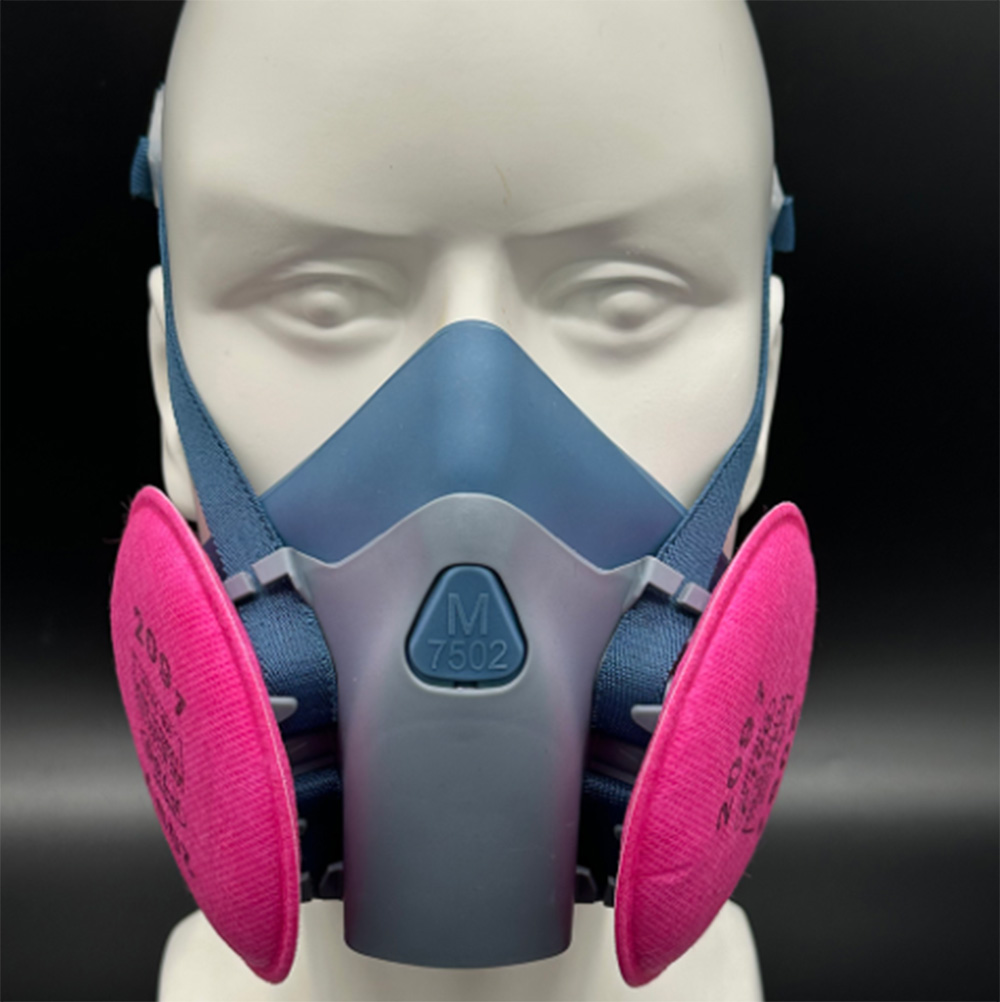
When workplace air contains hazards that threaten both your lungs and your eyes, a simple dust mask or half-face respirator is not enough.
You need full-face protection.
At Junsee Group, we help safety managers and workers understand their respiratory protection options. One of the most important—and most misunderstood—tools in industrial safety is the full face respirator.
This article explains what a full face respirator is, how it works, when you need one, and why it might be the right choice for your workplace.
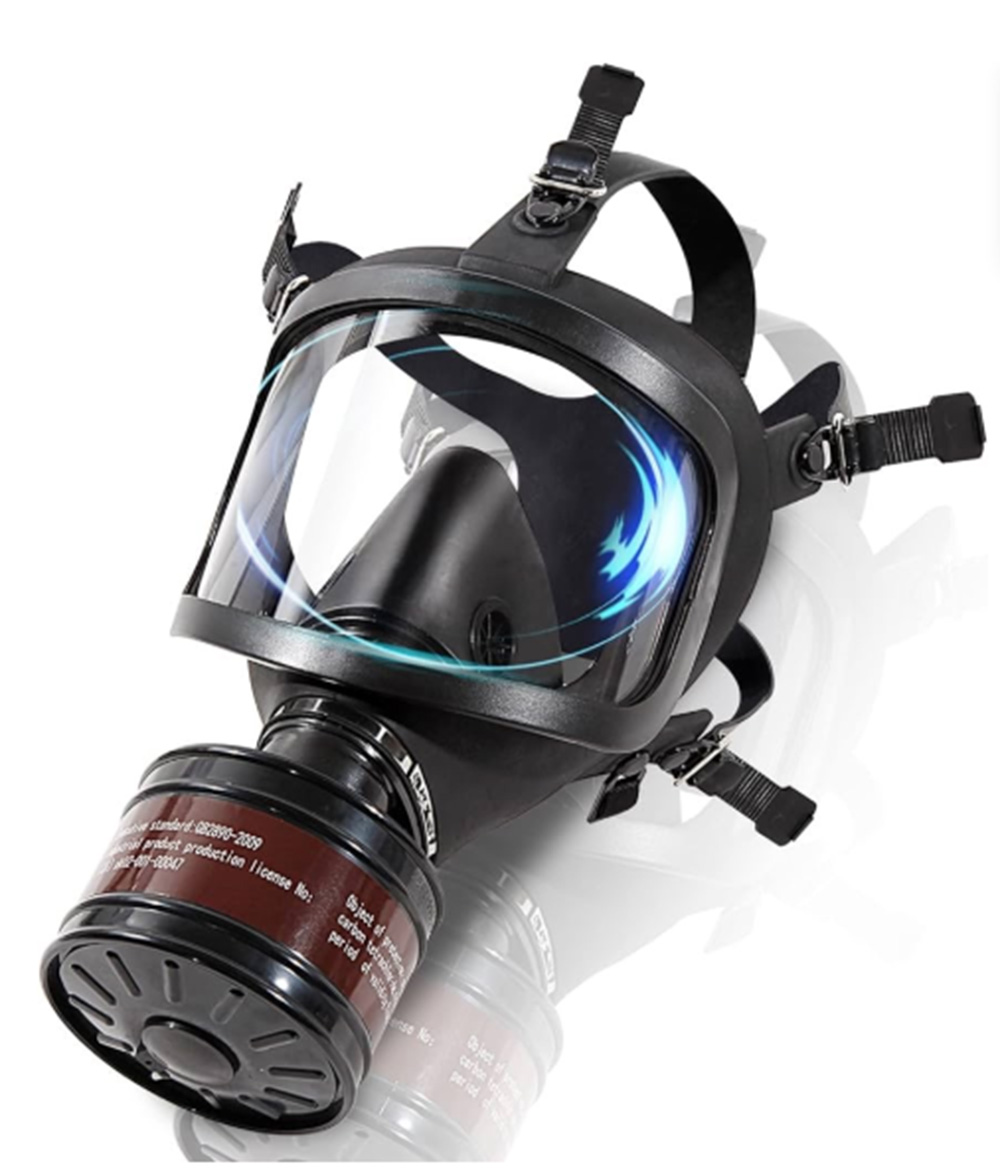
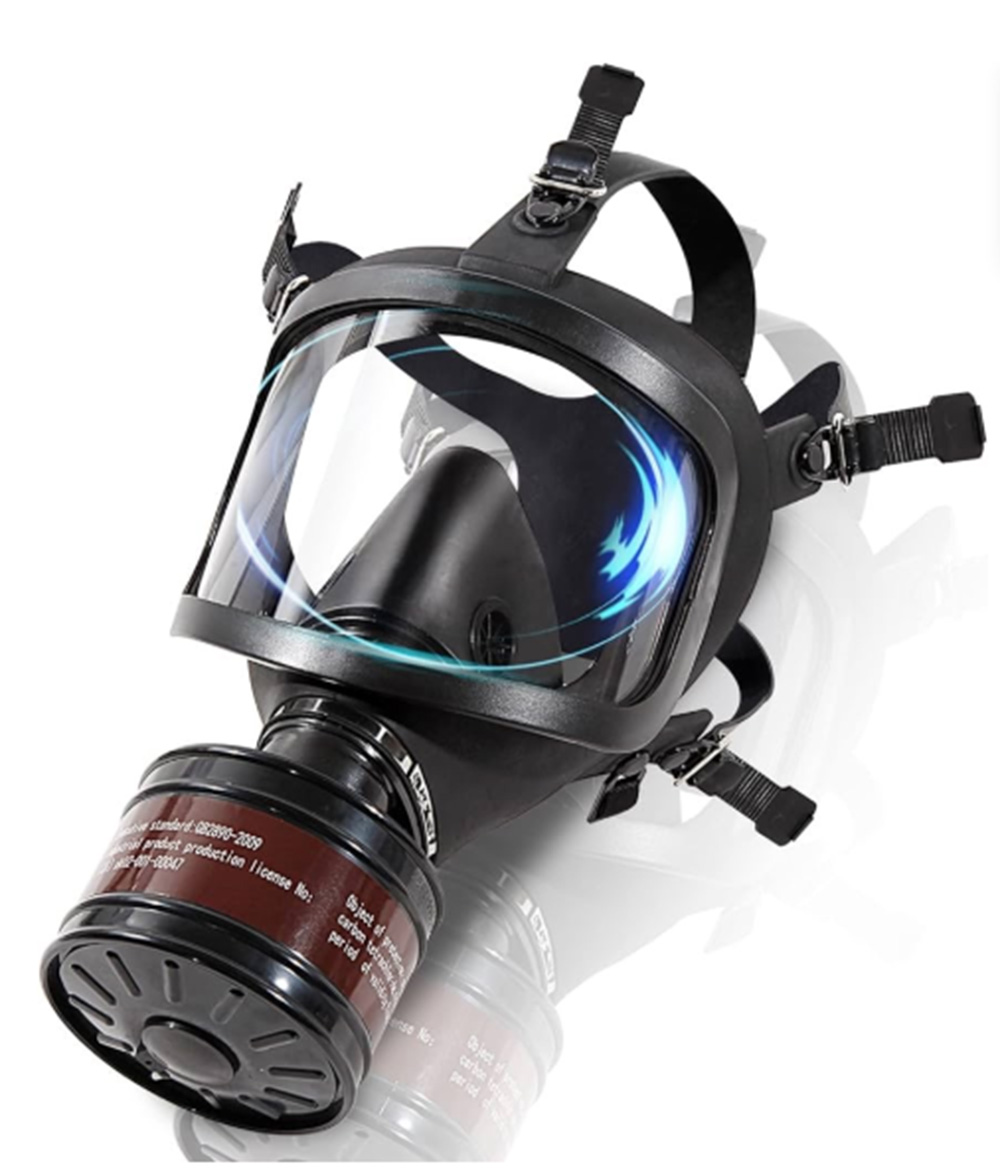
A full face respirator (also called a full facepiece respirator) is a type of air-purifying respirator that covers the entire face—from the hairline to below the chin. It provides simultaneous protection for:
| Protected Area | How It Is Protected |
|---|---|
| Respiratory system (nose, mouth, lungs) | Filters remove particulates, gases, or vapors from inhaled air |
| Eyes | Transparent visor blocks splashes, impacts, and irritating gases |
| Face | Visor and body of mask protect skin from chemical splashes and debris |
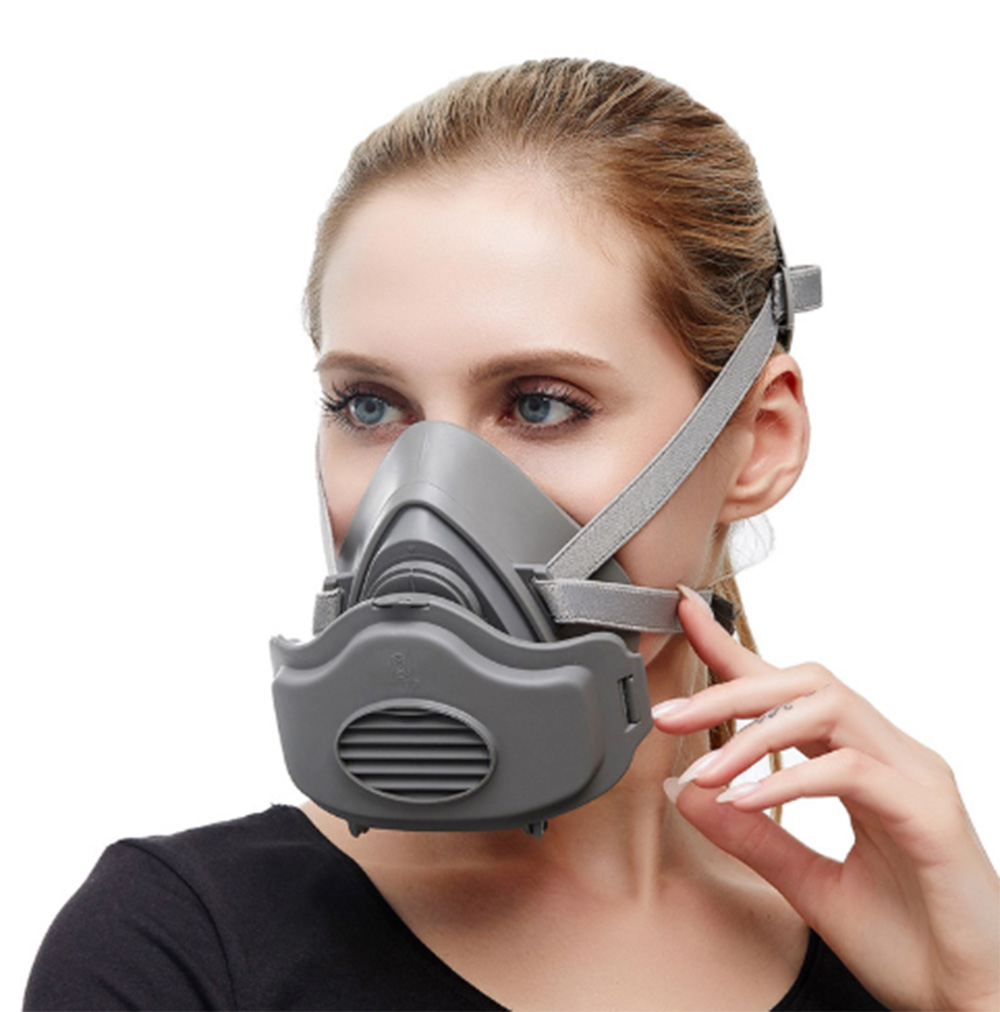
Unlike half-mask respirators (which cover only the nose and mouth), full face respirators incorporate a built-in visor that serves as both eye and face protection. This integrated design eliminates the gap between separate goggles and a mask—a common weak point in half-mask + goggle combinations.
✅ Junsee Group definition: A full face respirator is a single-piece respiratory protection device that seals against the entire face and includes a transparent visor for eye and face protection.
Full face respirators operate on the same principle as other negative-pressure air-purifying respirators: your lungs pull air through filters as you inhale.
| Step | Description |
|---|---|
| 1 | Worker inhales, creating negative pressure inside the facepiece |
| 2 | Air is drawn through threaded filter cartridges (mounted on the cheeks or chin) |
| 3 | Filters remove contaminants—particulates, gases, or both—depending on filter type |
| 4 | Clean air enters the facepiece and is inhaled |
| 5 | Exhaled air exits through a one-way exhalation valve (typically at the front or bottom) |
| Component | Function | Material |
|---|---|---|
| Facepiece body | Seals against the face; holds all components | Silicone, rubber, or elastomer |
| Visor | Protects eyes and face; provides vision | Polycarbonate, polyacetate, or glass |
| Filter cartridges (1 or 2) | Remove airborne contaminants | Activated carbon, HEPA media, or combination |
| Exhalation valve | Allows exhaled breath to exit; prevents contaminants from entering | Thin silicone flap |
| Head harness (straps) | Holds respirator securely on face | Elastic or fabric |
| Inner mask / nose cup (optional) | Reduces visor fogging by separating exhaled breath | Silicone or rubber |
This is the most common comparison safety managers face. Here is how they stack up.
| Comparison Factor | Full Face Respirator | Half Mask + Goggles |
|---|---|---|
| Assigned Protection Factor (APF) | 50 | 10 (half mask) |
| Eye protection from gases/vapors | ✅ Yes (eyes inside sealed environment) | ❌ No (gases can bypass goggles) |
| Eye protection from splashes/particles | ✅ Yes (built-in visor) | ✅ Yes (goggles) |
| Gap between respiratory and eye protection | None (integrated design) | Gap exists—potential entry point for contaminants |
| Visibility | Good (modern visors offer wide field of view) | Excellent (goggles can be very wide) |
| Weight on face | Moderate to heavy | Lighter |
| Cost (initial) | Higher (300) | Lower (100 total) |
| Donning time | Moderate (adjusting 4-5 straps) | Faster (half mask + goggles separately) |
| Compatibility with other PPE | Can be challenging with hard hats/ear muffs | Better (components fit around each other) |
| Facial hair impact | Severe (must be clean-shaven for seal) | Severe (same issue for half mask) |
✅ Junsee Group takeaway: The APF difference is critical. A full face respirator (APF 50) provides 5 times more protection than a half mask (APF 10). For hazards with airborne concentrations between 10x and 50x the permissible exposure limit (PEL), a half mask is not adequate—a full facepiece is required.
Not every job requires a full face respirator. But when any of these conditions are present, it may be the minimum acceptable protection.
| Hazard Examples | Why Full Face Is Required |
|---|---|
| Chlorine gas, ammonia vapor, formaldehyde, solvent vapors | These gases can severely irritate, burn, or damage eyes. Goggles do not protect against gases—only splashes and particles. A full face respirator seals the eyes inside the same clean-air environment as the nose and mouth. |
⚠️ Critical: If the airborne hazard is a gas or vapor that can harm the eyes, a half mask + goggles is not acceptable. You need a full face respirator.
| Airborne Concentration vs PEL | Required APF | Acceptable Respirator |
|---|---|---|
| < 10x PEL | 10 | Half mask (APF 10) may be adequate |
| 10x to 50x PEL | >10 | Half mask is not adequate—need full facepiece (APF 50) |
| > 50x PEL | >50 | Full facepiece may be inadequate—need PAPR (APF 50-1000+) or SCBA |
✅ Junsee Group advice: Review your most recent industrial hygiene sampling. If any results exceed 10x the PEL, upgrade from half mask to full face respirator.
| Scenario | Why Full Face Is Required |
|---|---|
| Liquid chemical handling, tank cleaning, spray painting, acid transfer | Splashes to the face can cause severe eye and skin injury. A full face respirator's visor provides continuous protection. With half mask + goggles, there is a physical gap between the mask and goggles where splashes can enter. |
| Scenario | Recommendation |
|---|---|
| Emergency response, hazmat, unknown chemical mixtures | Full face respirator (at minimum) provides broader protection. For complete unknown or IDLH, use SCBA. |
Some workers simply prefer the integrated design of a full face respirator—one piece to don, no separate goggles to fog or adjust.
The Assigned Protection Factor (APF) is the level of protection a properly functioning respirator is expected to provide to a properly fitted user.
| APF Value | Meaning | Example |
|---|---|---|
| APF 10 | Reduces contaminant concentration by 10x | Half mask respirator |
| APF 50 | Reduces contaminant concentration by 50x | Full face respirator |
| APF 25-1000 | Varies by configuration | PAPR (depending on headpiece) |
| APF 10,000 | Reduces contaminant concentration by 10,000x | SCBA (self-contained breathing apparatus) |
| Outside Concentration | APF 10 (Half Mask) | APF 50 (Full Face) |
|---|---|---|
| 50 ppm contaminant | 5 ppm inside mask | 1 ppm inside mask |
| PEL = 1 ppm | Overexposed (5 > 1) | Protected (1 = 1) |
✅ Junsee Group conclusion: If your hazard concentration is between 10x and 50x the PEL, a half mask leaves workers overexposed. A full face respirator provides adequate protection.
| Material | Characteristics | Best For |
|---|---|---|
| Silicone | Soft, comfortable, durable, easy to clean, excellent seal | Long shifts, workers who wear respirators daily |
| Rubber / Elastomer | Stiffer than silicone, durable, lower cost than silicone | General industrial use, occasional use |
| Thermoplastic | Lightweight, good chemical resistance | Chemical environments, specialized applications |
| Visor Material | Characteristics | Best For |
|---|---|---|
| Polycarbonate | Impact-resistant, lightweight, can scratch | Construction, grinding, impact hazards |
| Polyacetate | Chemical-resistant, excellent optical clarity | Chemical splash, lab work |
| Glass | Scratch-resistant, excellent clarity, heavy | Specialty applications (rare) |
| Anti-fog coated | Reduces condensation on visor | Hot/humid environments, high exertion |
| Configuration | Description | Best For |
|---|---|---|
| Dual cartridge (cheek-mounted) | Two filters, one on each cheek | Balanced weight, higher filter capacity |
| Single cartridge (chin-mounted) | One filter on the chin | Lower profile, sometimes lighter |
| Bayonet mount | Push-and-twist connection | Common in North America |
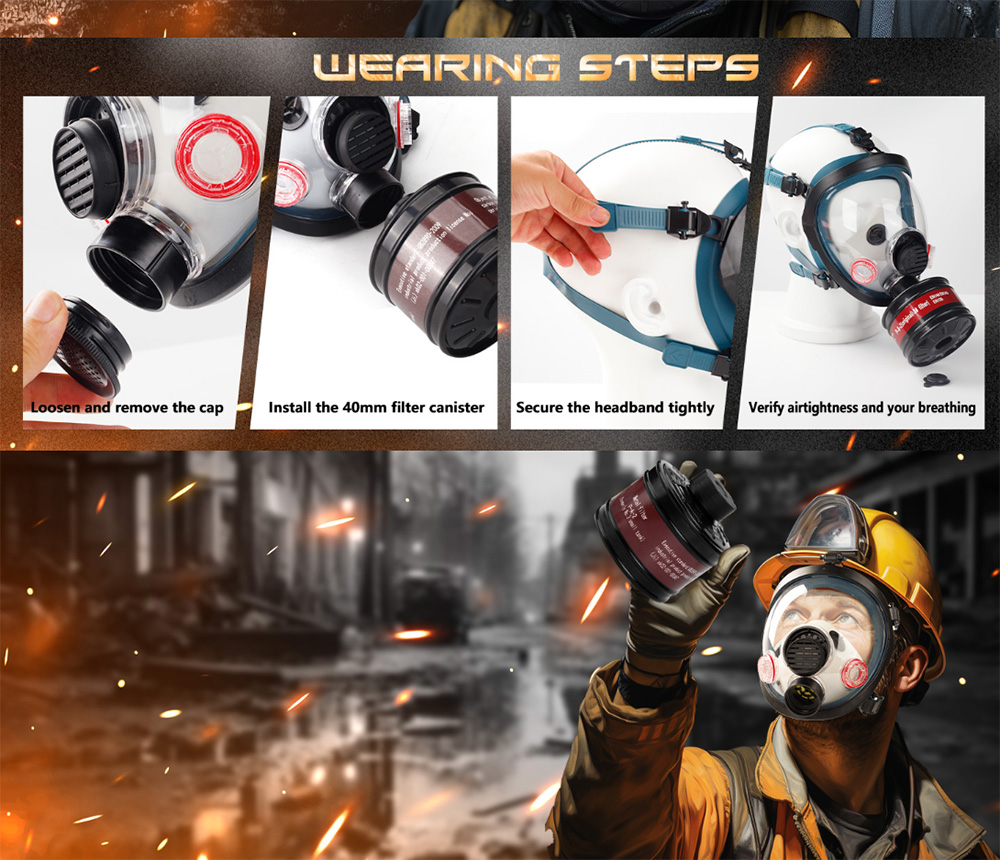
| Threaded (40mm) | Screw-on connection | Common in Europe; universal compatibility |
| Feature | Why It Matters |
|---|---|
| NIOSH or CE certification | Ensures minimum performance standards |
| APF 50 rating | Confirms required protection level |
| Anti-fog visor | Critical for hot environments and long shifts |
| Wide field of view | Improves safety and reduces neck strain |
| Speech diaphragm | Allows clearer communication (some models) |
| Drinking tube adapter | For long-duration wear in hazmat or extended operations |
| Compatibility with hard hats | May require specific adapter or low-profile design |
| Prescription glasses insert | For workers who cannot wear contacts |
Full face respirators are powerful tools—but they have important limitations.
| Limitation | Why It Matters |
|---|---|
| Does not provide oxygen | Cannot be used in oxygen-deficient atmospheres (<19.5% O2) |
| Not for IDLH | Not approved for Immediately Dangerous to Life or Health concentrations |
| Requires fit testing | Must pass annual fit testing; facial hair breaks the seal |
| Negative pressure | User must be able to breathe through filters (may be difficult for some medical conditions) |
| No protection for exposed skin (except face) | Neck and other skin may still need protection from gases/splashes |
| Can be hot | Negative pressure design traps heat and moisture; less comfortable than PAPR in hot environments |
⚠️ Critical: Full face respirators are not SCBAs. They do not supply oxygen and cannot be used in environments that are oxygen-deficient or immediately dangerous to life or health.
| Condition | Recommended Solution |
|---|---|
| Hazard concentration 10x-50x PEL | Full face respirator (APF 50) may be adequate |
| Hazard concentration >50x PEL | PAPR (APF 25-1000+) or SCBA |
| High heat environment | PAPR (cooling airflow) is far more comfortable |
| Workers with facial hair | PAPR (loose-fitting hood, no seal required) |
| Tight budget, clean-shaven workforce | Full face respirator (lower upfront cost) |
| Need highest comfort for long shifts | PAPR (zero breathing resistance) |
| Workers cannot pass fit testing | PAPR (no fit test required for loose hoods) |
| Condition | Why Full Face Is Used |
|---|---|
| Hazards: Chlorine gas, acid mists, chemical splashes | Gases irritate eyes—goggles not sufficient. Splash risk requires visor protection. |
| Typical concentration: 10-25x PEL | Half mask (APF 10) inadequate; full face (APF 50) adequate. |
| Condition | Why Full Face Is Used (or PAPR) |
|---|---|
| Hazards: Isocyanate vapors + paint mist | Isocyanates can cause permanent asthma; eye protection from vapors required. |
| Typical concentration: 5-15x PEL | Full face may be adequate with proper cartridge; PAPR often preferred for comfort. |
| Condition | Why Full Face Is Used |
|---|---|
| Hazards: Solvent vapors, acid splashes, unknown mixtures | Full face provides broad protection; integrated visor protects eyes from both splashes and vapors. |
| Condition | Why Full Face Is Used (or PAPR) |
|---|---|
| Hazards: Residual vapors, limited ventilation | Full face (APF 50) provides higher protection than half mask; PAPR may be preferred for comfort and positive pressure. |
A: No. Any facial hair that passes between the skin and the sealing surface of the respirator will break the seal and allow contaminants to enter. Full face respirators require a clean-shaven face where the seal contacts the skin. This includes stubble, goatees, mustaches (if they cross the seal line), and sideburns that extend into the seal area.
✅ Solution: If workers cannot or will not shave, consider a PAPR with a loose-fitting hood—no face seal required.
A: Yes—but not standard glasses. Most full face respirators have optional prescription lens inserts that mount inside the visor. Standard eyeglass frames break the face seal. Options include:
Prescription lens inserts (recommended)
Contacts (if medically approved and worker is comfortable)
PAPR with hood (fits over glasses)
A: Replace components on schedule:
| Component | Replacement Frequency |
|---|---|
| Facepiece (silicone/rubber) | Every 3-5 years, or when cracked, deformed, or no longer seals |
| Visor | When scratched beyond clear vision, cracked, or crazed (chemical cracks) |
| Head straps | When elastic loses tension (typically 1-2 years) |
| Exhalation valve | When valve flap is curled, cracked, or does not lie flat |
| Filters/cartridges | Per manufacturer schedule; when saturated (smell/taste contaminant); or when clogged (increased breathing resistance) |
A: Use mild soap and warm water. Never use solvents, bleach, or abrasive cleaners.
Basic steps:
Remove filters (do not get them wet)
Wash facepiece in warm soapy water
Scrub gently with soft brush or cloth
Rinse thoroughly with clean water
Air dry completely
Reassemble with new or dry filters
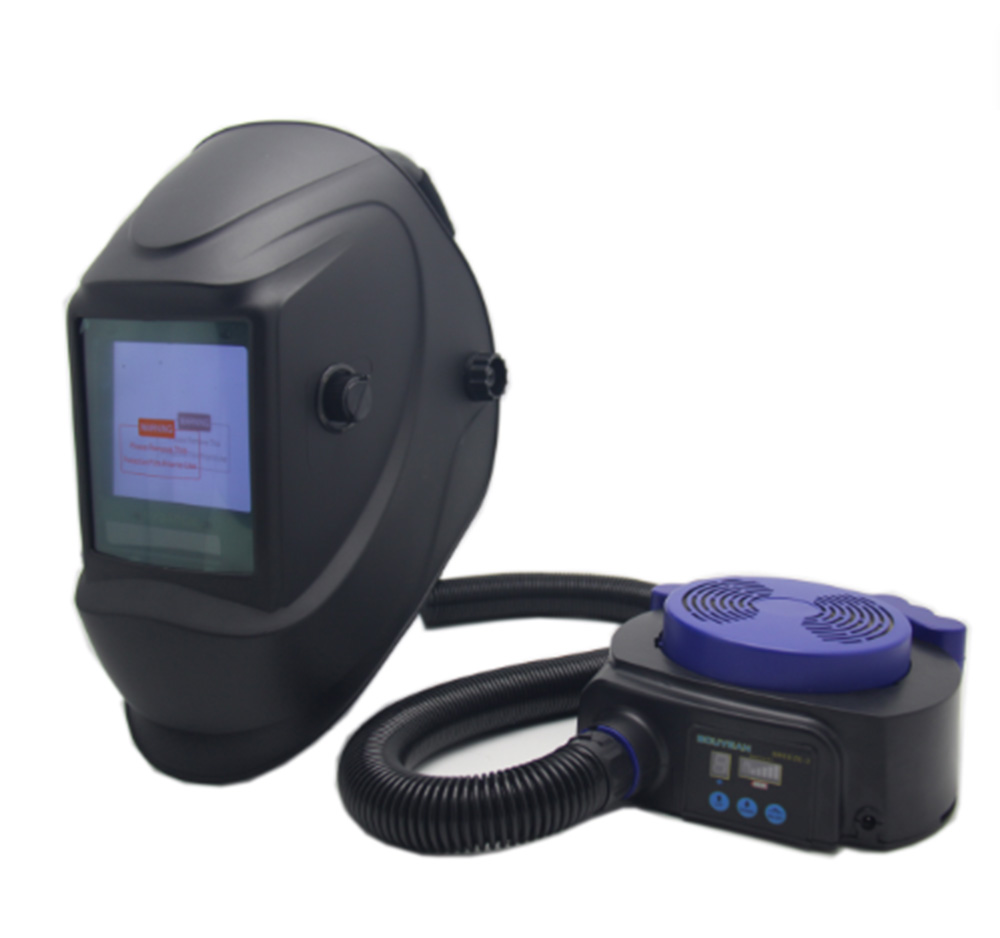
A: Not with a standard clear visor. Welding requires a darkened lens for eye protection from arc radiation. Some manufacturers offer welding adapter kits that attach a welding helmet to a full face respirator. For welding, many users prefer an integrated PAPR welding helmet, which combines respiratory protection with auto-darkening welding protection.
| Market | Standard | Key Requirements |
|---|---|---|
| United States | NIOSH 42 CFR Part 84 | Approval of respirator as assembly (facepiece + filters) |
| Europe | EN 136 (full face mask) | Testing for seal, leakage, breathing resistance, visor optical quality |
| Europe | EN 140 (half mask) | Not applicable to full face |
| International | ISO 16973 | Classification and performance requirements |
| Marking | Meaning |
|---|---|
| NIOSH approval number (e.g., TC-84A-XXXX) | Indicates certified assembly |
| APF 50 | Assigned Protection Factor |
| EN 136:1998 (European model) | Conforms to full face mask standard |
| Filter rating (e.g., P100, A1B1E1K1) | Type and level of filtration |
A full face respirator is a critical tool in industrial safety—offering 5 times the protection of a half mask (APF 50 vs 10) and integrated eye protection that goggles alone cannot provide, especially against gases and vapors.
| When to Choose Full Face Respirator | When to Consider Alternatives |
|---|---|
| Hazard concentration 10x-50x PEL | Concentration >50x PEL → PAPR or SCBA |
| Gases or vapors that irritate eyes | High heat environment → PAPR (more comfortable) |
| Chemical splash risk | Workers have facial hair → PAPR (loose hood) |
| Need integrated eye + respiratory protection | Workers cannot pass fit testing → PAPR |
| Budget is limited (lower upfront cost) | Extended wear in hot conditions → PAPR |
The bottom line: A full face respirator is not the right tool for every job. But when your hazard includes gases that threaten the eyes, or concentrations that exceed what a half mask can handle, a full face respirator is not optional—it is the minimum acceptable protection.
At Junsee Group, we offer a complete range of full face respirators from trusted manufacturers—with the filters, cartridges, and accessories you need to match your specific hazards.

Your email address will not be published. Required fields are marked