
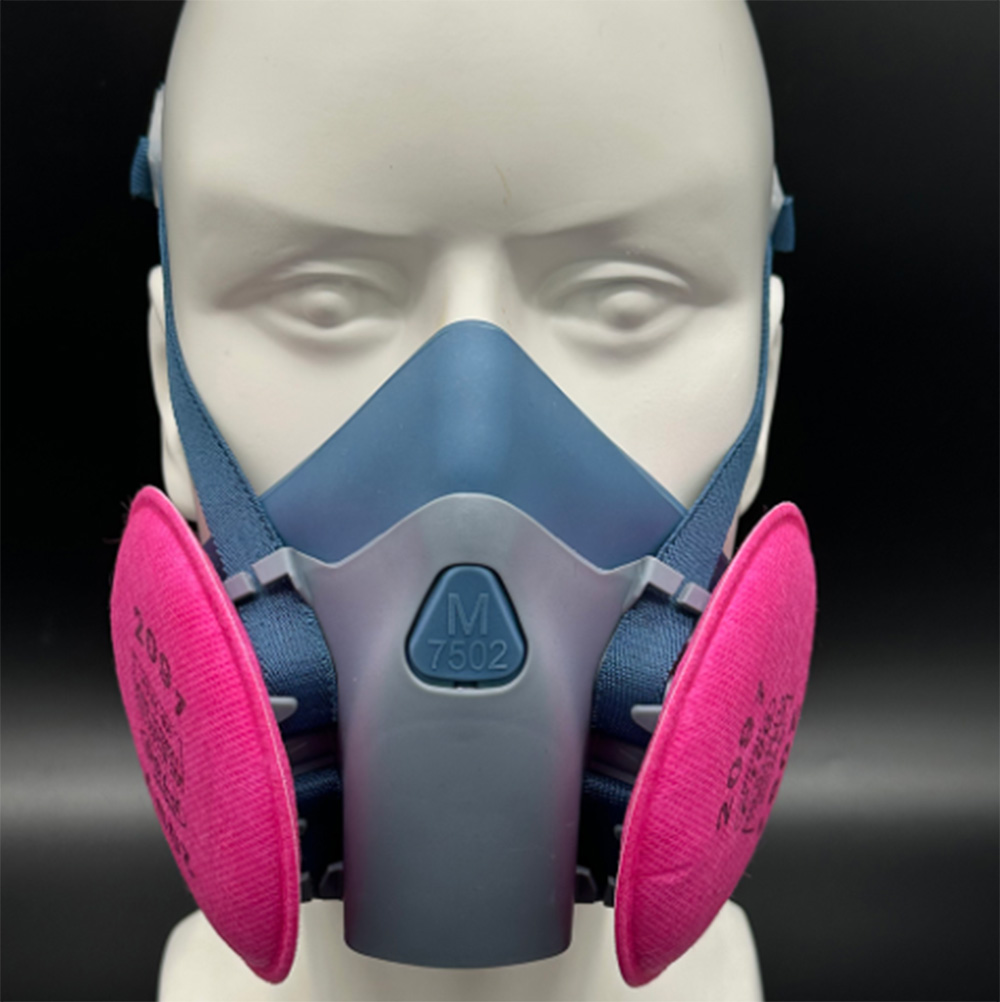
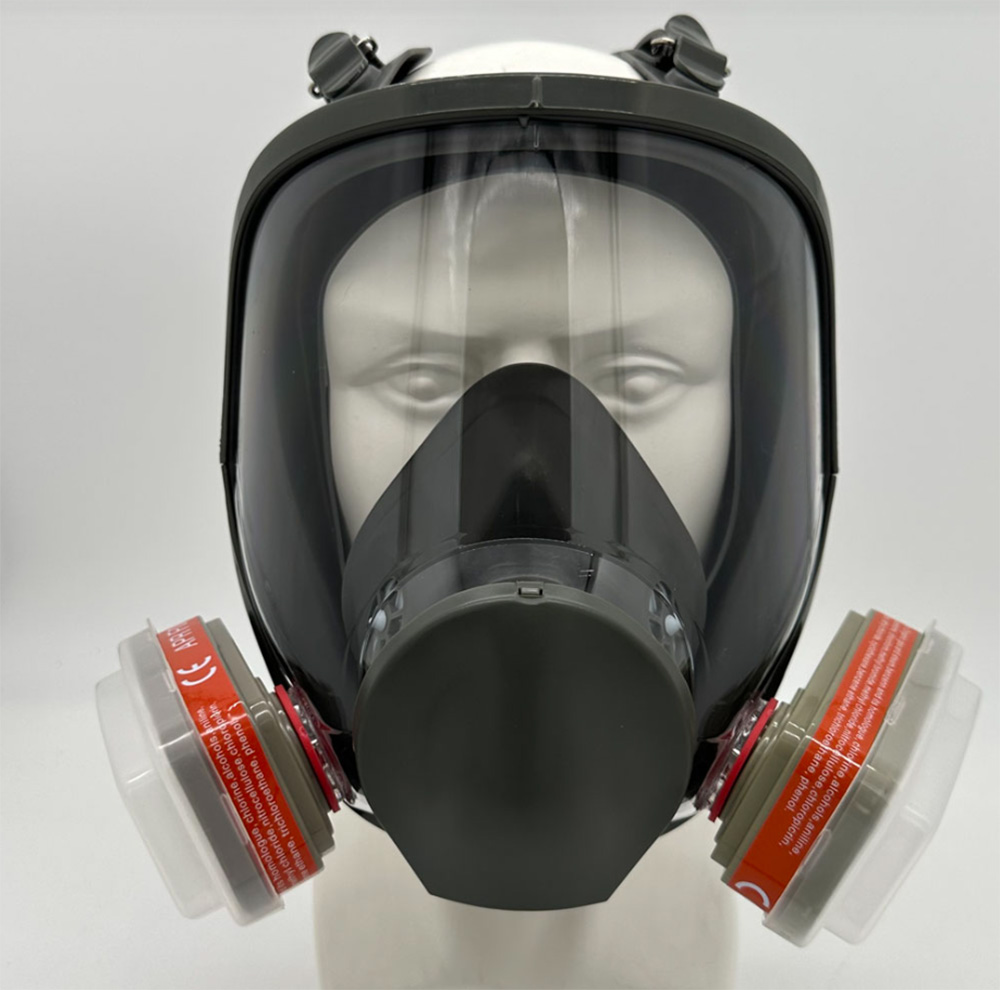
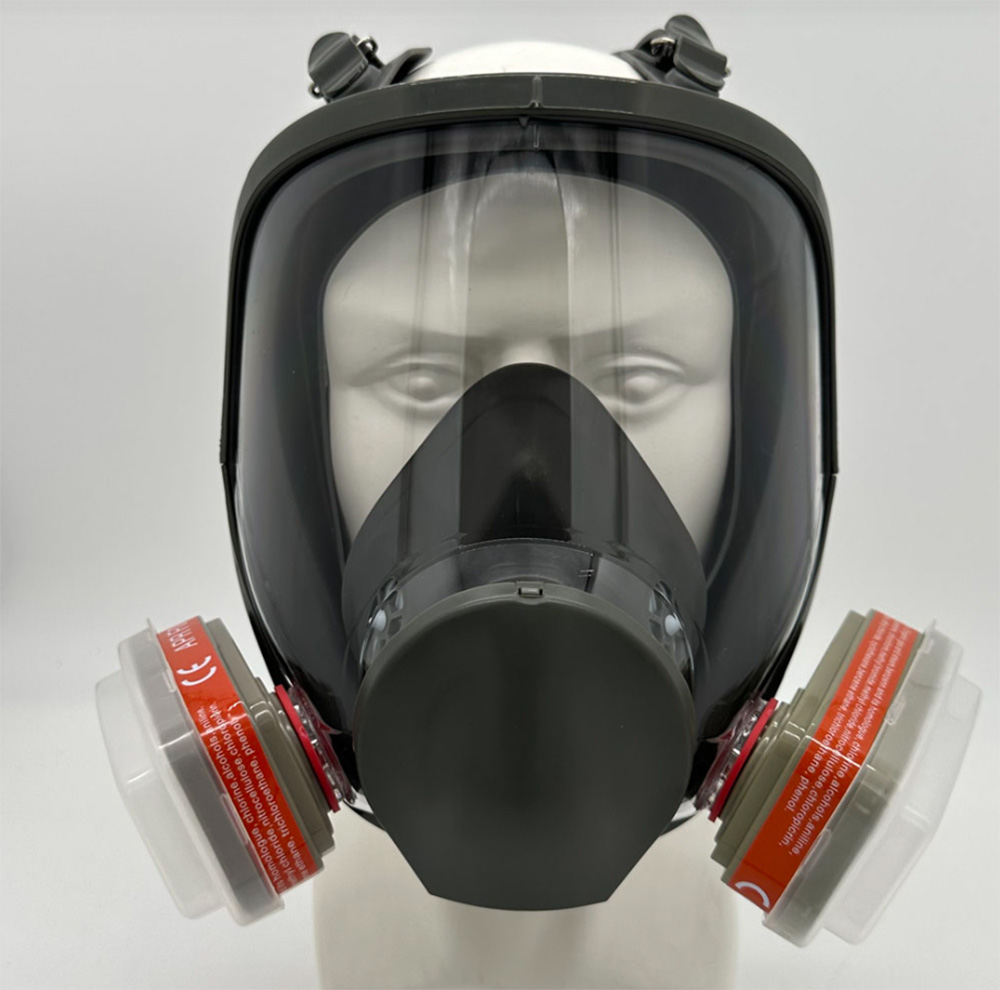
Walk onto any industrial site, and you will see a mix of respiratory protection. Some workers wear simple half masks covering only their nose and mouth. Others wear full facepieces with built-in visors covering their entire face.
Both provide respiratory protection. Both filter contaminants from the air. So why do some jobs require a full face respirator while others do not?
The answer is not about comfort or cost—it is about hazards that threaten more than just the lungs.
At Junsee Group, we help safety managers understand this critical distinction. This article explains the key differences between full facepiece and half mask respirators—and why some jobs legally and medically require full face protection.
| Feature | Half Mask Respirator | Full Facepiece Respirator |
|---|---|---|
| What it covers | Nose and mouth only | Entire face (hairline to chin) |
| Eye protection | None (must add separate goggles) | Built-in visor protects eyes and face |
| Assigned Protection Factor (APF) | 10 | 50 |
| Seal area | Nose bridge, cheeks, chin | Forehead, temples, cheeks, chin |
| Typical weight | Lighter (5-10 oz / 150-300g) | Heavier (12-20 oz / 350-600g) |
| Typical cost | 80 | 300 |
| Donning time | Faster (2-3 straps) | Slower (4-5 straps) |
| Compatibility with glasses | Poor (requires insert or contacts) | Poor (requires insert or contacts) |
This is the most important distinction—and the one most workers misunderstand.
| Half Mask + Goggles | Full Facepiece | |
|---|---|---|
| Protects eyes from splashes and particles | ✅ Yes (if goggles are worn) | ✅ Yes (built-in visor) |
| Protects eyes from gases and vapors | ❌ No | ✅ Yes |
Goggles are designed to protect against:
Liquid splashes
Flying particles (dust, debris)
Impact (with appropriate rating)
But gases and vapors are molecules. They are thousands of times smaller than particles. Gases can:
Pass through the air vents in most goggles (required for anti-fog)
Seep around the edges of the goggle seal
Enter through the gap between the top of the half mask and the bottom of the goggles
⚠️ Critical fact: A half mask + goggles provides no protection for the eyes against airborne gases or vapors such as chlorine, ammonia, formaldehyde, or solvent vapors. These gases can cause immediate eye irritation, corneal burns, or long-term damage.
| Scenario | Half Mask + Goggles | Full Facepiece |
|---|---|---|
| Worker enters area with 10 ppm ammonia vapor (PEL = 25 ppm? No, ACGIH STEL = 35 ppm? Actually, IDLH for ammonia is 300 ppm—but eye irritation occurs at much lower levels. OSHA PEL is 50 ppm, but eye irritation begins around 20-50 ppm depending on individual.) | Worker's lungs are protected (if cartridges are correct). Eyes burn, water, and tear. Worker cannot see. Worker removes goggles or leaves area. | Worker's eyes are protected because they are sealed inside the same clean-air environment as the nose and mouth. |
✅ Junsee Group takeaway: If the airborne hazard is a gas or vapor that can irritate or damage the eyes, a half mask is not acceptable. You need a full facepiece.
The Assigned Protection Factor (APF) tells you how much a respirator reduces contaminant concentration.
| Respirator Type | APF | Meaning |
|---|---|---|
| Half mask | 10 | Reduces concentration by 10x (e.g., 100 ppm outside → 10 ppm inside) |
| Full facepiece | 50 | Reduces concentration by 50x (e.g., 100 ppm outside → 2 ppm inside) |
Your required APF depends on how concentrated the hazard is compared to the Permissible Exposure Limit (PEL) or Occupational Exposure Limit (OEL).
Formula: Required APF = (Airborne concentration) ÷ (Exposure limit)
| Airborne Concentration vs PEL | Required APF | Acceptable Respirator |
|---|---|---|
| < 10x PEL | 10 | Half mask (APF 10) may be adequate |
| 10x to 50x PEL | >10 | Half mask not adequate—full facepiece (APF 50) required |
| > 50x PEL | >50 | Full facepiece not adequate—need PAPR (APF 25-1000+) or SCBA |
| Hazard | PEL | Airborne Concentration | Multiple of PEL | Required APF | Acceptable? |
|---|---|---|---|---|---|
| Lead dust | 50 µg/m³ | 300 µg/m³ | 6x | 6 | Half mask (APF 10) → adequate |
| Lead dust | 50 µg/m³ | 800 µg/m³ | 16x | 16 | Half mask (APF 10) → NOT adequate; full facepiece (APF 50) → adequate |
| Isocyanate vapor | 5 ppb | 80 ppb | 16x | 16 | Same conclusion: half mask inadequate, full face required |
✅ Junsee Group advice: Review your industrial hygiene sampling. If any results exceed 10x the exposure limit, half masks are not enough. Upgrade to full facepiece or PAPR.
In many workplaces, liquid chemicals or flying debris pose a hazard to the face and eyes.
| Hazard Type | Half Mask + Goggles | Full Facepiece |
|---|---|---|
| Chemical splash from front | Goggles protect eyes; mask protects nose/mouth. Gap between mask and goggles allows splash to reach skin on cheeks, nose bridge, and forehead. | Visor covers entire face. No gap. |
| Chemical splash from below | Splash can travel up under goggles or between mask and goggles. | Visor extends below chin—more coverage. |
| High-speed particles (grinding, chipping) | Impact goggles provide eye protection. Face skin exposed. | Visor protects entire face. |
| Molten metal or welding spatter | Goggles alone not sufficient. Requires full face shield over goggles. | Many full face visors are rated for spatter (check EN 166 or ANSI Z87.1 markings). |
Scenario: A worker is transferring concentrated sulfuric acid from one container to another. The hose slips. Acid splashes upward.
| Half Mask + Goggles | Full Facepiece | |
|---|---|---|
| Outcome | Goggles protect eyes. Acid hits cheeks, nose bridge, and forehead—skin burns. Acid seeps into gap between mask and goggles. Worker suffers facial burns and potential eye exposure. | Visor blocks splash from entire face. Worker's face remains protected. |
✅ Junsee Group takeaway: For any job with liquid splash risk (chemical transfer, tank cleaning, spray painting) or flying debris risk (grinding, chipping, chiseling), a full facepiece provides significantly better protection than a half mask + goggles.
The seal between the respirator and the face determines whether contaminants enter.
| Half Mask | Full Facepiece | |
|---|---|---|
| Seal surface area | Smaller (around nose and mouth) | Larger (forehead, temples, cheeks, chin) |
| Seal stability | Can be disrupted by talking, smiling, yawning | More stable—seal area includes forehead and temples |
| Common leak points | Nose bridge, chin, cheeks (near mouth movement) | Forehead and temples (less movement) |
The larger seal surface of a full facepiece means:
More contact area to distribute pressure
Less pressure per square inch (more comfortable for long wear)
Seal locations (forehead, temples) are not affected by talking or facial expressions
✅ Junsee Group observation: Many workers fail half mask fit testing but pass full facepiece fit testing—because the larger, more stable seal compensates for facial geometry challenges.
Here are specific jobs and conditions where a full face respirator is required—not just recommended.
| Industry | Tasks | Why Full Face Required |
|---|---|---|
| Chemical manufacturing | Transferring acids, caustics, solvents | Splashes can cause blindness and facial burns |
| Laboratory | Mixing concentrated reagents | Unknown reactions may produce splashes |
| Wastewater treatment | Handling chlorine or sodium hypochlorite | Splash + gas exposure |
| Hazard | Why Full Face Required |
|---|---|
| Isocyanate vapors (cause permanent asthma) | Eye protection from vapors required—goggles not sufficient |
| Paint mist (particulates) | Combined hazard requires high APF |
| Overspray | Visor protects face from paint droplets |
Note: Many spray painters prefer PAPR for comfort, but a full facepiece with organic vapor cartridges is the minimum acceptable protection for isocyanate paints.
| Hazard | Why Full Face Required |
|---|---|
| Residual chemical vapors | Gases may be invisible but present |
| Unknown ventilation | Contaminants may accumulate at higher concentrations |
| Need for high APF | Air monitoring may show levels >10x PEL |
⚠️ Important: Confined space entry with respiratory hazards typically requires full facepiece (APF 50) at minimum. PAPR or SCBA may be required depending on hazard assessment.
| Hazard | Why Full Face Required |
|---|---|
| Unknown chemical mixture | Cannot rely on half mask (APF 10) for unknown toxicity |
| Potential for gas/vapor eye irritation | Must protect eyes |
| Splash potential | Visor protects face |
Note: For IDLH or unknown hazards, SCBA (self-contained breathing apparatus) is required—not air-purifying full facepiece. But for many non-IDLH spills, full facepiece is the minimum.
| Hazard | Why Full Face Required |
|---|---|
| Potent Active Pharmaceutical Ingredients (OEL <10 µg/m³) | High toxicity requires high APF. Half mask (APF 10) insufficient. |
| Fine powder dust | Full facepiece provides better seal and protects eyes from powder |
| Condition | Half Mask + Goggles | Full Facepiece |
|---|---|---|
| Dust only (wood, grain, dry powder) | ✅ Acceptable (if goggles worn for eye protection) | ⚠️ Overkill—higher cost not justified |
| Fumes only (welding, soldering) | ✅ Acceptable (with appropriate filter) | ⚠️ May be overkill unless concentration high |
| Gases/vapors that do NOT irritate eyes | ✅ Acceptable (with gas cartridges) | ⚠️ May be overkill |
| Gases/vapors that DO irritate eyes (chlorine, ammonia, formaldehyde, solvents) | ❌ NOT acceptable | ✅ Required |
| Liquid chemical splash risk | ❌ Gap between mask and goggles creates entry point | ✅ Required |
| Airborne concentration 10x-50x PEL | ❌ APF 10 insufficient | ✅ Required |
| High-speed particles (grinding, chipping) | ⚠️ Goggles protect eyes; face skin exposed | ✅ Better—visor protects entire face |
| Tight budget, low hazard | ✅ Best choice | ❌ Too expensive |
| High heat environment | ⚠️ Acceptable but uncomfortable | ⚠️ Also uncomfortable (PAPR better) |
| Workers with facial hair | ❌ Seal impossible | ❌ Seal impossible (need PAPR) |
| Factor | Half Mask + Goggles | Full Facepiece |
|---|---|---|
| Initial equipment cost | 15-30 (goggles) = $35-110 | $150-300 |
| Annual fit testing cost | $50-100 (mask only) | $50-100 |
| Filter replacement cost (annual) | $50-150 | $50-150 (similar) |
| Goggle replacement (scratched/fogged) | $15-30 every 6-12 months | $0 (visor is built-in) |
| 5-year TCO (per worker) | ~$300-600 | ~$350-700 |
Full facepiece typically costs only 10-20% more over 5 years—but provides 5x the protection (APF 50 vs 10) and critical eye protection from gases.
✅ Junsee Group conclusion: For applications that require eye protection from gases or APF >10, the small premium for full facepiece is easily justified by the dramatic increase in protection.
| Misconception | Truth |
|---|---|
| "Goggles protect my eyes from gases." | No. Goggles are designed for splashes and particles—not gases. Gas molecules pass through vents and seals. |
| "A half mask with a face shield is the same as a full facepiece." | No. A face shield worn over a half mask has a large gap at the bottom and sides—gases and splashes can enter. |
| "Full facepieces are too heavy—workers won't wear them." | Modern silicone full facepieces are lightweight (12-16 oz) and comfortable enough for 8-hour shifts. |
| "If the half mask fits, I don't need a full facepiece." | Fit is not the issue. APF 10 vs 50 and eye protection from gases are the issues. |
| "Full facepieces are only for chemical plants." | No. Any workplace with gases that irritate eyes—wastewater, labs, painting, refrigeration—needs full face protection. |
| If Your Workplace Has… | Recommended Respiratory Protection |
|---|---|
| Dust only (no gases, no splash, concentration <10x PEL) | Half mask with P100 filters + safety glasses or goggles |
| Gases that do NOT irritate eyes (concentration <10x PEL) | Half mask with appropriate gas cartridges + safety glasses |
| Gases that DO irritate eyes (any concentration) | Full facepiece with appropriate gas cartridges |
| Liquid chemical splash risk | Full facepiece with appropriate cartridges |
| Concentration 10x-50x PEL (any contaminant) | Full facepiece with appropriate filters |
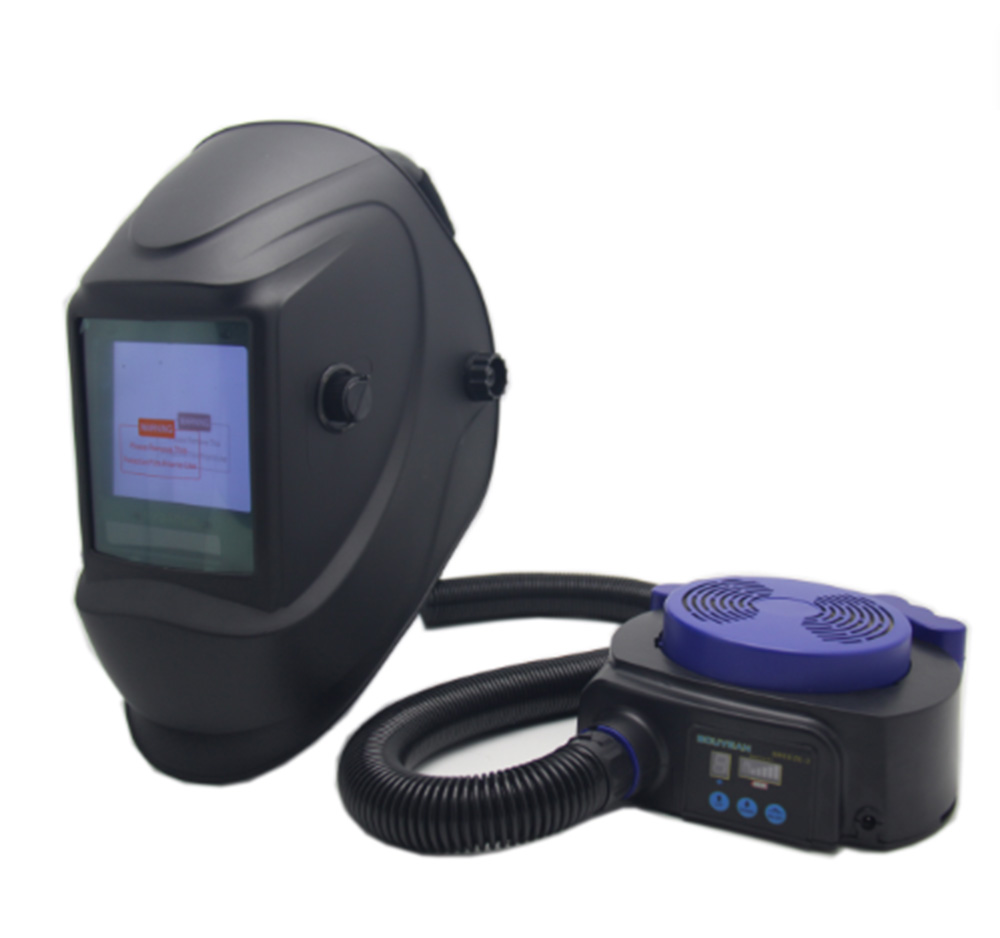
| Welding fumes + potential gas exposure | Full facepiece or PAPR welding helmet |
| High heat + long shifts + gases | PAPR (most comfortable) |
| Workers with facial hair | PAPR (loose-fitting hood)—neither half mask nor full facepiece will seal |
The bottom line: If your hazard includes gases that can harm the eyes or airborne concentrations exceeding 10x the exposure limit, a half mask is not enough. Your workers need a full facepiece respirator.
At Junsee Group, we help customers make this decision every day. We provide:
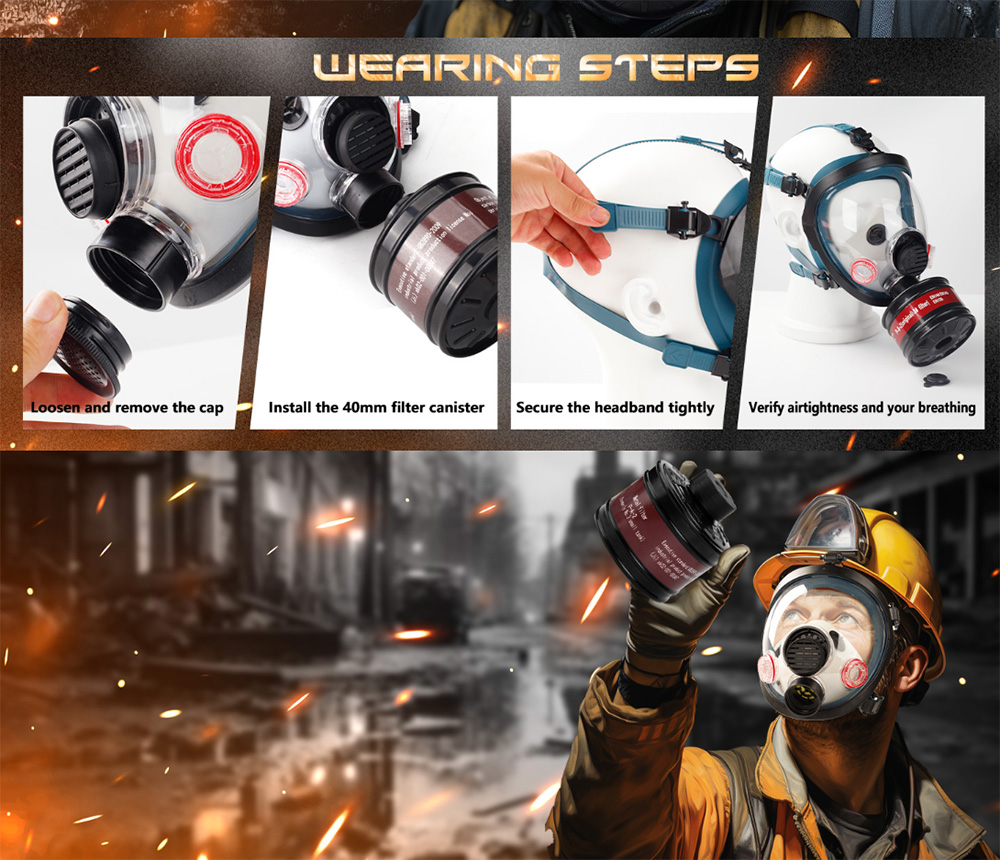
✅ Full facepiece respirators (NIOSH and CE certified)
✅ Matching gas cartridges and particulate filters
✅ Fit testing guidance
✅ Training materials for proper use
Is your workplace using half masks when full facepieces are required?
Contact Junsee Group today. Let us review your hazard assessment together—and help you select the right level of protection for your workers.

Your email address will not be published. Required fields are marked