
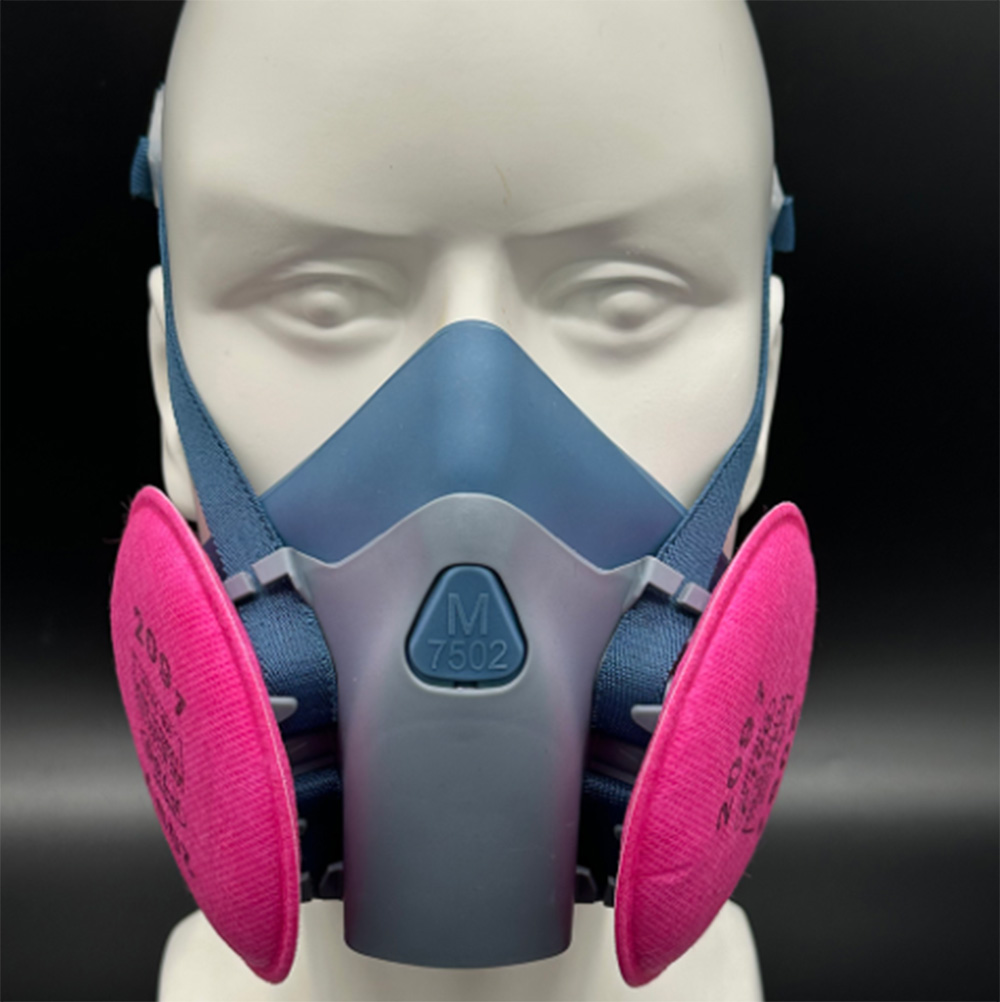
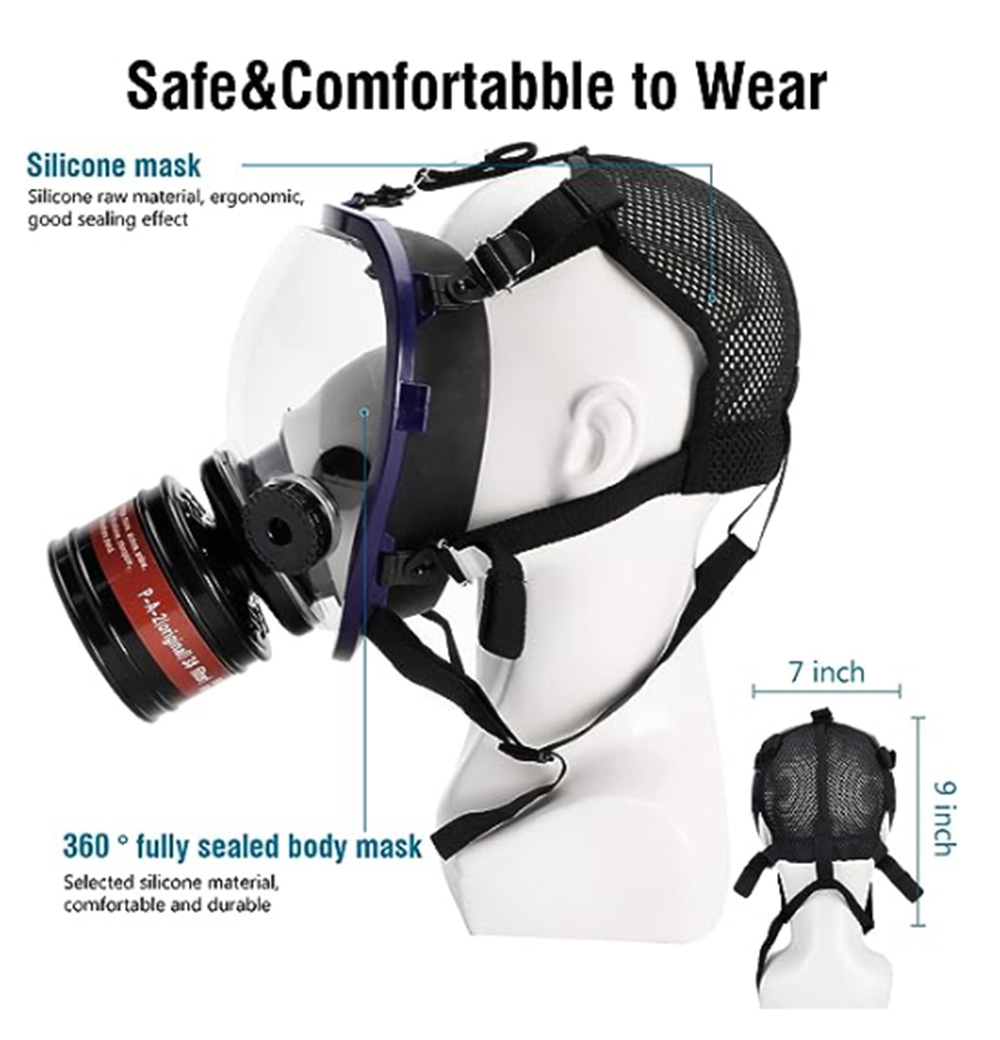
Every safety manager faces this decision: Do you invest in full facepiece respirators for your workers, or do you save money upfront with half masks + goggles?
At first glance, the choice seems simple. Half masks cost less. Goggles are cheap. Why pay more for a full facepiece?
But the real question is not about purchase price—it is about protection gap and total cost of ownership. When you calculate both, the answer often surprises people.
At Junsee Group, we help customers run these numbers every day. This article breaks down the protection gap (how much more protection a full facepiece provides) and the cost difference (what you actually pay over time)—so you can make an informed decision.
The protection gap between a full facepiece and a half mask + goggles is not small—it is dramatic. Here is why.
| Respirator Type | APF | Protection Level |
|---|---|---|
| Half mask | 10 | Reduces contaminant concentration by 10x |
| Full facepiece | 50 | Reduces contaminant concentration by 50x |
What this means in real terms:
| Outside Concentration | Half Mask (APF 10) Inside | Full Facepiece (APF 50) Inside |
|---|---|---|
| 100 ppm | 10 ppm | 2 ppm |
| 500 ppm | 50 ppm | 10 ppm |
| 1,000 ppm | 100 ppm | 20 ppm |
✅ Junsee Group calculation: A full facepiece provides 5 times more protection than a half mask against the same airborne concentration.
| Half Mask + Goggles | Full Facepiece | |
|---|---|---|
| Protects eyes from splashes/particles | ✅ Yes | ✅ Yes |
| Protects eyes from gases/vapors | ❌ No | ✅ Yes |
Why goggles fail against gases:
| Reason | Explanation |
|---|---|
| Vents | Most goggles have indirect vents for anti-fog—gases enter through vents |
| Edge leakage | Gases seep around the goggle seal (goggles are not gas-tight) |
| Gap between mask and goggles | Physical gap at nose bridge and cheeks allows gas entry |
⚠️ Critical protection gap: If your workplace contains gases or vapors that can irritate or damage eyes (chlorine, ammonia, formaldehyde, solvent vapors), a half mask + goggles provides zero eye protection. Full facepiece is required.
| Half Mask + Goggles | Full Facepiece | |
|---|---|---|
| Splash from front | Goggles protect eyes; gap at nose/cheeks allows splash to reach skin | Visor blocks splash from entire face |
| Splash from below | Splash can travel up under goggles | Visor extends below chin—more coverage |
| Splash from above | Forehead exposed | Visor protects forehead |
| Factor | Half Mask | Full Facepiece |
|---|---|---|
| Seal surface area | Smaller (nose, cheeks, chin) | Larger (forehead, temples, cheeks, chin) |
| Movement affects seal | Talking, smiling, yawning disrupt seal | Forehead/temple seal is stable during facial movements |
| Fit test pass rate | Lower (more sensitive to face shape) | Higher (larger seal area accommodates more face shapes) |
| Protection Factor | Half Mask + Goggles | Full Facepiece | Gap |
|---|---|---|---|
| APF | 10 | 50 | 5x better |
| Eye protection from gases | ❌ No | ✅ Yes | Infinite gap |
| Splash protection | Partial | Full | Significant |
| Seal stability | Moderate | High | Better |
✅ Junsee Group conclusion on protection: For any hazard involving gases that irritate eyes, splashes, or concentrations >10x PEL, the protection gap is so large that half mask + goggles is not an acceptable alternative—full facepiece is required.
Now let us talk money. The upfront cost difference is clear. But total cost of ownership (TCO) over 3-5 years tells a different story.
| Item | Half Mask + Goggles | Full Facepiece |
|---|---|---|
| Half mask respirator | 60 | — |
| Full facepiece respirator | — | 300 |
| Safety goggles | 30 | — (built into facepiece) |
| Total upfront cost | 90 | 300 |
Upfront gap: Full facepiece costs 3-5x more upfront than half mask + goggles.
| Item | Half Mask + Goggles | Full Facepiece |
|---|---|---|
| Filter cartridges (annual) | 150 | 150 (similar) |
| Goggle replacement (scratched/fogged) | 30 per year | $0 (visor is built-in) |
| Valve flap replacement | 10 per year | 10 per year |
| Head strap replacement (every 2 years) | 10 per year (prorated) | 20 per year (prorated) |
| Annual consumables cost | 200 | 180 |
Annual gap: Similar—full facepiece may actually be slightly lower because no goggle replacement.
| Item | Half Mask + Goggles | Full Facepiece |
|---|---|---|
| Qualitative fit test (QLFT) | 75 | 75 |
| Quantitative fit test (QNFT) | 150 | 150 |
| Annual fit test cost | 150 | 150 |
Fit test gap: Same—both require annual fit testing.
This is where the math gets interesting.
| Factor | Half Mask + Goggles | Full Facepiece |
|---|---|---|
| Compliance rate (typical) | 60-75% | 80-90% |
| Unprotected minutes per 8-hour shift (assuming 70% vs 85% compliance) | 144 minutes (2.4 hours) | 72 minutes (1.2 hours) |
| Risk of overexposure incident | Baseline | ~50% lower |
| Heat stress / discomfort | Moderate (goggles fog, mask hot) | Moderate (full face also warm, but no goggle fog) |
| Productivity loss from discomfort | Low to moderate | Low |
Let us run the numbers for a medium-sized workplace with 50 workers over 5 years.
| Assumption | Value |
|---|---|
| Number of workers | 50 |
| Shifts per year | 250 |
| Filter replacement | $100 per worker per year (same for both) |
| Fit testing cost | $75 per worker per year (same for both) |
| Goggle replacement (half mask only) | $20 per worker per year |
| Valve flap replacement | $8 per worker per year (both) |
| Head strap replacement (half mask) | $8 per worker per year (prorated) |
| Head strap replacement (full face) | $15 per worker per year (prorated) |
| Facepiece/visor replacement (full face) | $30 per worker per year (prorated—visor scratches) |
| Cost Category | Half Mask + Goggles (50 workers) | Full Facepiece (50 workers) |
|---|---|---|
| Initial equipment | 50 × 3,000 | 50 × 11,000 |
| Filters (5 years) | 50 × 25,000 | 50 × 25,000 |
| Goggle replacement (5 years) | 50 × 5,000 | $0 |
| Valve flaps (5 years) | 50 × 2,000 | 50 × 2,000 |
| Head straps (5 years) | 50 × 2,000 | 50 × 3,750 |
| Visor/facepiece replacement (5 years) | $0 (half mask has no visor) | 50 × 7,500 |
| Fit testing (5 years) | 50 × 18,750 | 50 × 18,750 |
| Total 5-Year TCO | $55,750 | $68,000 |
| Half Mask + Goggles | Full Facepiece | |
|---|---|---|
| 5-year TCO (50 workers) | $55,750 | $68,000 |
| Annual cost per worker | $223 | $272 |
| 5-year difference | — | +$12,250 (22% higher) |
✅ Junsee Group finding: Full facepiece costs approximately 20-25% more over 5 years than half mask + goggles—not 3-5x more as upfront prices suggest.
The TCO calculation above assumes both options provide equivalent protection. They do not.
When you factor in the protection gap, the value equation changes dramatically.
| Factor | Half Mask + Goggles | Full Facepiece |
|---|---|---|
| APF | 10 | 50 |
| Effective protection (APF × compliance) | 10 × 70% = APF 7 effective | 50 × 85% = APF 42.5 effective |
| Cost per unit of effective protection ($ per year per APF point) | 31.86 | 6.40 |
✅ Junsee Group calculation: Full facepiece provides 6x more effective protection per dollar spent than half mask + goggles.
For many hazards, the comparison is irrelevant because half mask + goggles is not acceptable by safety standards.
| Condition | Is Half Mask + Goggles Acceptable? | Why |
|---|---|---|
| Gases/vapors that irritate eyes | ❌ No | Goggles do not protect eyes from gases |
| Chemical splash risk | ❌ No | Gap between mask and goggles allows splash entry |
| Concentration 10x-50x PEL | ❌ No | APF 10 insufficient (need APF 50) |
| High-speed particles (grinding) | ⚠️ Maybe (if impact goggles + face shield) | Face shield + goggles is bulky; full facepiece simpler |
| Dust only, low concentration | ✅ Yes | Half mask + goggles is adequate |
✅ Junsee Group conclusion: If your hazard requires full facepiece by regulation or good practice, the cost comparison is moot—half mask + goggles is not a legal or safe option.
| If Your Workplace Has… | Recommended Solution | Why |
|---|---|---|
| Dust only (wood, grain, dry powder) – concentration <10x PEL | Half mask + goggles | Adequate protection at lower cost |
| Fumes only (welding, soldering) – no eye irritation | Half mask + goggles or full face | Both work; cost decides |
| Gases that irritate eyes (chlorine, ammonia, solvents) | Full facepiece required | Half mask + goggles not acceptable for eye protection |
| Chemical splash risk | Full facepiece required | Gap in half mask + goggles creates entry point |
| Concentration 10x-50x PEL | Full facepiece required | APF 10 insufficient; need APF 50 |
| Mixed hazards (dust + gas) | Full facepiece with combination filters | Better seal and eye protection |
| Tight budget, low hazard, clean-shaven workers | Half mask + goggles | Acceptable when properly matched to hazard |
| Workers cannot pass half mask fit test | Full facepiece (try first) or PAPR | Larger seal area may improve fit test pass rate |
| Workers have facial hair | Neither — need PAPR with loose hood | Both require clean-shaven seal |
| Factor | Assessment |
|---|---|
| Hazard | Wood dust |
| Eye hazard | Particles only (no gases) |
| Concentration | Typically <10x PEL |
| Recommendation | Half mask + goggles |
| Rationale | Adequate protection; lower cost; workers comfortable |
| Factor | Assessment |
|---|---|
| Hazard | Organic solvent vapors + liquid splash |
| Eye hazard | Vapors irritate eyes; splashes can blind |
| Concentration | 5-15x PEL |
| Recommendation | Full facepiece required |
| Rationale | Half mask + goggles does not protect eyes from vapors; gap allows splash entry |
| Factor | Assessment |
|---|---|
| Hazard | Metal fumes (zinc, lead, manganese) |
| Eye hazard | Fumes not typically irritating to eyes (but particles present) |
| Concentration | Variable—can exceed 10x PEL |
| Heat | High—workers remove PPE due to discomfort |
| Recommendation | PAPR with hood (more comfortable in heat) |
| Rationale | Neither half mask nor full facepiece is comfortable in extreme heat; PAPR provides cooling airflow |
| Dimension | Half Mask + Goggles | Full Facepiece | Winner |
|---|---|---|---|
| Upfront cost (per worker) | 90 | 300 | Half mask + goggles |
| 5-year TCO (per worker) | ~$223/year | ~$272/year | Half mask + goggles (20-25% lower) |
| APF | 10 | 50 | Full facepiece (5x better) |
| Eye protection from gases | ❌ No | ✅ Yes | Full facepiece (infinite gap) |
| Splash protection | Partial | Full | Full facepiece |
| Seal stability | Moderate | High | Full facepiece |
| Effective protection per dollar | $31.86 per APF point | $6.40 per APF point | Full facepiece (5x better value) |
| Acceptable for gas/eye hazards | ❌ No | ✅ Yes | Full facepiece (required) |
| If Your Priority Is… | Choose… |
|---|---|
| Lowest upfront cost | Half mask + goggles (but verify hazard does not require full facepiece) |
| Lowest 5-year TCO | Half mask + goggles (20-25% lower) |
| Highest protection | Full facepiece (5x APF, eye protection from gases, better splash protection) |
| Best value (protection per dollar) | Full facepiece (5x more effective protection per dollar) |
| Compliance with regulations for gas/eye hazards | Full facepiece required—half mask + goggles not acceptable |
| Workers with fit test challenges | Full facepiece (higher pass rate) |
| High heat environment | Neither—consider PAPR |
The bottom line: Half mask + goggles costs less over 5 years—about 20-25% less. But for many hazards (gases that irritate eyes, splash risks, concentrations >10x PEL), half mask + goggles is not acceptable by safety standards. When it is acceptable, it is the economical choice. When it is not, the cost comparison does not matter—full facepiece is required.
At Junsee Group, we help customers make this decision based on their specific hazards—not just spreadsheet math.

Your email address will not be published. Required fields are marked