
Not all PAPRs are the same.
When you decide that a Powered Air Purifying Respirator (PAPR) is right for your workplace, you face another important decision: belt-mounted or helmet-mounted?
These two mainstream PAPR styles look similar on the surface – both use a battery-powered blower to deliver filtered air to the wearer. But the user experience, application fit, comfort, and cost profile are dramatically different.
At Junsee Group, we help safety managers choose between belt PAPR vs helmet PAPR every day. This comparison breaks down the differences so you can select the right style for your specific workers and hazards.
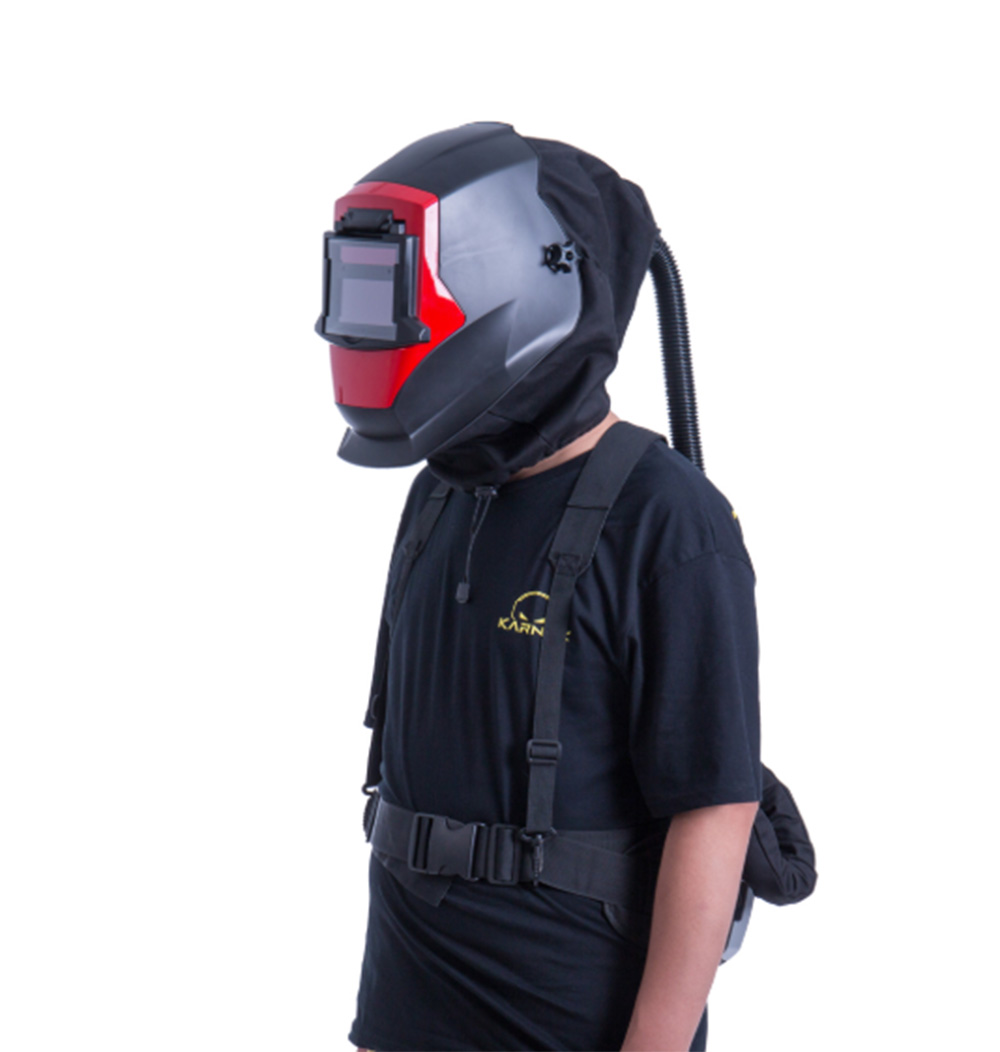
| Feature | Belt-Mounted PAPR | Helmet-Mounted PAPR |
|---|---|---|
| Blower location | Worn on a belt around the waist | Integrated into the helmet/headgear |
| Battery location | On the belt (separate or integrated) | On the back of the helmet or in helmet shell |
| Air delivery | Blower → hose → headpiece | Blower → short internal path → face |
| Headpiece weight | Light (only headpiece/hood) | Heavier (blower + battery in/on helmet) |
| Overall system weight | Distributed (blower on hips + headpiece light) | Concentrated (all weight on head and neck) |
| Typical headpiece type | Loose-fitting hood or tight-fitting half mask/full facepiece | Loose-fitting helmet or tight-fitting full facepiece |
| Common applications | Healthcare, pharma, chemical, general industry | Welding, construction, heavy industry, high-mobility tasks |
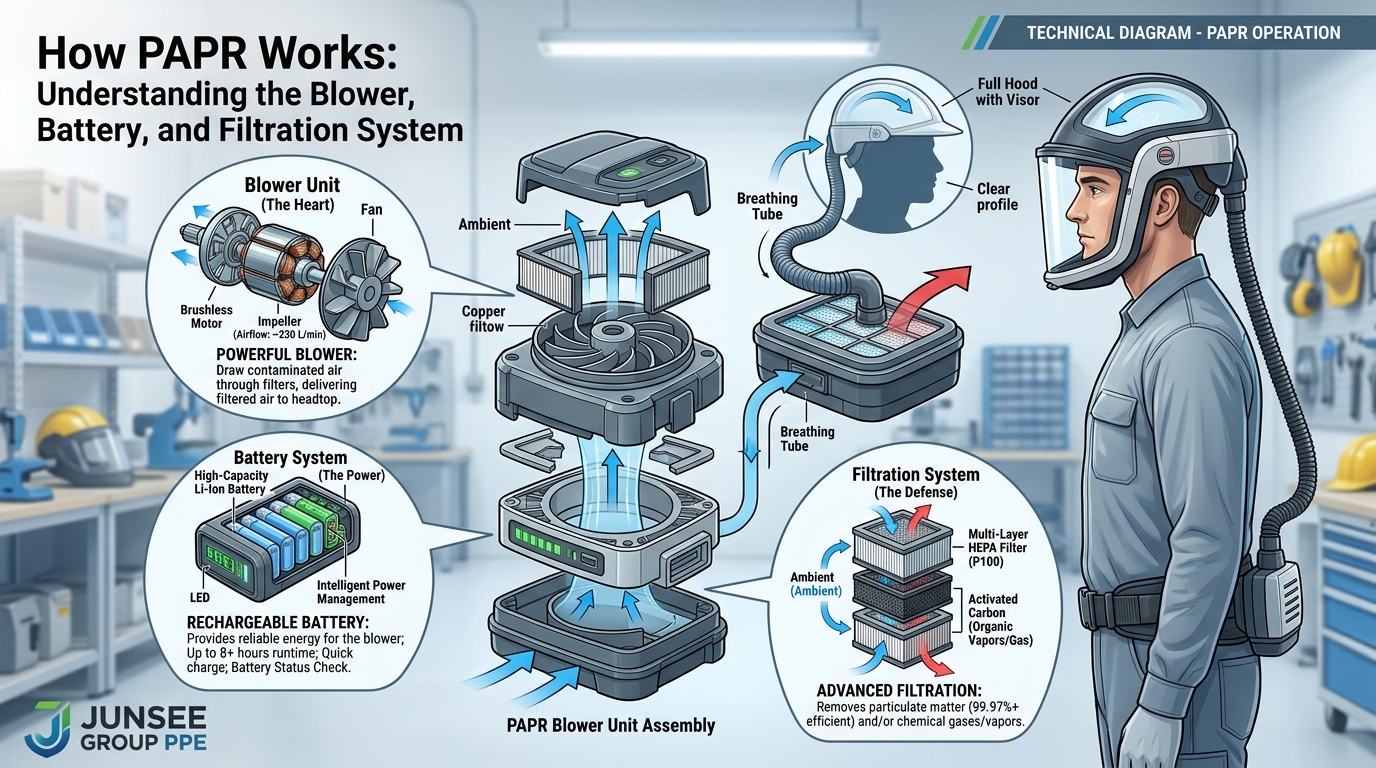
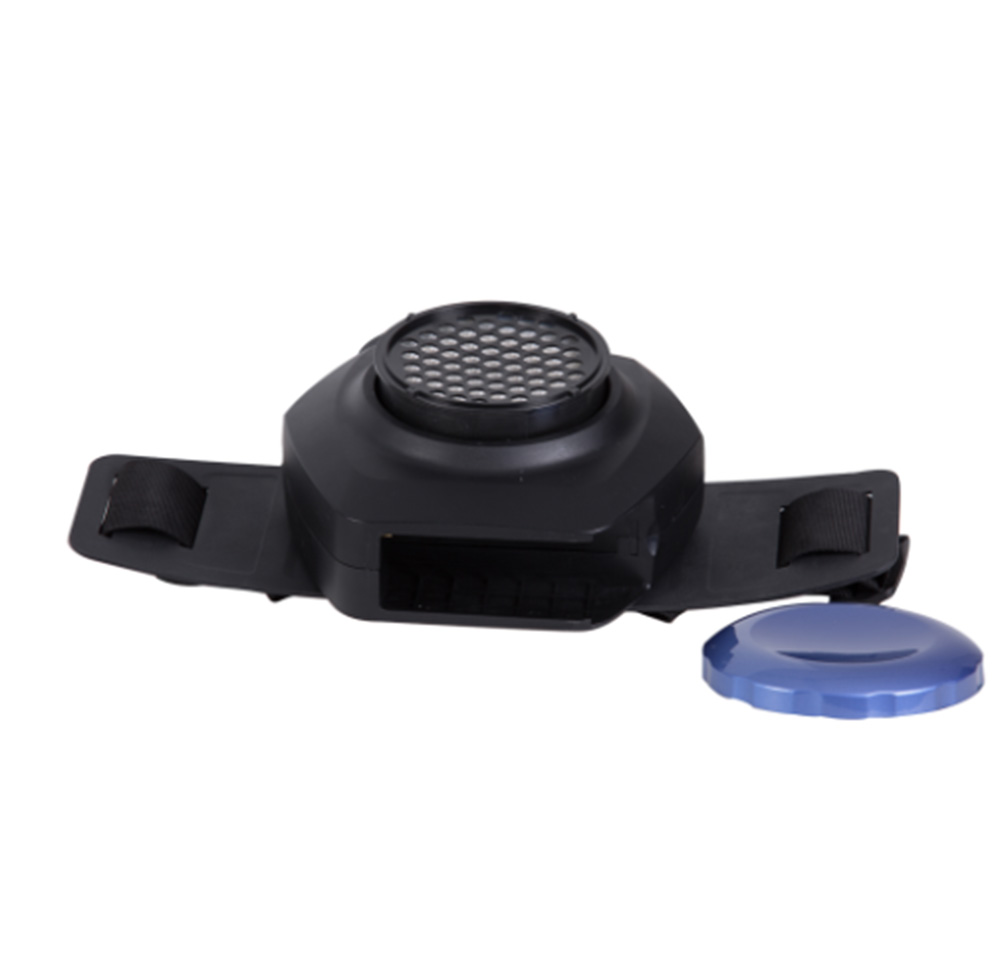
A belt-mounted PAPR consists of a blower unit (with battery and filters) clipped to a belt around the wearer's waist. A flexible breathing hose connects the blower to a separate headpiece – typically a loose-fitting hood, full facepiece, or half mask. The blower pulls air through filters and pushes it up the hose to the wearer's breathing zone.
| Advantage | Why It Matters |
|---|---|
| Lightweight on head | Only the headpiece (often just a lightweight hood) sits on the head. The heavy components (blower, battery, filters) hang on the hips. This dramatically reduces neck fatigue during long shifts. |
| Modular flexibility | The same belt blower can be used with multiple headpieces – a hood for general work, a full facepiece for chemical splash risk, a half mask for tight spaces. One blower serves many applications. |
| Easier to service | Filters and batteries are easily accessible on the belt. No need to remove the entire helmet to change a filter or swap a battery. |
| Better weight distribution | Carrying weight on the hips (the body's strongest load-bearing area) is much less fatiguing than carrying weight on the head and neck. |
| Compatibility with hard hats | Many belt-mounted PAPR hoods are designed to fit over standard hard hats – allowing head protection without a dedicated PAPR helmet. |
| Lower cost per unit | Belt-mounted systems are generally less expensive than helmet-mounted systems because the headpiece is simpler. |
| Cooler in hot environments | The blower and battery are not sitting on the head – no additional heat source strapped to the skull. |
| Disadvantage | Why It Matters |
|---|---|
| Hose management | The breathing hose can snag on equipment, door handles, or machinery – a trip hazard and a nuisance. |
| Belt required | Workers must wear a sturdy belt. In some jobs (e.g., wearing full body suits), accessing the belt can be difficult. |
| Less integrated | More loose parts – blower, hose, headpiece. Donning takes longer (belt first, then headpiece, then connect hose). |
| Can interfere with other belt-worn gear | Tool belts, fall protection harnesses, and instrument packs compete for belt space. |
| Hose can be uncomfortable in hot environments | The hose resting against the body can trap heat in high-temperature work. |
| Industry | Why Belt-Mounted Works Well |
|---|---|
| Healthcare | Lightweight hoods are comfortable for long shifts. No heavy components on the head. Easy to don over surgical scrubs. |
| Pharmaceutical manufacturing | Quick filter changes between batches. Hood fits over hairnets and bouffant caps. |
| Chemical blending | Full facepiece option for splash protection. Blower stays clean on belt while worker reaches into mixing vessels. |
| General factory work | Workers already wear belts for tool pouches. Adding a PAPR blower is natural. |
| Cleanroom operations | Lightweight hoods with smooth surfaces are easy to clean. Blower worn outside cleanroom garment or under specialized PAPR suits. |
✅ Junsee Group recommendation: Choose belt-mounted PAPR when neck fatigue is a concern, when you need modular flexibility (one blower, multiple headpieces), or when workers already wear belts for other equipment.
A helmet-mounted PAPR integrates the blower and battery directly into the helmet or headpiece. The entire system – filters, blower, battery, and head protection – is worn on the head. Some designs place the battery on the back of the helmet for counterbalance; others integrate everything into the helmet shell.
| Advantage | Why It Matters |
|---|---|
| No hose – no snag hazards | Everything is on the head. No dangling hose to catch on equipment, doorways, or moving machinery. Essential for high-mobility jobs. |
| Faster donning | One piece: put on the helmet, turn it on, and go. No belt to fasten, no hose to connect, no headpiece to attach. |
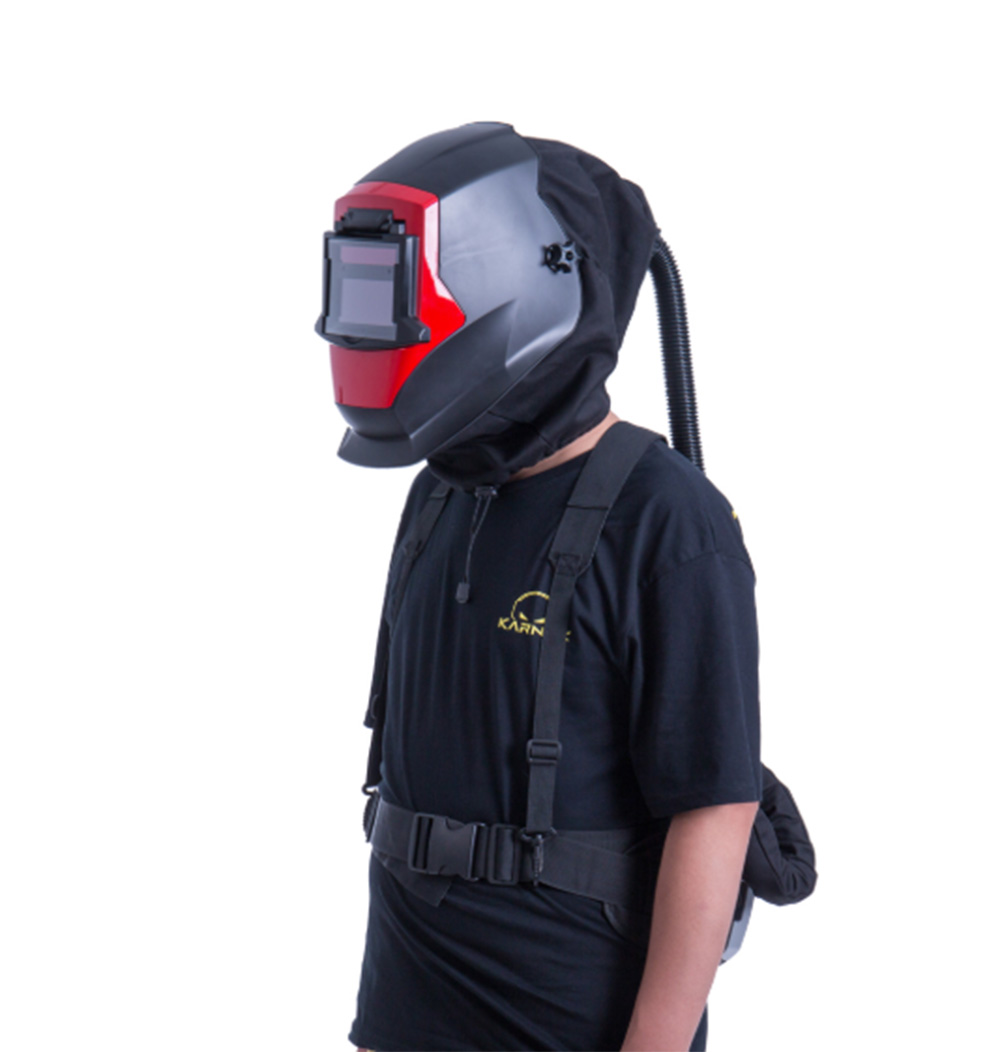
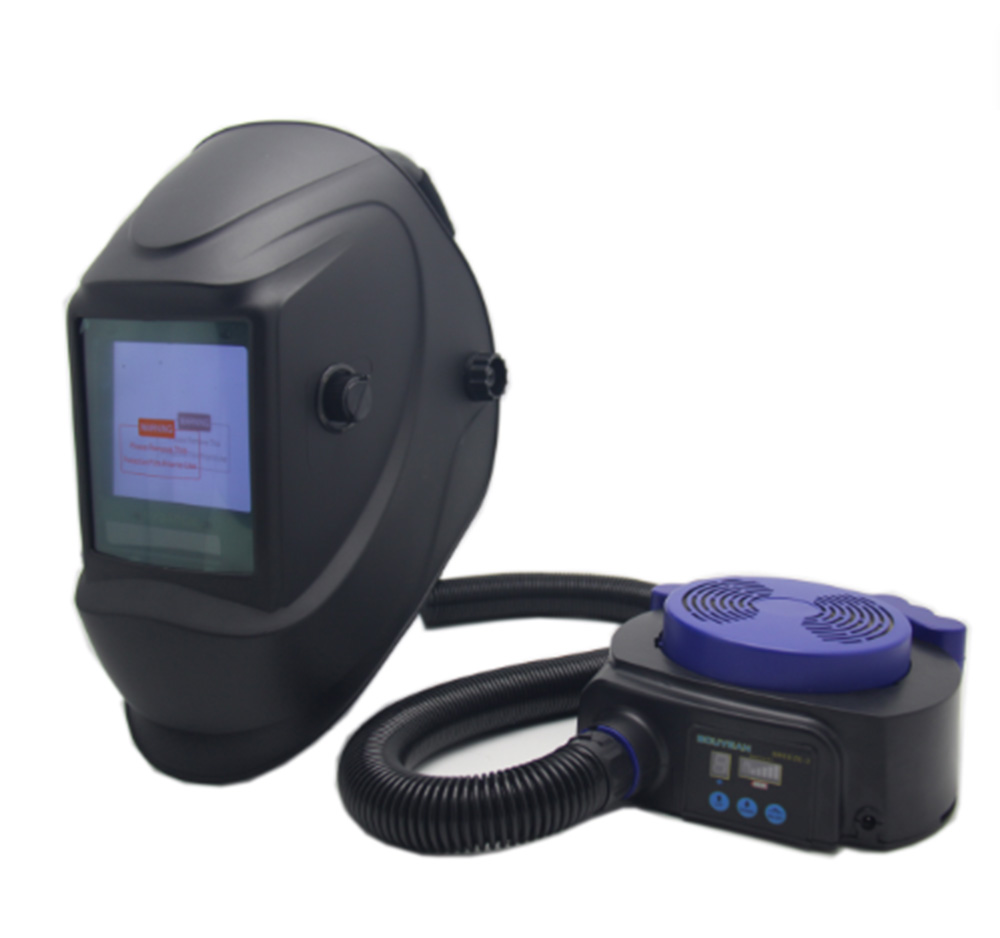
| Excellent for welding | Integrated PAPR welding helmets combine auto-darkening welding protection with powered air – one unit, perfect for welders. |
| Better for climbing and tight spaces | No belt and no hose means no restrictions when climbing ladders, crawling through manways, or working in confined spaces. |
| Integrated head protection | The helmet provides impact protection (hard hat rating) and PAPR in one certified unit. |
| No belt interference | Leaves the waist free for fall protection harnesses, tool belts, or other PPE without competition for space. |
| Less to carry | One piece of equipment instead of two (blower + separate headpiece). |
| Disadvantage | Why It Matters |
|---|---|
| Heavier on the head | All components (blower, battery, filters, helmet) sit on the head. Typical weight: 1.5-2.5 kg (3.3-5.5 lbs). This causes neck fatigue during long shifts. |
| Higher cost | Helmet-mounted systems are more complex to manufacture – typically 20-50% more expensive than belt-mounted equivalents. |
| Filter changes are on the head | Changing filters requires removing the helmet or reaching up to the head – awkward and increases exposure risk if done in contaminated area. |
| Battery swaps are on the head | Same issue – on-helmet battery changes are less convenient than belt-mounted swaps. |
| Less modular | The helmet is dedicated to that PAPR system. You cannot easily swap to a different headpiece for different tasks. |
| Can be top-heavy | Some designs have poor weight distribution, causing the helmet to tilt forward or backward. |
| Heat buildup | The blower and battery generate heat – and that heat is trapped against the head by the helmet. |
| Industry | Why Helmet-Mounted Works Well |
|---|---|
| Welding | Integrated PAPR welding helmets are the gold standard. No separate belt to interfere with welding position. No hose to snag on rebar or equipment. |
| Construction | Workers already wear hard hats. Helmet-mounted PAPR adds respiratory protection without adding a separate belt unit that could interfere with fall protection. |
| Confined space entry | No hose to snag. No belt to restrict movement. One integrated unit that fits through manways. |
| Mining | Rugged, integrated design with no loose components. Easy to don and doff at the cage. |
| Utility work (line workers, arborists) | Climbing poles or trees – belt-mounted PAPR would be impossible. Helmet-mounted is the only practical solution. |
| Scaffold erection | Workers are already wearing fall protection harnesses. Helmet-mounted PAPR leaves the waist free for the harness belt. |
✅ Junsee Group recommendation: Choose helmet-mounted PAPR when workers climb, weld, wear fall protection, work in tight spaces, or when a snagging hose creates a serious hazard.
| Comparison Factor | Belt-Mounted PAPR | Helmet-Mounted PAPR |
|---|---|---|
| Weight on head | Light (0.2-0.5 kg / 0.4-1.1 lbs) | Heavy (1.5-2.5 kg / 3.3-5.5 lbs) |
| Neck fatigue (8-hour shift) | Low | Moderate to High |
| Hose snag hazard | Present – requires management | None |
| Donning time | 45-90 seconds | 15-30 seconds |
| Compatibility with other belt gear | Poor – competes for belt space | Excellent – leaves waist free |
| Compatibility with fall protection | Poor – belt interference | Excellent – no interference |
| Filter/battery change convenience | Excellent (waist-level access) | Poor (on-head access) |
| Modular flexibility | High (one blower, multiple headpieces) | Low (dedicated helmet) |
| Welding application | Possible but awkward | Excellent (integrated welding helmets) |
| Climbing / confined space | Poor (hose snags, belt catches) | Excellent |
| Heat environment | Good (blower off the head) | Fair (blower/heat on head) |
| Typical cost (complete system) | 1,200 | 2,000 |
| Replacement parts cost | Lower (modular = cheaper individual components) | Higher (integrated = expensive helmet assembly) |
| Condition | Why |
|---|---|
| Workers perform long shifts (8+ hours) | Neck fatigue is a real concern – lighter headpiece wins |
| Workers do not wear fall protection or tool belts | Belt space is available |
| Multiple headpieces are needed for different tasks | Modular blower serves many applications |
| Budget is a primary concern | Belt-mounted systems cost less |
| Workers are in healthcare, pharma, or general manufacturing | Low snag risk, long shifts, need for comfort |
| Filter changes are frequent (high particulate loading) | Easy waist-level access to filters |
| You want to standardize on one blower for multiple departments | One belt unit can support hoods, facepieces, and half masks |
| Condition | Why |
|---|---|
| Workers climb (ladders, scaffolds, poles, towers) | No hose to snag – critical for climbing safety |
| Workers weld | Integrated welding PAPR helmets are the industry standard |
| Workers wear fall protection harnesses | Waist must be free for harness belt |
| Workers work in confined spaces (tanks, manholes, ductwork) | No hose to snag, no belt to catch |
| Fast donning is critical (emergency response) | One piece – put on and go |
| Snag hazards are everywhere (construction, demolition, forestry) | No hose to catch on rebar, branches, or debris |
| Workers prefer an integrated "all-in-one" solution | No separate components to track or lose |
| Factor | Application |
|---|---|
| Workers | 50 operators, 8-hour shifts, weighing and blending potent APIs |
| Why belt-mounted | Long shifts – neck fatigue would be severe with helmet-mounted. Workers wear cleanroom garments – belt blower fits over or under. Quick filter changes at waist between batches. |
| Headpiece | Loose-fitting hood with particle filter |
| Result | High compliance, low fatigue, successful fit testing (none required due to loose-fitting hood) |
| Factor | Application |
|---|---|
| Workers | 20 welders, 6-hour shifts, welding galvanized steel in open structure |
| Why helmet-mounted | Workers climb columns and beams – a hose would snag constantly, creating a fall hazard. Welders already wear welding helmets – integrated PAPR adds respiratory protection without changing workflow. |
| Headpiece | Auto-darkening welding helmet with integrated PAPR |
| Result | No snag hazards. Welders report cooler, more comfortable breathing. No belt interference with fall protection harnesses. |
| Factor | Application |
|---|---|
| Workers | 30 maintenance technicians, variable shifts, multiple tasks |
| Why both | Different tasks require different solutions. Tank entry (confined space) → helmet-mounted (no hose). Long-duration filter replacement (8-hour shift) → belt-mounted (lighter on head). |
| Solution | Junsee Group supplied both styles. Belt-mounted for long filtration shifts. Helmet-mounted for confined space entry. |
| Result | Right tool for each job. Workers trained on both systems. |
Belt-mounted vs helmet-mounted PAPR is not about which is "better" overall – it is about which is better for your specific workers, tasks, and environment.
| If Your Priority Is… | Choose… |
|---|---|
| Neck comfort during long shifts | Belt-mounted |
| No hose snag hazards | Helmet-mounted |
| Welding application | Helmet-mounted (integrated welding PAPR) |
| Pharma or healthcare | Belt-mounted |
| Climbing or fall protection | Helmet-mounted |
| Modular flexibility (multiple headpieces) | Belt-mounted |
| Budget | Belt-mounted |
| Fast donning | Helmet-mounted |
| Confined space entry | Helmet-mounted |
At Junsee Group, we offer both belt-mounted and helmet-mounted PAPR systems because we know that one size does not fit all. We help customers select the right style based on:
✅ Shift duration and work intensity
✅ Need for other PPE (fall protection, tool belts, hard hats)
✅ Work environment (confined spaces, climbing, open areas)
✅ Task-specific requirements (welding, chemical handling, cleanroom)
✅ Budget and total cost of ownership


Your email address will not be published. Required fields are marked