
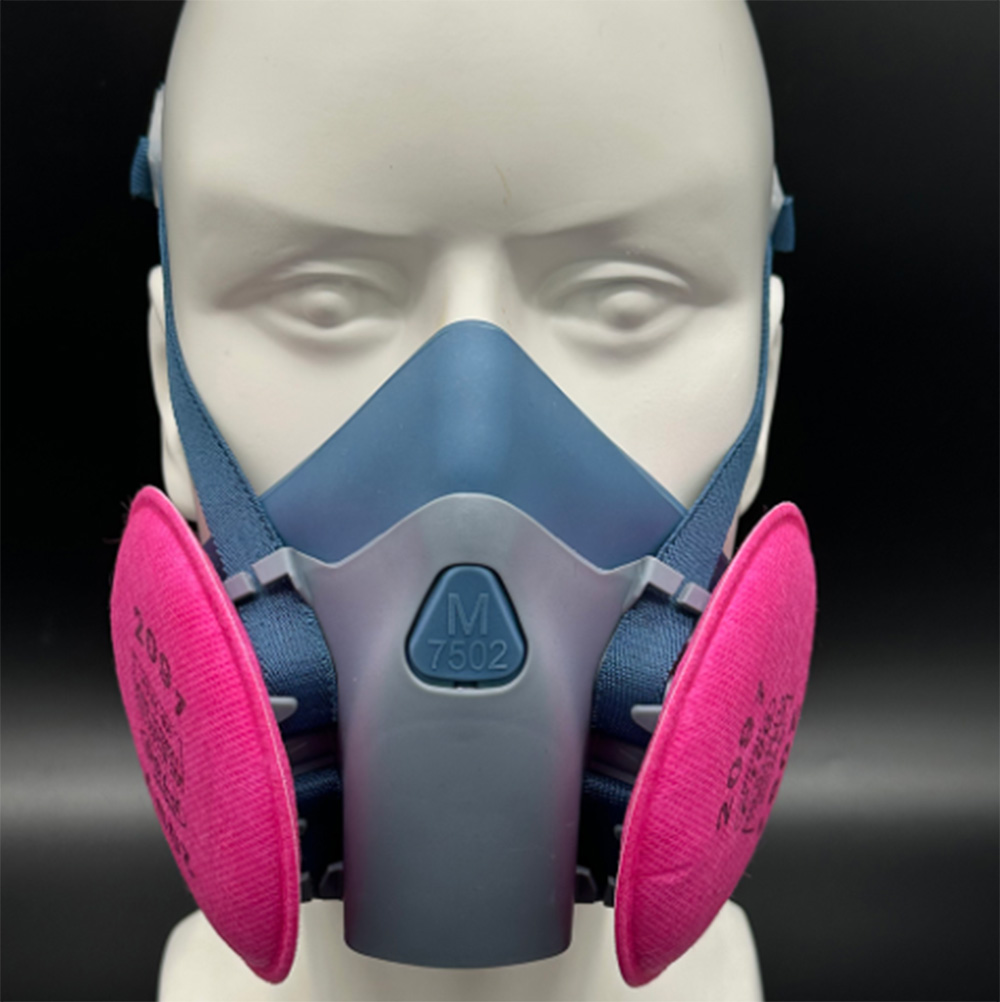
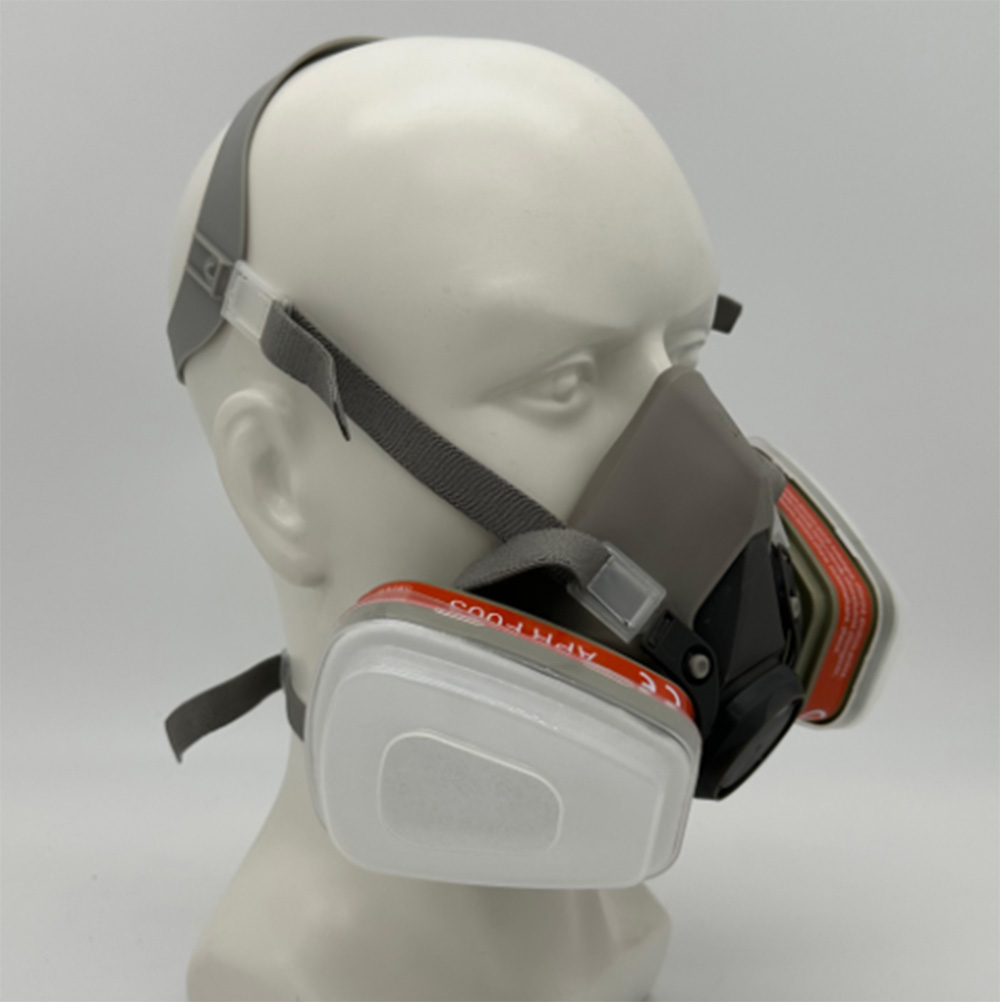
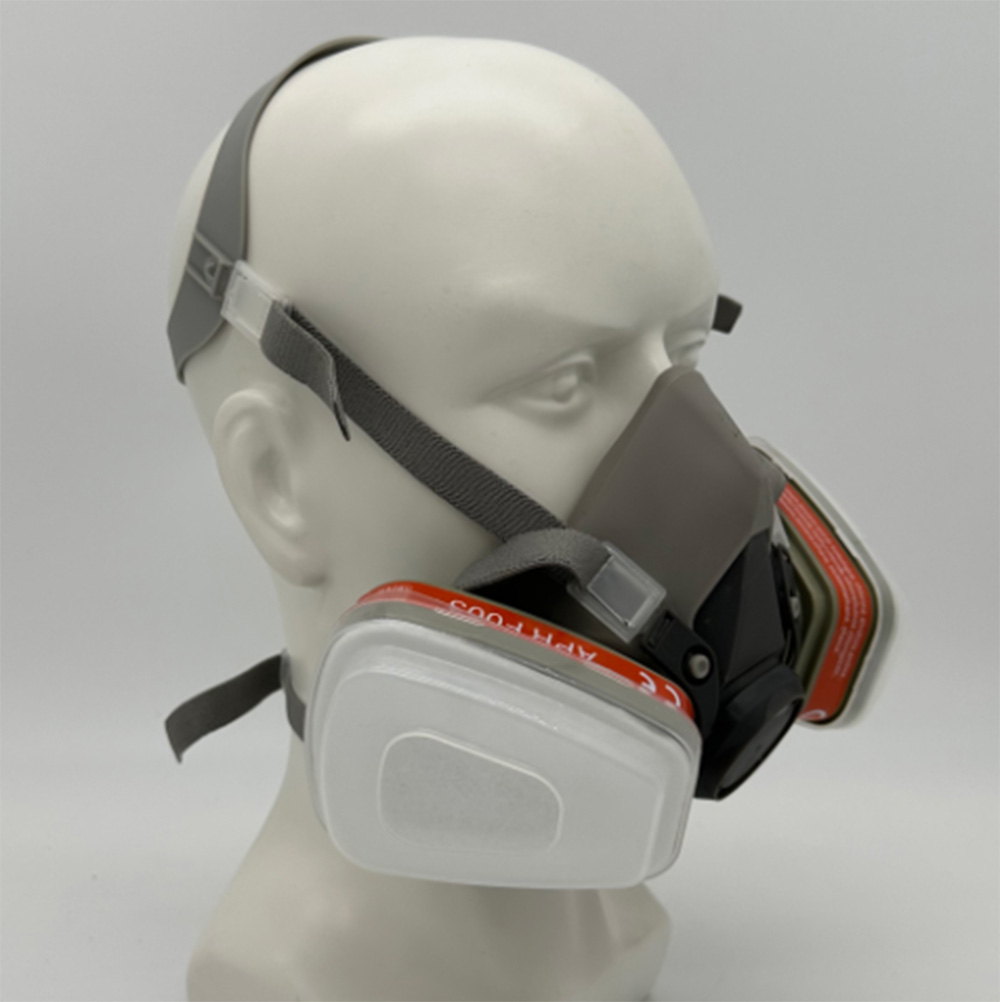
On paper, a half mask respirator with a pair of goggles looks like it offers the same protection as a full facepiece. Both cover the nose and mouth. Both have filters. Both protect the eyes with some form of eyewear.
But the protection gap between these two solutions is not small—it is dramatic.
At Junsee Group, we help safety managers understand this gap every day. A half mask + goggles may look like a full facepiece alternative, but when you examine protection factor, seal integrity, and eye protection from gases, the difference becomes clear.
This article calculates the protection gap between half mask + goggles and full facepiece across every dimension that matters—so you can make an informed decision for your workplace.
The Assigned Protection Factor (APF) is the workplace level of protection a respirator is expected to provide when used within a continuing, effective respiratory protection program .
| Outside Concentration | Half Mask (APF 10) Inside | Full Facepiece (APF 50) Inside |
|---|---|---|
| 100 ppm | 10 ppm | 2 ppm |
| 250 ppm | 25 ppm | 5 ppm |
| 500 ppm | 50 ppm | 10 ppm |
✅ Junsee Group calculation: A full facepiece provides 5 times more protection than a half mask against the same airborne concentration .
According to OSHA and NIOSH guidance, a half mask respirator is only adequate when the airborne contaminant concentration is no more than 10 times the permissible exposure limit (PEL) . If your industrial hygiene sampling shows concentrations above 10x PEL, a half mask is not sufficient—you need a full facepiece (APF 50) or higher .
| Hazard Concentration vs PEL | Required APF | Acceptable Solution |
|---|---|---|
| < 10x PEL | 10 | Half mask may be adequate |
| 10x – 50x PEL | >10 | Half mask not adequate—full facepiece (APF 50) required |
| > 50x PEL | >50 | Full facepiece may be inadequate—PAPR or SCBA required |
The most critical—and most misunderstood—difference between these two solutions is how they protect the eyes.
Why goggles fail against gases:
Gas molecules are thousands of times smaller than particles—they pass through the vents in most goggles
Gases seep around the edges of the goggle seal (goggles are not gas-tight)
There is a physical gap between the top of the half mask and the bottom of the goggles
Gases can enter from below, above, and the sides of the goggles
⚠️ Critical protection gap: If your workplace contains gases or vapors that can irritate or damage eyes (chlorine, ammonia, formaldehyde, solvent vapors), a half mask + goggles provides zero eye protection. Full facepiece is required .
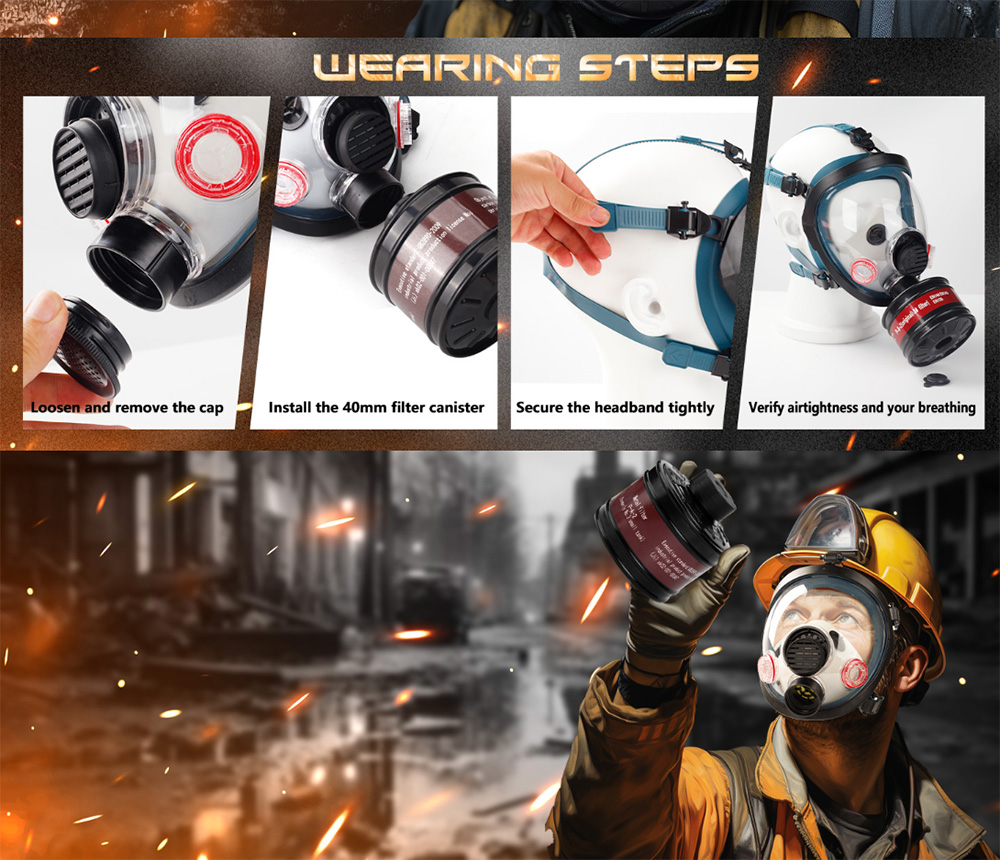
A full facepiece covers the entire face, from roughly the hairline to below the chin, with a built-in visor that provides eye and face protection .
| Protection Feature | How It Works |
|---|---|
| Eyes sealed in clean air | Eyes are inside the same sealed environment as the nose and mouth |
| No gaps | The visor is integrated—no gap between respiratory and eye protection |
| Gas protection for eyes | Gases cannot reach the eyes because they are sealed inside the facepiece |
| Splash protection | Visor covers forehead, cheeks, nose, and chin—no exposed skin |
✅ Junsee Group takeaway: A half mask + goggles cannot protect eyes from gases. A full facepiece can. This is not a minor difference—it is a fundamental protection gap.
✅ Junsee Group takeaway: A full facepiece protects the entire face, not just the eyes. A half mask + goggles leaves significant areas of the face exposed to chemical splashes.
The seal between the respirator and the face determines whether contaminants can enter.
Studies measuring protection factors of respirators as worn under simulated working conditions (normal breathing, smiling, moving head, talking) found that:
Protection factors for half masks ranged widely, with some performing poorly during facial movements
Full facepieces showed more stable seal performance across different exercises
Day-to-day variation in fit was more significant for half masks than full facepieces
✅ Junsee Group takeaway: A full facepiece maintains a more stable seal during head movement and facial expressions, providing more consistent real-world protection.
| Protection Factor | Half Mask + Goggles | Full Facepiece | Gap |
|---|---|---|---|
| APF | 10 | 50 | 5x better |
| Eye protection from gases | ❌ No | ✅ Yes | Infinite gap |
| Eye protection from splashes | ✅ Yes (goggles) | ✅ Yes (visor) | Comparable |
| Face protection from splashes | ❌ No (face exposed) | ✅ Yes (visor covers face) | Significant |
| Seal stability during movement | Moderate | High | Better |
| Protects against concentration >10x PEL | ❌ No | ✅ Yes | Required |
| Key Principle | Why It Matters |
|---|---|
| APF 10 vs 50 = 5x protection gap | Full facepiece provides significantly higher respiratory protection |
| Goggles DO NOT protect eyes from gases | Gases pass through vents and gaps—only full facepiece seals eyes |
| The gap between mask and goggles is a vulnerability | Splashes and gases can enter through this gap |
| Full facepiece protects the entire face | Visor covers forehead, cheeks, and chin—not just eyes |
| Half mask + goggles may look similar but is not equivalent | The protection gap is real and measurable |
The bottom line: A half mask + goggles may appear to offer the same protection as a full facepiece—but the numbers tell a different story. APF 10 vs 50. No eye protection from gases vs full protection. Face exposed vs face covered. If your hazard includes gases that irritate eyes or concentrations above 10x PEL, the protection gap is so large that half mask + goggles is not an acceptable alternative—full facepiece is required.
At Junsee Group, we help customers make this decision based on their specific hazard assessments—not assumptions about what "looks similar."


Your email address will not be published. Required fields are marked