
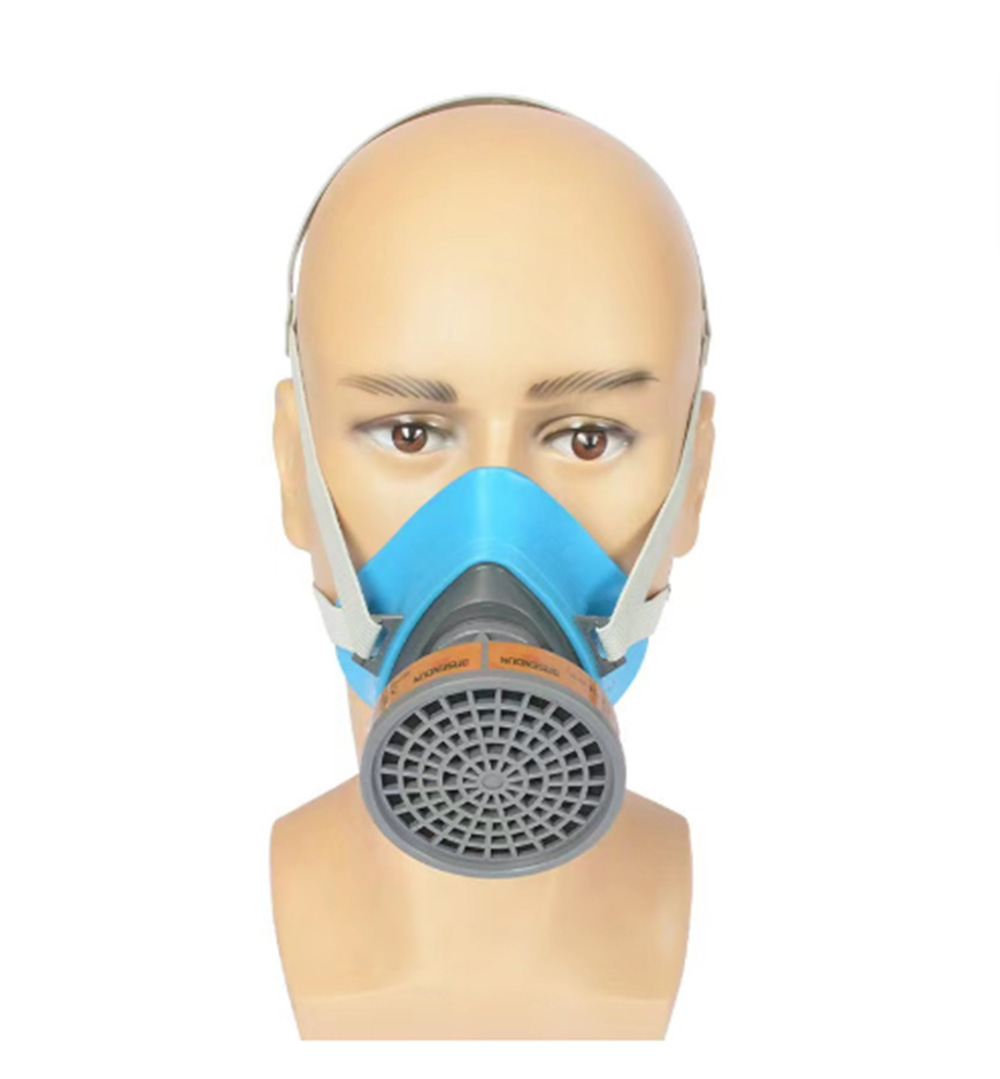
Walk onto any construction site or workshop, and you will see them. Workers wearing flimsy white masks over their mouths. They look similar to a half mask respirator. They cover the nose and mouth. They protect against dust.
But a dust mask is not the same as a half mask respirator – and relying on a dust mask when you need a respirator can be a costly and dangerous mistake.
At Junsee Group, we see this confusion every day. Workers wear dust masks in environments where they need real respiratory protection. Safety managers assume a dust mask is "good enough" because it looks similar.
This article compares half mask vs dust mask, explains their key differences, and tells you when to upgrade from a dust mask to a half mask respirator.
The term "dust mask" is used loosely. In safety, it typically means a disposable filtering facepiece designed only for nuisance dust – not for toxic or hazardous materials.
| Feature | Typical Dust Mask |
|---|---|
| Design | Disposable, filtering facepiece (the mask itself is the filter) |
| Protection | Particulates only (dust, pollen, dry powders) – not gases or vapors |
| Fit | One size – does not seal tightly to the face (no adjustable head straps) |
| Durability | Single use or limited reuse (disposable) |
| APF (Assigned Protection Factor) | Not rated – often less than 10 (no formal APF) |
| Approval | Not NIOSH-approved for occupational use (unless labeled as N95) |
| Cost | $0.50 – $2.00 each |
N95 is a NIOSH-approved particulate respirator. It is technically a "dust mask" but has certified protection (APF 10 for tight-fitting N95s with proper fit testing). The confusing part is that many people call N95s "dust masks" too.
| Type | NIOSH-Approved? | APF | Reusable? | Protects Against |
|---|---|---|---|---|
| Nuisance dust mask (non-NIOSH) | No | None (unrated) | No | Non-toxic dust only |
| N95 respirator | Yes | 10 | No (limited reuse) | Particulates |
| Half mask respirator | Yes | 10 | Yes | Particulates, gases, vapors |
✅ Junsee Group clarification: A "dust mask" can mean a cheap nuisance mask (non-NIOSH) or an N95 respirator (NIOSH-approved). The distinction matters enormously.
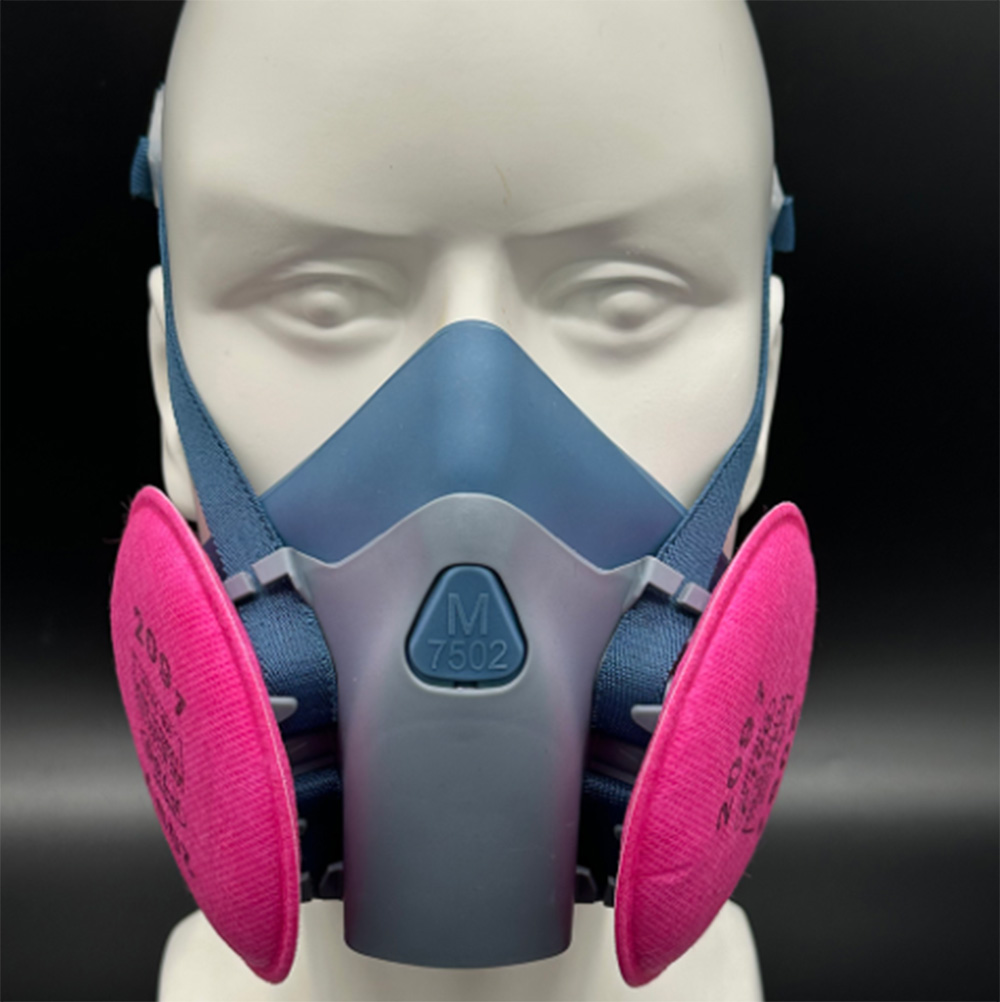
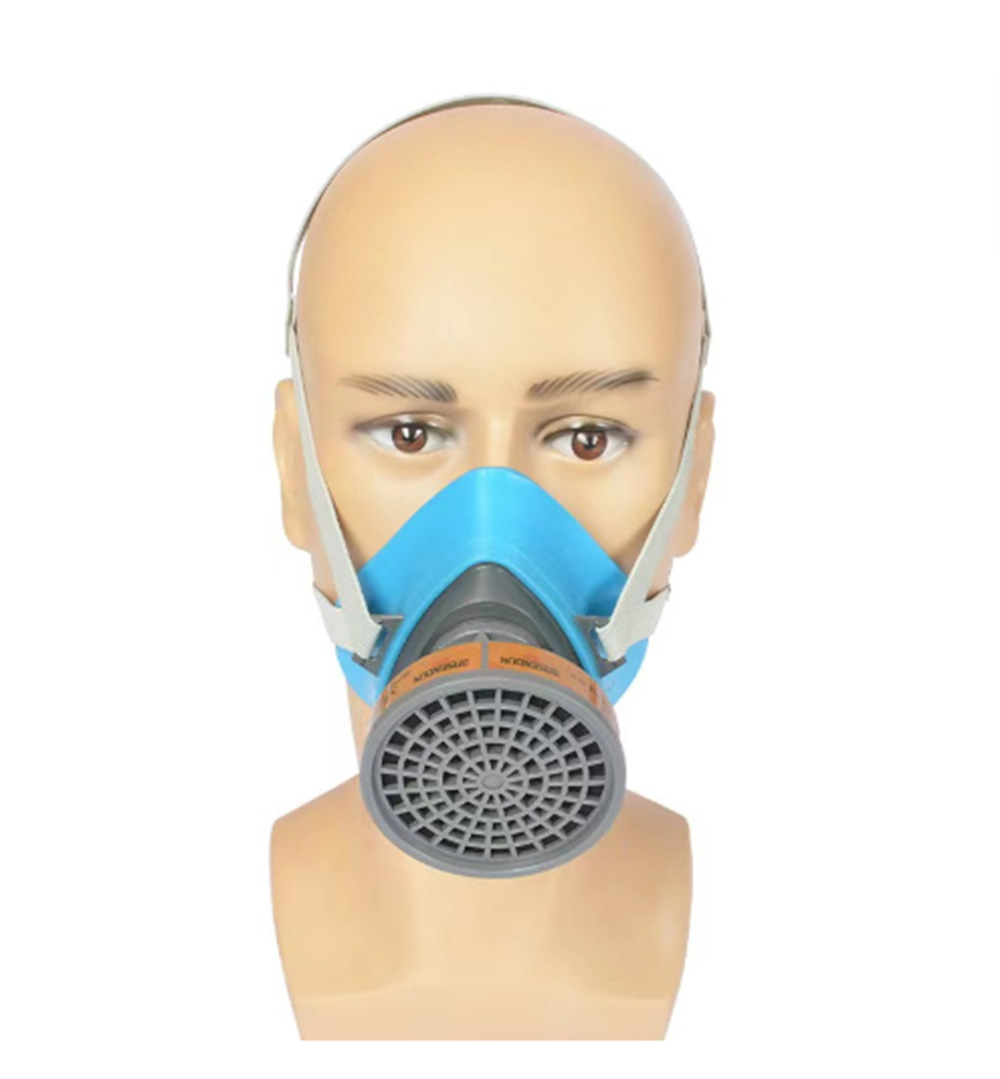
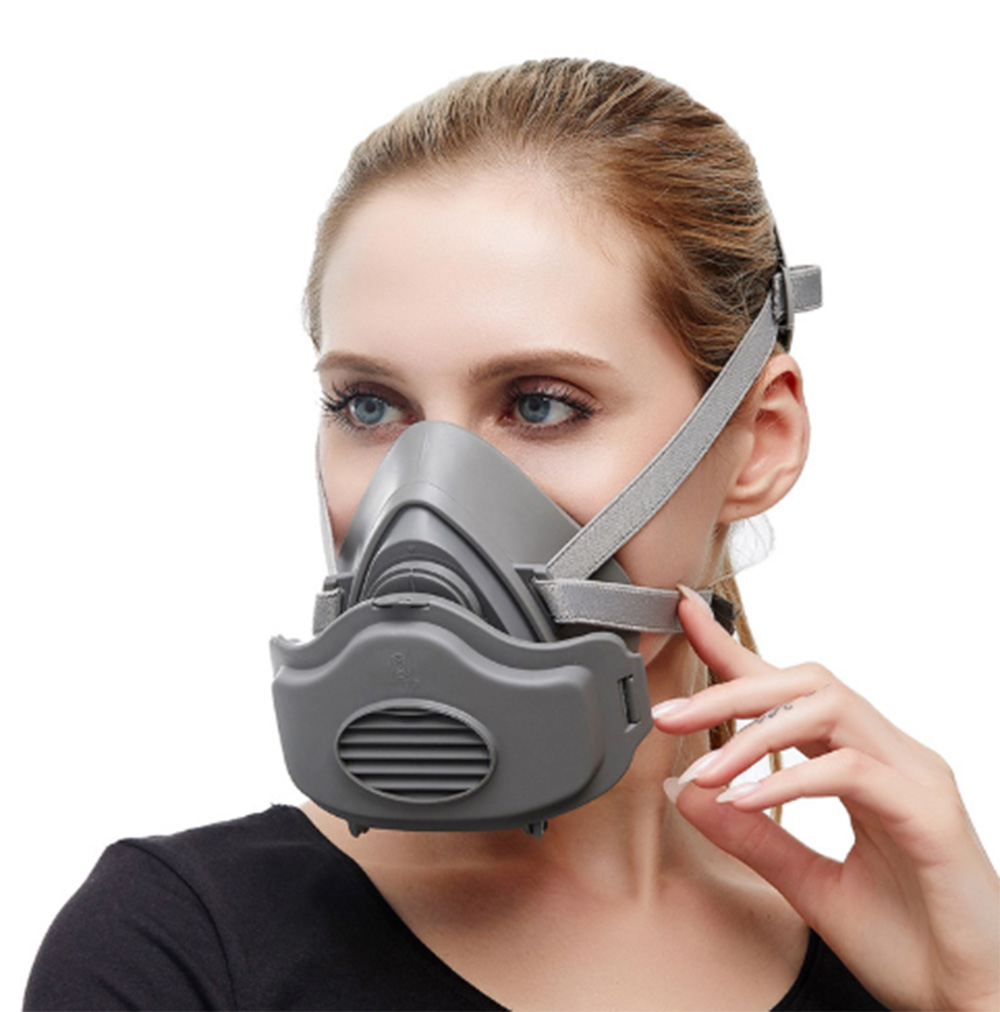
A half mask respirator is a reusable, tight-fitting respirator with replaceable filter cartridges. It is designed for occupational use.
| Feature | Half Mask Respirator |
|---|---|
| Design | Reusable elastomeric facepiece with replaceable filters |
| Protection | Particulates, gases, vapors – depends on filter selected |
| Fit | Tight-fitting with adjustable head straps – must be fitted to the user |
| Durability | Facepiece lasts 3-5 years; filters replaced as needed |
| APF | 10 (when properly fitted and used) |
| Approval | NIOSH-certified (US) or CE-certified (Europe) |
| Cost | $20-60 for facepiece; $5-15 per filter set |
| Comparison Factor | Dust Mask (Nuisance) | N95 Respirator | Half Mask Respirator |
|---|---|---|---|
| NIOSH-certified? | ❌ No | ✅ Yes | ✅ Yes |
| APF | None (unrated) | 10 | 10 |
| Reusable? | ❌ No (single-use) | Limited reuse | ✅ Yes (3-5 years) |
| Replaceable filters? | ❌ No | ❌ No (whole mask discarded) | ✅ Yes |
| Adjustable fit? | ❌ No (one size) | ❌ No (one size) | ✅ Yes (head straps) |
| Seal quality | Poor (leaks around edges) | Good (if properly fit-tested) | Excellent (if properly fit-tested) |
| Protects against gases/vapors? | ❌ No | ❌ No | ✅ Yes (with gas cartridges) |
| Protects against particulates? | ✅ Yes (non-toxic only) | ✅ Yes | ✅ Yes (with particulate filters) |
| Protects against toxic particulates? | ❌ No | ✅ Yes | ✅ Yes |
| Long-term cost | High (daily disposal) | High (frequent replacement) | Low (only filters replaced) |
| Environmental waste | High | High | Low |
| Dust Mask | Half Mask Respirator |
|---|---|
| ❌ Protects against nuisance dust only (non-toxic) | ✅ Protects against all particulates with proper filter |
| ❌ Does not have NIOSH-certified seal for hazardous dust | ✅ NIOSH-certified APF 10 for all dust types |
Examples of hazardous dust that require a respirator (not a nuisance dust mask):
| Hazardous Dust | Industry |
|---|---|
| Silica (crystalline) | Construction, mining, concrete cutting |
| Lead dust | Battery recycling, demolition, painting |
| Asbestos | Demolition, insulation removal |
| Welding fume | Welding, fabrication |
| Wood dust (toxic species) | Woodworking (some species are carcinogenic) |
| Grain dust | Agriculture, grain handling (can be explosive and toxic) |
✅ Junsee Group takeaway: If the dust is toxic, hazardous, or has an established occupational exposure limit (PEL, OEL), you need a NIOSH-approved respirator – not a nuisance dust mask.
| Dust Mask | Half Mask Respirator |
|---|---|
| ❌ No protection against gases or vapors | ✅ Full protection with gas cartridges |
Dust masks are particulate-only. They do not stop gases or vapors. Gas molecules are thousands of times smaller than dust particles – they pass right through a dust mask as if it were not there.
Common gas/vapor hazards that require a half mask with gas cartridges:
| Gas/Vapor | Industry | Cartridge Type |
|---|---|---|
| Organic solvents (xylene, toluene) | Painting, printing, degreasing | Organic vapor (A – Brown) |
| Acid gases (chlorine, SO₂) | Chemical plants, water treatment | Acid gas (B – Grey) |
| Ammonia | Refrigeration, fertilizer | Ammonia (K – Green) |
| Isocyanates | Spray painting (auto body) | Organic vapor + P100 (combination) |
| Formaldehyde | Laboratories, embalming | Organic vapor (A) |
| Hydrogen sulfide | Wastewater, oil and gas | Multi-gas (ABEK – Olive) |
⚠️ Critical warning: If you are exposed to gases or vapors and wearing only a dust mask, you are completely unprotected. Upgrade to a half mask respirator with the correct gas cartridges.
| Dust Mask | Half Mask Respirator |
|---|---|
| ❌ Will clog quickly and lose effectiveness | ✅ Replaceable filters – swap when clogged |
| ❌ No fit adjustment – dust enters around edges | ✅ Adjustable head straps for tight seal |
High dust concentration means the dust mask will clog rapidly. As it clogs, breathing resistance increases. Workers often remove the mask to breathe – exposing themselves to the hazard.
A half mask respirator has:
Replaceable filters – you can change them when they clog
Adjustable fit – maintains seal even during heavy work
Silicone or rubber seal – far superior to the flimsy material of a dust mask
| Dust Mask | Half Mask Respirator |
|---|---|
| ❌ Disposable – high cost over time | ✅ Reusable – low long-term cost |
| ❌ Uncomfortable for long shifts | ✅ Comfortable (silicone models) for 8-hour shifts |
| ❌ No sizing options | ✅ Multiple sizes available |
Cost comparison (per worker, 250 shifts per year):
| Item | Dust Mask (N95) | Half Mask Respirator |
|---|---|---|
| Daily cost | $1.00 per day | Facepiece: $40 one-time |
| Annual cost | $250 | Filters: $80/year |
| 5-year cost | $1,250 | $440 (facepiece + 5 years filters) |
✅ Junsee Group takeaway: For daily use, a half mask respirator saves over 60% over 5 years compared to disposable N95 dust masks – and provides better protection.
| Dust Mask | Half Mask Respirator |
|---|---|
| ❌ One size – cannot adjust | ✅ Adjustable head straps |
| ❌ Poor fit for diverse face shapes | ✅ Multiple sizes (S, M, L) |
| ❌ No fit testing possible | ✅ Fit testing required and possible |
Dust masks are one-size-fits-all (or actually, one-size-fits-poorly). They leak around the edges for most face shapes.
Half mask respirators:
Have adjustable head straps for a custom fit
Come in multiple sizes to match different face shapes
Can be fit-tested to verify the seal
| Dust Mask | Half Mask Respirator |
|---|---|
| ❌ Can only filter particulates | ✅ Combination filters for dust + gas |
Many workplaces have both particulates and gases. Examples:
| Workplace | Particulate Hazard | Gas Hazard |
|---|---|---|
| Spray painting | Paint mist | Solvent vapors |
| Welding galvanized steel | Metal fume | Zinc oxide + ozone |
| Chemical mixing | Powdered chemicals | Solvent vapors |
Only a half mask respirator can handle both – with combination filters (e.g., A2P3 for organic vapors + particulates).
| If Your Situation Is... | Use This |
|---|---|
| Non-toxic dust only (household dust, pollen, drywall sanding) – occasional use | Nuisance dust mask (non-NIOSH) |
| Non-toxic dust – frequent use | N95 dust mask (NIOSH-approved) |
| Toxic dust (silica, lead, asbestos, metal fume) | Half mask respirator with particulate filter |
| Gases or vapors (solvents, acids, ammonia) | Half mask respirator with gas cartridges |
| Combined dust + gas hazard | Half mask respirator with combination filters |
| Daily use for 4+ hours | Half mask respirator (silicone for comfort) |
| Workers with diverse face shapes | Half mask respirator (multiple sizes available) |
| Tight budget, long-term protection | Half mask respirator (lower TCO over 5 years) |
| Eye irritation from vapors | Full facepiece – half mask does not protect eyes |
Dust masks are not useless – they have legitimate applications.
| Application | Why It's OK |
|---|---|
| Household cleaning | Non-toxic dust, short duration |
| Lawn mowing / leaf blowing | Pollen, grass dust – nuisance only |
| Drywall sanding (non-occupational) | Occasional use, nuisance dust |
| Woodworking (non-toxic wood) | Short duration, nuisance dust |
| Visitors to construction sites | Low risk, short duration – better than nothing |
| Application | Why Not |
|---|---|
| Any toxic dust | Does not have NIOSH-certified seal for hazardous materials |
| Gases or vapors | Does not stop gases |
| Long-duration work | Uncomfortable, clogs quickly |
| Workers with respiratory protection requirements | Does not meet OSHA requirements for respiratory protection |
| Fumes (welding, soldering) | Fumes are fine particles that pass through |
| Asbestos or lead | Not sufficient – requires NIOSH-approved respiratory protection |
Let us compare the cost of using dust masks (N95) vs half mask respirators for a workforce of 50 workers over 5 years.
| Assumption | Value |
|---|---|
| Number of workers | 50 |
| Shifts per year | 250 |
| Shifts requiring respiratory protection | 250 (daily) |
| N95 cost per unit | $1.00 |
| N95 reuse (typical in practice) | 2 shifts per mask (some reuse more, some less) |
| N95 annual cost per worker | $125 (250 shifts ÷ 2 = 125 masks/year × $1) |
| Half mask facepiece cost | $40 per worker (one-time) |
| Half mask filter cost per set | $10 |
| Filter life (particulate only) | 40 hours of use (5 days of 8-hour shifts) |
| Filter changes per year | 250 shifts ÷ 5 days per filter = 50 filter changes/year × $10 = $500 |
| Wait, that seems too high for daily filter changes. Let's revise: |
| Cost Item | N95 Dust Mask | Half Mask Respirator |
|---|---|---|
| Initial facepiece | N/A (disposable) | $40 (once) |
| Annual mask/filter cost | 125 masks/year × $1 = $125 | 50 filter sets/year × $10 = $500 |
| 5-year mask/filter cost | $625 | $2,500 |
| 5-year facepiece cost | N/A | $40 |
| Total 5-year per worker | $625 | $2,540 |
Wait – half mask is more expensive in this calculation? That contradicts the earlier comparison.
| Filter Type | Half Mask Filter Cost | Notes |
|---|---|---|
| Particulate only (P100) | Lower – $10-15 per set, lasts 3-6 months | Comparable to N95 cost |
| Gas cartridge | Higher – $15-30 per set, replaced when saturated | Often more expensive |
For particulate-only applications: The half mask may be cost-competitive or slightly more expensive.
For gas applications: N95 cannot be used – the cost comparison is irrelevant because N95 does not work.
✅ Junsee Group takeaway: The real driver for upgrading is not cost – it is protection. Dust masks cannot protect against toxic dust, gases, or vapors. If you need protection from these hazards, a dust mask is not an option.
| Factor | Dust Mask | Half Mask Respirator |
|---|---|---|
| OSHA compliance | ❌ Not a compliant respirator program | ✅ Full compliance with written program |
| Fit testing requirement | ❌ Cannot be fit-tested | ✅ Fit-testable |
| Medical evaluation required | ❌ Not required (not a respirator) | ✅ Required |
| Training required | ❌ Not required | ✅ Required |
| Written program required | ❌ Not required | ✅ Required |
⚠️ Critical: If you are using nuisance dust masks for occupational exposure to hazardous substances, you are not OSHA-compliant. You need a formal respiratory protection program with half mask respirators (or higher), including fit testing, medical evaluations, and training.
| When to Upgrade | Why |
|---|---|
| Exposure to toxic dust (silica, lead, asbestos) | Dust masks do not have certified seal for hazardous materials |
| Exposure to gases or vapors | Dust masks do not stop gases |
| Daily or long-duration use | Half masks are more comfortable and cost-effective over time |
| Poor fit with dust masks | Half masks have adjustable straps and multiple sizes |
| Combined hazards (dust + gas) | Half masks can use combination filters |
| OSHA compliance required | Dust masks do not meet OSHA respiratory protection requirements |
| Workers need fit verification | Dust masks cannot be fit-tested |
| High dust concentration | Half masks have replaceable filters – dust masks clog quickly |
| Key Principle | Why It Matters |
|---|---|
| Dust masks are for nuisance dust only | They are not respiratory protection for hazardous materials |
| N95 is a real respirator – but particulate only | N95 does not protect against gases or vapors |
| Half mask respirators offer more protection | Particulate, gas, and combination filters available |
| APF 10 is the same for N95 and half masks | Both provide APF 10 when fitted properly |
| Gas protection is the game-changer | Half masks with gas cartridges protect where N95 cannot |
| Cost is similar over time | Long-term cost is comparable – protection is the real difference |
The bottom line: If you are exposing workers to anything more than nuisance dust, a dust mask is not enough. Upgrade to a half mask respirator – not because it is cheaper (it may not be), but because it is the minimum level of protection required for hazardous materials.
At Junsee Group, we supply half mask respirators and filters for all common industrial hazards – particulates, organic vapors, acid gases, ammonia, and combinations. We also provide fit testing guidance and training to help you build a compliant respiratory protection program.
Are your workers using dust masks when they need real respirator protection?
Contact Junsee Group today. Let us help you assess your hazards and upgrade to the right half mask respirators for your workforce.


Your email address will not be published. Required fields are marked