
One of the most common questions safety managers ask us at Junsee Group is:
"Should I use a half mask or a full facepiece respirator for my workers?"
It seems like a simple question. But the answer depends on many factors — hazard type, concentration, work environment, worker comfort, and budget.
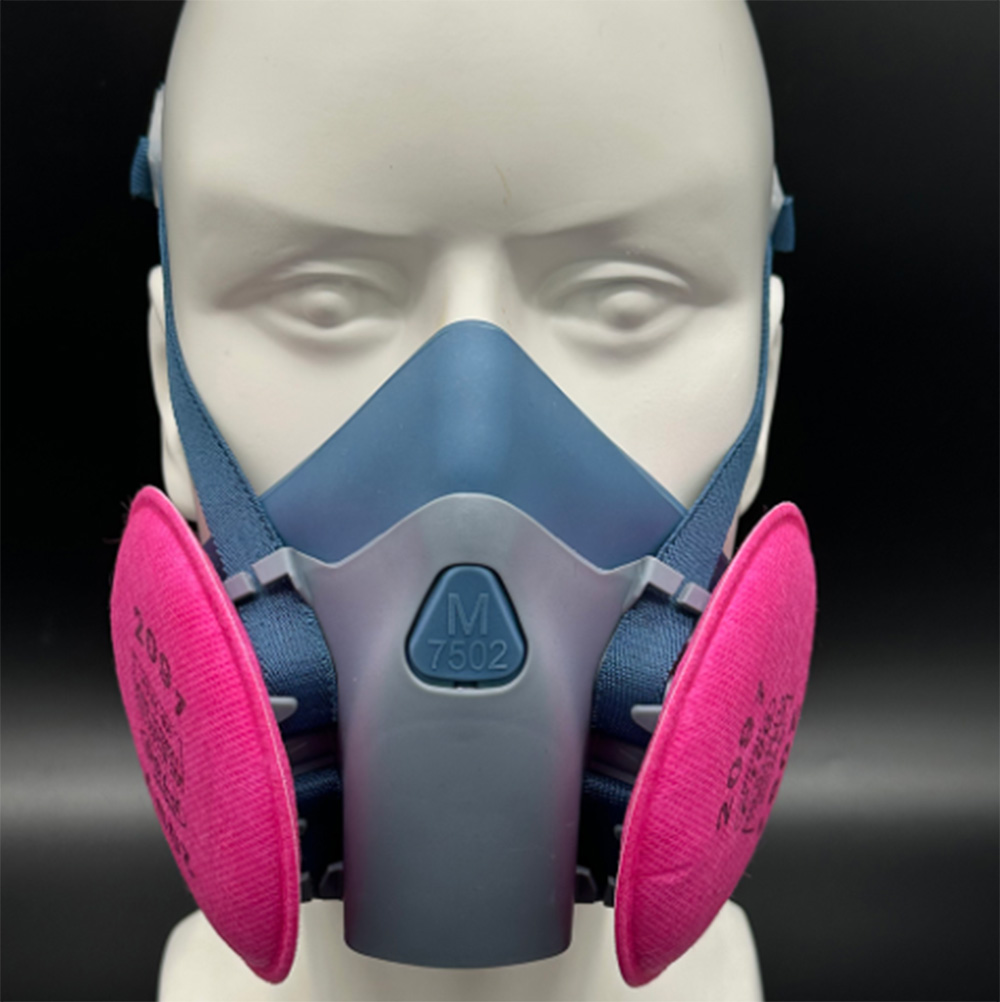
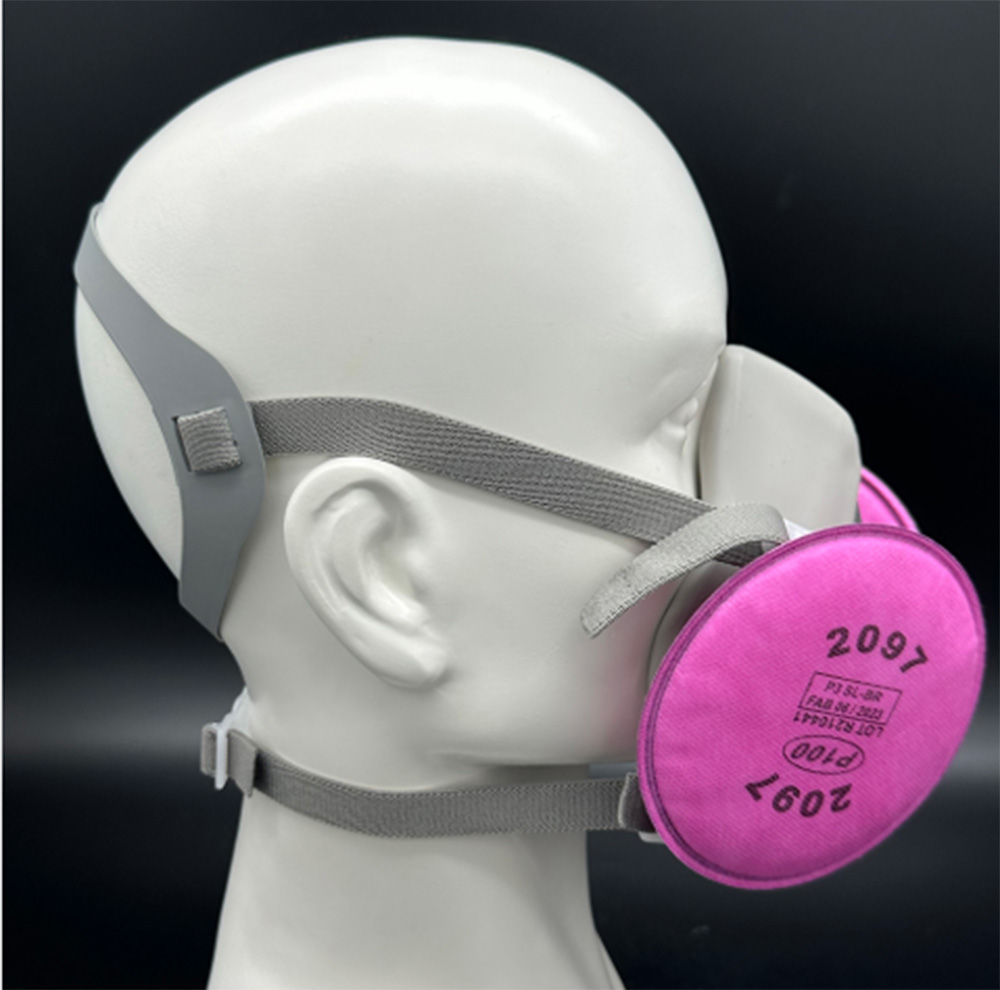
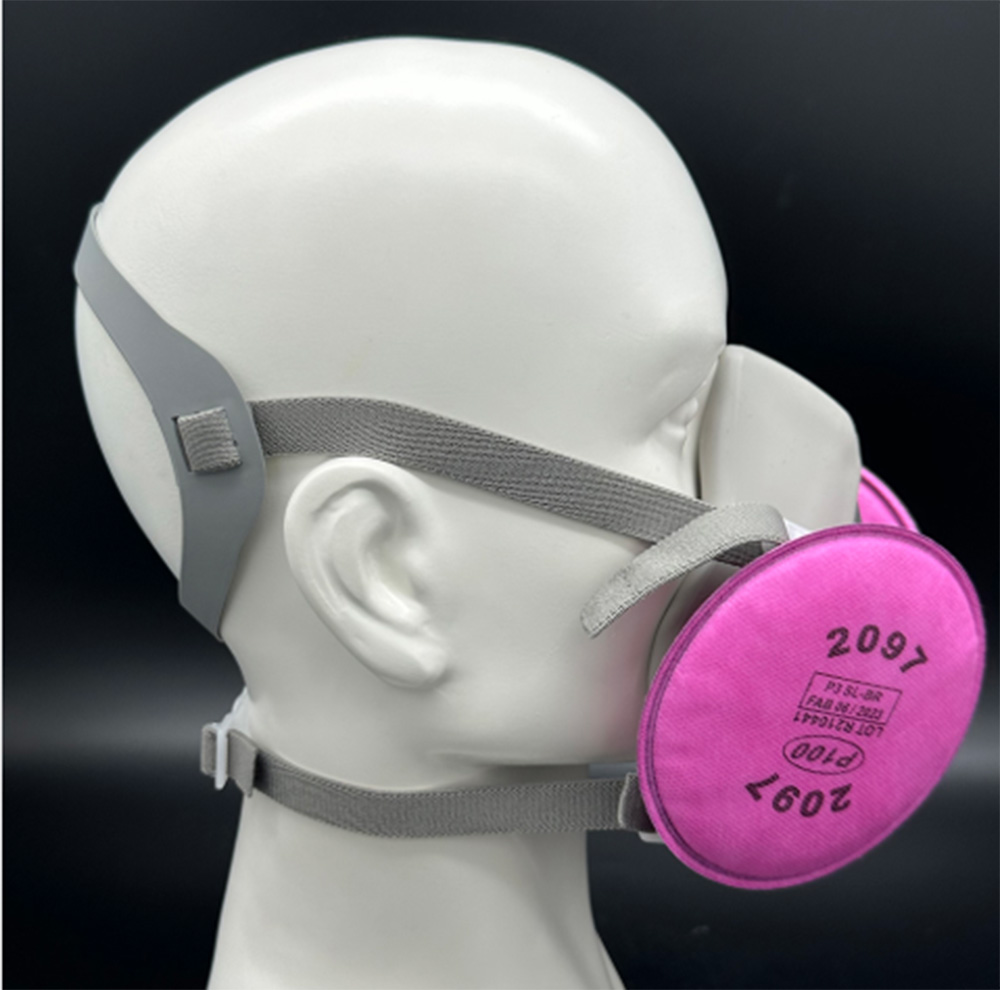
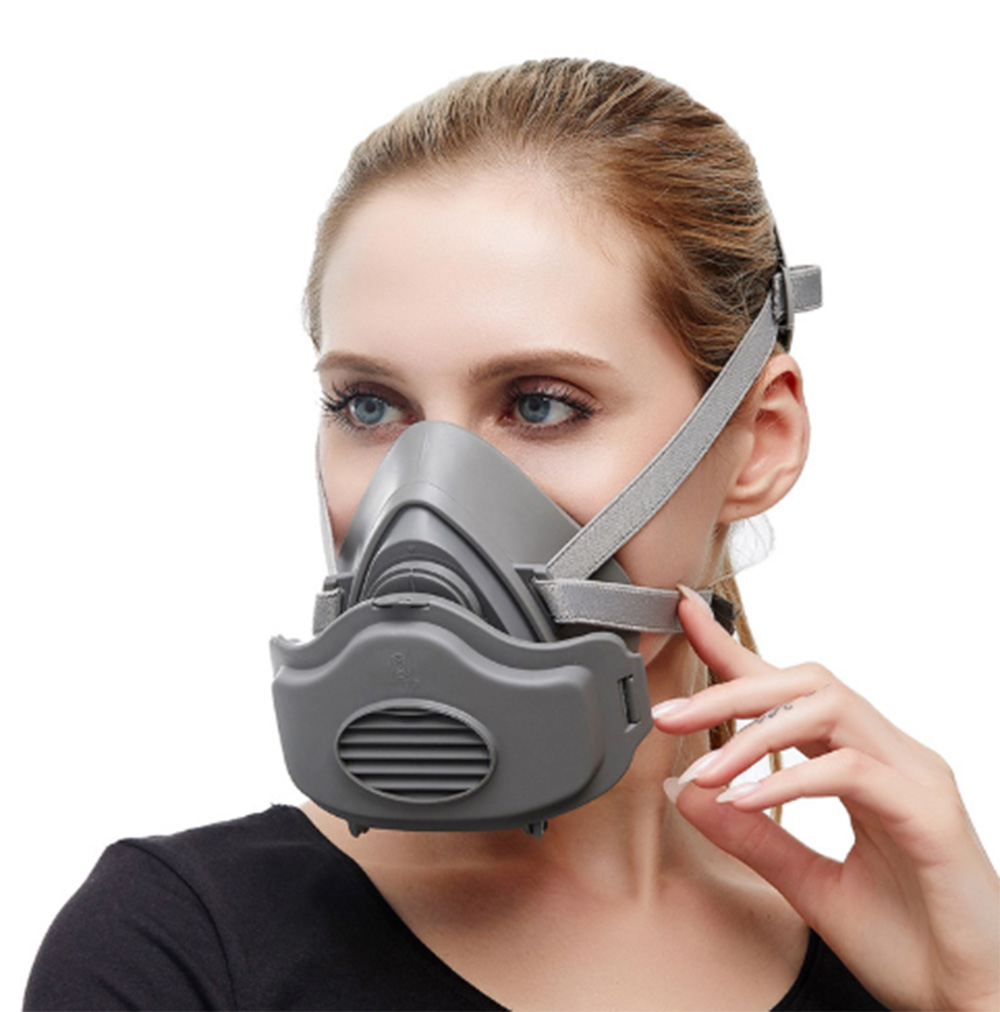
Both half masks and full facepieces are reusable, air-purifying respirators. Both can use the same types of filter cartridges. Both require fit testing and clean-shaven faces. But they are not interchangeable.
This guide compares half mask vs full facepiece across seven key dimensions, helping you determine which is better for your specific job and workplace.
| Feature | Half Mask Respirator | Full Facepiece Respirator |
|---|---|---|
| Coverage | Nose and mouth only | Entire face (hairline to chin) |
| Eye protection | ❌ None — requires separate goggles | ✅ Built-in visor protects eyes and face |
| Assigned Protection Factor (APF) | 10 | 50 |
| Seal area | Nose bridge, cheeks, chin | Forehead, temples, cheeks, chin |
| Weight on face | Lighter (5-10 oz / 150-300g) | Heavier (12-20 oz / 350-600g) |
| Typical cost | $20 - $80 | $150 - $300 |
| Donning time | Faster (2-3 straps) | Slower (4-5 straps) |
| Compatibility with glasses | Poor (must use contacts or inserts) | Poor (must use spectacle kits) |
| Facial hair | ❌ Not allowed (breaks seal) | ❌ Not allowed (breaks seal) |
The Assigned Protection Factor (APF) is the level of protection a respirator provides.
| Respirator Type | APF | Protection Level |
|---|---|---|
| Half mask | 10 | Reduces contaminant concentration by 10x |
| Full facepiece | 50 | Reduces contaminant concentration by 50x |
What this means in practice:
| Outside Concentration | Half Mask (APF 10) Inside | Full Facepiece (APF 50) Inside |
|---|---|---|
| 100 ppm | 10 ppm | 2 ppm |
| 500 ppm | 50 ppm | 10 ppm |
| 1,000 ppm | 100 ppm | 20 ppm |
✅ Junsee Group takeaway: A full facepiece provides 5 times more protection than a half mask. If your hazard concentration exceeds 10x the permissible exposure limit (PEL), a half mask is not adequate.
This is perhaps the most critical difference — and the most misunderstood.
| Half Mask + Goggles | Full Facepiece | |
|---|---|---|
| Protects eyes from splashes/particles | ✅ Yes (if goggles worn) | ✅ Yes (built-in visor) |
| Protects eyes from gases/vapors | ❌ No | ✅ Yes |
Why goggles fail against gases:
Gases pass through the vents in goggles
Gases seep around the edges of the goggle seal
There is a physical gap between the mask and goggles
⚠️ Critical: If your workplace contains gases or vapors that can irritate or damage eyes (chlorine, ammonia, formaldehyde, solvents), a half mask is not acceptable — you need a full facepiece.
| Hazard Type | Half Mask + Goggles | Full Facepiece |
|---|---|---|
| Chemical splash from front | Goggles protect eyes; gap at nose/cheeks allows splash to reach skin | Visor blocks splash from entire face |
| Chemical splash from below | Splash can travel up under goggles | Visor extends below chin — more coverage |
| High-speed particles (grinding) | Impact goggles protect eyes; face skin exposed | Visor protects entire face |
| Molten metal or welding spatter | Goggles alone not sufficient | Many full facepieces rated for spatter |
| Factor | Half Mask | Full Facepiece |
|---|---|---|
| Seal surface area | Smaller (nose, cheeks, chin) | Larger (forehead, temples, cheeks, chin) |
| Movement affects seal | Talking, smiling, yawning disrupt seal | Forehead/temple seal is stable during facial movements |
| Fit test pass rate | Lower (more sensitive to face shape) | Higher (larger seal area accommodates more face shapes) |
A half mask respirator is the right choice when all of these conditions are met:
| Condition | Why It Matters |
|---|---|
| Hazard concentration is <10x PEL | APF 10 is sufficient for the exposure level |
| No eye irritation from gases/vapors | The eyes are not at risk from airborne gases |
| No splash risk | Liquid chemicals will not contact the face |
| Workers are clean-shaven | No facial hair under the seal area |
| Workers can pass fit testing | Fit testing is possible and passed |
| Budget is a primary concern | Half masks cost less than full facepieces |
| Short to moderate shifts (<4 hours) | Comfort difference with full facepiece is less noticeable |
| Workers are comfortable with separate goggles | Goggles do not cause discomfort or fogging issues |
| Job / Industry | Hazard | Why Half Mask Is Adequate |
|---|---|---|
| Woodworking | Wood dust | Particulate only; no gases; concentration <10x PEL with controls |
| Construction (dust control) | Silica dust | Particulate only; concentration <10x PEL with proper controls |
| Welding (mild steel, open area) | Metal fume | Particulate only; concentration typically <10x PEL |
| General manufacturing | Nuisance dust | Particulate only; low concentration |
| Agriculture (mixing pesticides) | Pesticide mist | If concentration <10x PEL and no eye irritation from vapors |
| Laboratory (solvent handling) | Organic vapors | If concentration <10x PEL and vapors do not irritate eyes |
| Red Flag | Why Half Mask Fails |
|---|---|
| Workers complain of eye irritation | Gases are reaching eyes — half mask does not protect them |
| Fit test failure rate is high | Half mask may not fit your workforce well |
| Workers with beards or stubble | Half mask cannot seal |
| Concentration exceeds 10x PEL | APF 10 is insufficient |
| Splash incidents occur | Half mask leaves face exposed |
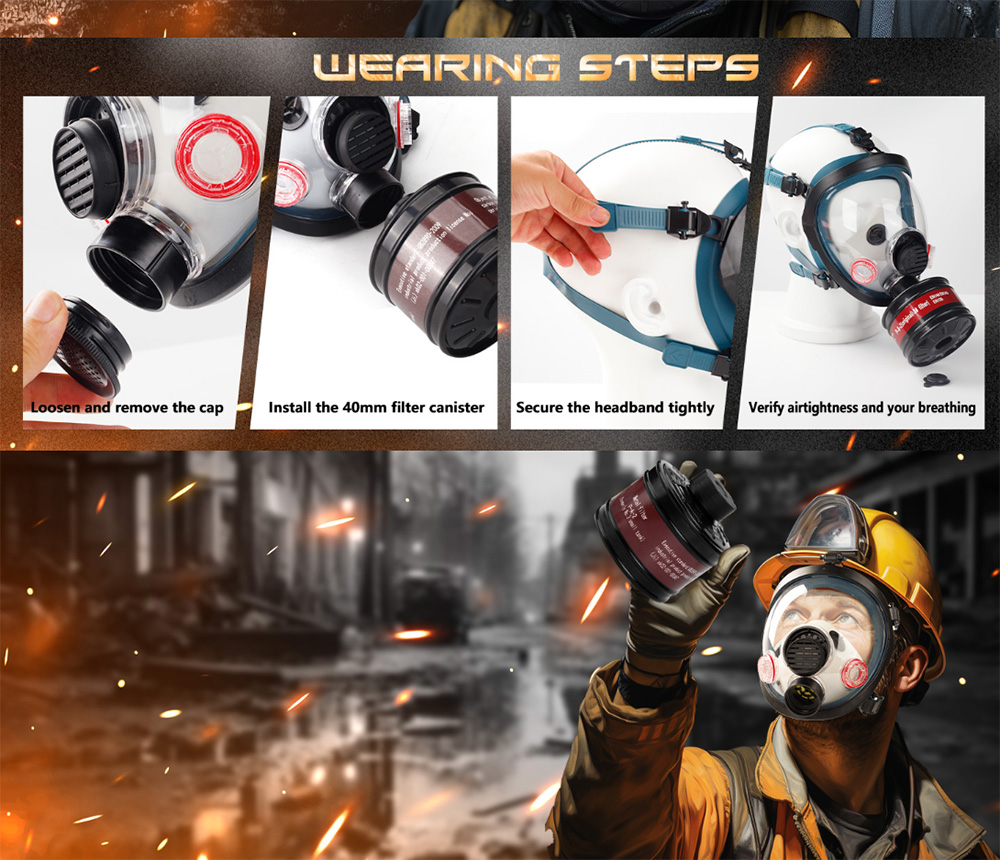
A full facepiece respirator is the right choice when any of these conditions apply:
| Condition | Why It Matters |
|---|---|
| Gases/vapors that irritate eyes | Goggles do not protect eyes from gases — only full facepiece does |
| Chemical splash risk | Visor protects the entire face; no gap for splashes to enter |
| Concentration 10x-50x PEL | APF 50 is required; half mask (APF 10) is insufficient |
| High-speed particles (grinding, chipping) | Visor protects entire face, not just eyes |
| Workers cannot pass half mask fit testing | Full facepiece has larger seal area and may fit better |
| Workers prefer all-in-one solution | No separate goggles to fog or adjust |
| Heat is not a major concern | Full facepiece is warmer than half mask but acceptable in moderate conditions |
| Job / Industry | Hazard | Why Full Facepiece Is Required |
|---|---|---|
| Chemical plant operator | Chlorine gas, acid mists, chemical splashes | Gases irritate eyes; splash risk |
| Spray painter (isocyanates) | Solvent vapors + paint mist | Isocyanates cause eye irritation and permanent asthma; high toxicity |
| Wastewater treatment | Chlorine gas, hydrogen sulfide | Gases irritate eyes; high toxicity |
| Laboratory (hazardous chemicals) | Formaldehyde, acid gases, solvent vapors | Eye irritation from vapors; splash risk |
| Tank entry (non-IDLH) | Residual chemical vapors | Unknown concentration; gases may irritate eyes |
| Pharmaceutical manufacturing (potent APIs) | Potent drug powder | High toxicity requires APF 50 |
| Red Flag | Why Full Facepiece May Not Work |
|---|---|
| Workers complain of heat and discomfort | Full facepiece is heavier and warmer than half mask — consider PAPR |
| Budget is extremely tight | Full facepiece costs 3-5x more upfront |
| Workers are clean-shaven and concentration <10x PEL | Half mask would be adequate and more comfortable |
| No eye irritation from gases | Half mask may be sufficient if no other hazards |
Let us run the numbers for a workplace with 50 workers over 5 years.
| Assumption | Half Mask | Full Facepiece |
|---|---|---|
| Initial equipment per worker | $60 | $220 |
| Equipment lifespan | 3 years | 3 years |
| Annual filter cost per worker | $100 | $100 |
| Annual fit testing per worker | $75 | $75 |
| Annual valve/strap replacement | $20 | $20 |
| Annual goggle replacement (half mask only) | $20 | $0 |
| Cost Category | Half Mask | Full Facepiece |
|---|---|---|
| Initial equipment | 50 × $60 = $3,000 | 50 × $220 = $11,000 |
| Mid-cycle replacement (year 3) | 50 × $60 = $3,000 | 50 × $220 = $11,000 |
| Filters (5 years) | 50 × $100 × 5 = $25,000 | 50 × $100 × 5 = $25,000 |
| Fit testing (5 years) | 50 × $75 × 5 = $18,750 | 50 × $75 × 5 = $18,750 |
| Valve/strap (5 years) | 50 × $20 × 5 = $5,000 | 50 × $20 × 5 = $5,000 |
| Goggle replacement (5 years) | 50 × $20 × 5 = $5,000 | $0 |
| Total 5-Year TCO | $59,750 | $70,750 |
| Half Mask | Full Facepiece | |
|---|---|---|
| 5-year TCO (50 workers) | $59,750 | $70,750 |
| Annual cost per worker | $239 | $283 |
| 5-year difference | — | +$11,000 (18% higher) |
✅ Junsee Group finding: Full facepiece costs approximately 18% more over 5 years than half mask — not 3-5x more as upfront prices suggest. Goggle replacement costs close the gap significantly.
| If Your Workplace Has... | Recommended Solution | Why |
|---|---|---|
| Dust only — no gases, no splash, concentration <10x PEL | Half mask | Adequate protection; lower cost; lighter |
| Gases/vapors that irritate eyes | Full facepiece required | Half mask does not protect eyes from gases |
| Chemical splash risk | Full facepiece required | Visor protects entire face; no gap |
| Concentration 10x-50x PEL | Full facepiece required | APF 10 insufficient; need APF 50 |
| High-speed particles (grinding) | Full facepiece | Visor protects entire face |
| Workers cannot pass half mask fit test | Full facepiece | Larger seal area may improve fit |
| Tight budget, low hazard, clean-shaven workers | Half mask | Acceptable when properly matched to hazard |
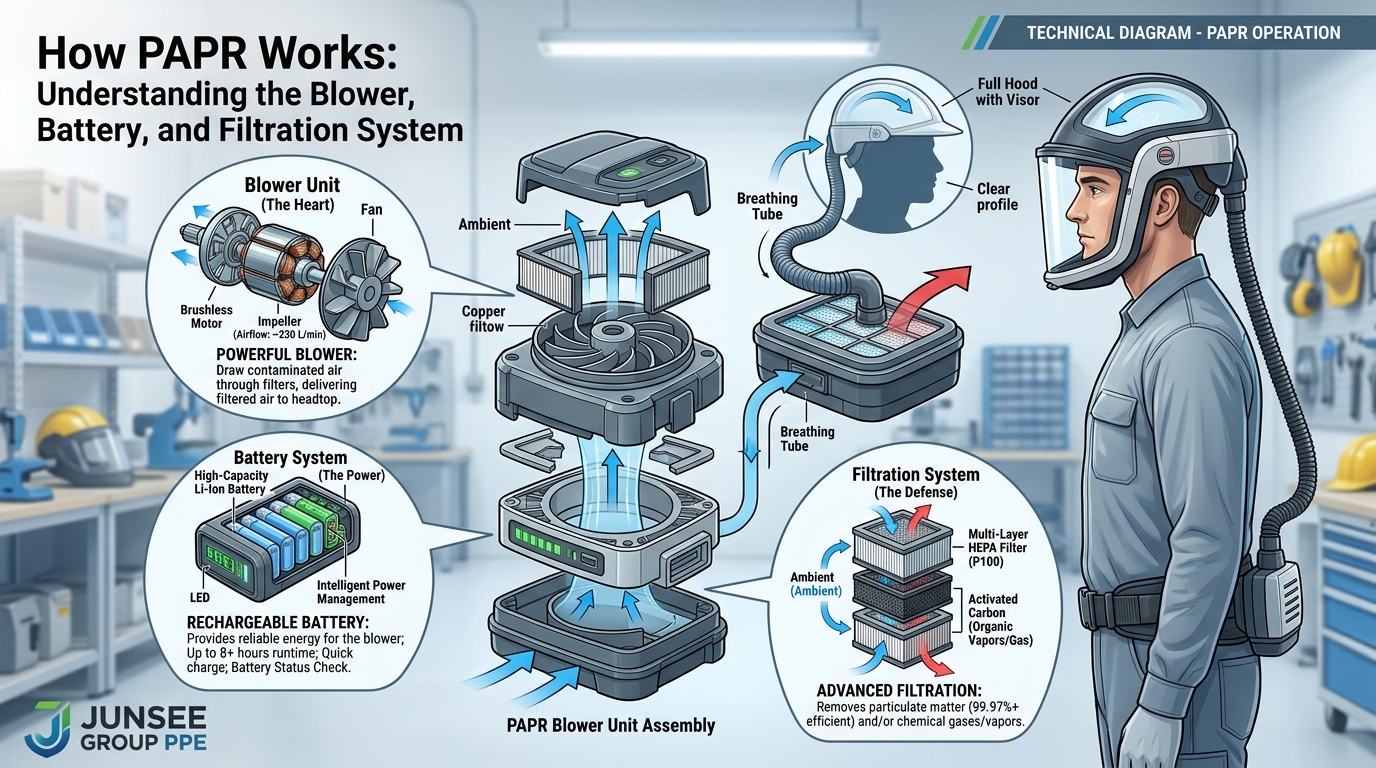
| Workers have facial hair | Neither — need PAPR with loose hood | Both require clean-shaven seal |
| High heat environment | Neither — consider PAPR | Both are hot; PAPR provides cooling airflow |
| Workers prefer all-in-one solution | Full facepiece | No separate goggles to manage |
| Factor | Assessment |
|---|---|
| Hazard | Wood dust |
| Eye hazard | Particles only (no gases) |
| Concentration | <10x PEL |
| Recommendation | Half mask |
| Rationale | Adequate protection; lower cost; lighter for long shifts |
| Factor | Assessment |
|---|---|
| Hazard | Organic solvent vapors + liquid splash |
| Eye hazard | Vapors irritate eyes; splashes can blind |
| Concentration | 5-15x PEL |
| Recommendation | Full facepiece required |
| Rationale | Half mask does not protect eyes from vapors; gap allows splash entry |
| Factor | Assessment |
|---|---|
| Hazard | Metal fumes (zinc, lead, manganese) |
| Eye hazard | Fumes not typically irritating to eyes |
| Concentration | Variable — can exceed 10x PEL |
| Heat | High — workers remove PPE due to discomfort |
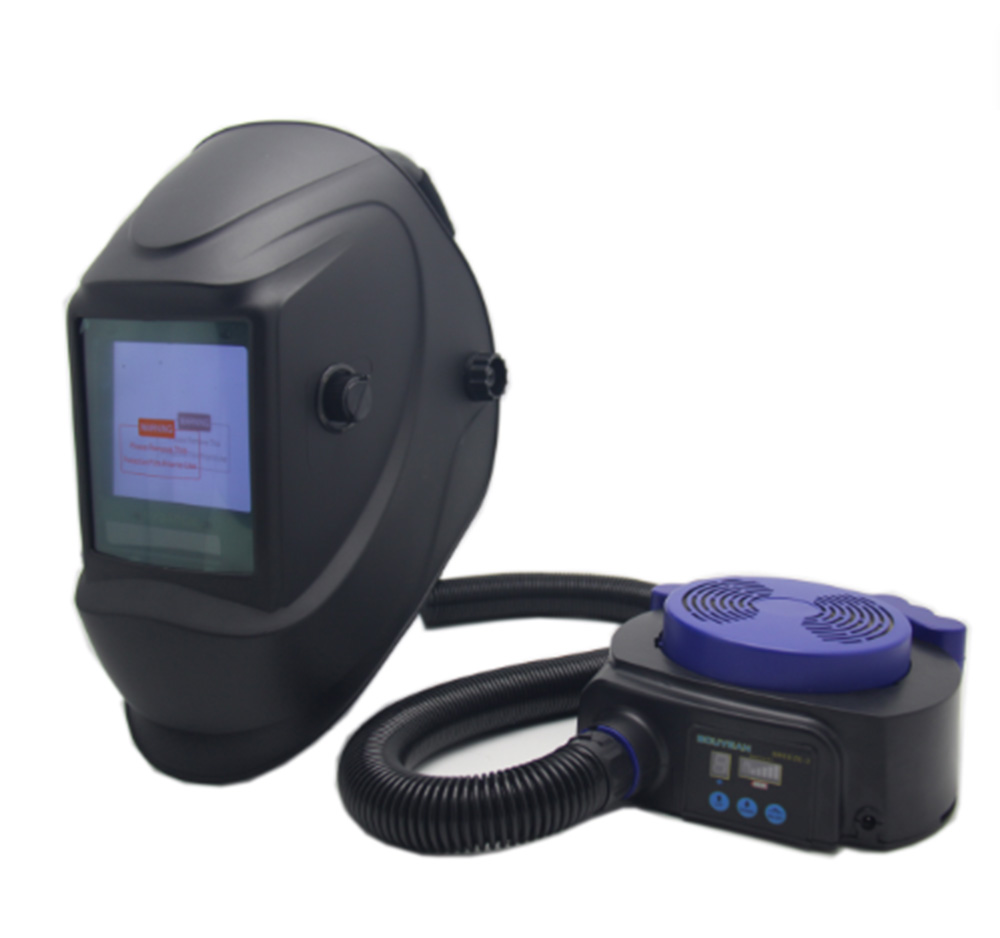
| Recommendation | PAPR (not half mask or full facepiece) |
| Rationale | Neither half mask nor full facepiece is comfortable in extreme heat; PAPR provides cooling airflow |
| Dimension | Half Mask | Full Facepiece | Winner |
|---|---|---|---|
| APF | 10 | 50 | Full facepiece (5x better) |
| Eye protection from gases | ❌ No | ✅ Yes | Full facepiece (infinite gap) |
| Splash protection | Partial | Full | Full facepiece |
| Seal stability | Moderate | High | Full facepiece |
| Weight on face | Lighter | Heavier | Half mask |
| Cost (upfront) | Lower | Higher | Half mask |
| 5-year TCO | Lower | 18% higher | Half mask |
| Comfort in heat | Better | Worse | Half mask |
| All-in-one design | No (needs goggles) | Yes | Full facepiece |
| Fit test pass rate | Lower | Higher | Full facepiece |
| If Your Priority Is... | Choose... |
|---|---|
| Lowest cost (upfront and 5-year TCO) | Half mask (if hazard allows) |
| Highest protection (APF) | Full facepiece (APF 50) |
| Eye protection from gases | Full facepiece — half mask cannot provide this |
| Splash protection | Full facepiece |
| Lightweight for long shifts | Half mask |
| Better in heat | Half mask (or PAPR) |
| Fewer pieces to manage | Full facepiece (no separate goggles) |
| Workers who fail half mask fit testing | Full facepiece (larger seal area) |
| Concentration >10x PEL | Full facepiece (or PAPR) |
The bottom line: Half mask is cheaper and lighter. Full facepiece provides higher protection, eye protection from gases, and better splash protection. The choice depends on your hazard assessment — not your budget. If the hazard requires eye protection from gases or APF 50, the cost comparison is irrelevant.
At Junsee Group, we help customers make this decision based on their specific hazards — not just spreadsheet math.
Need help choosing between half mask and full facepiece for your workplace?
Contact Junsee Group today. We will review your hazard assessment, calculate required APF, and help you select the right respirator for your workers.


Your email address will not be published. Required fields are marked