
When a workplace contains airborne hazards that threaten both the respiratory system and the eyes, safety managers face a critical decision.
Do you choose a full facepiece respirator that does it all in one unit? Or do you combine a half mask + goggles as separate pieces?
At Junsee Group, we help customers make this exact choice every day. There is no single right answer for every situation. But there are clear trade-offs in comfort, cost, compatibility, and protection level.
Let us break down the full facepiece vs half mask + goggles comparison so you can choose the right solution for your workers and your workplace.
| Solution | Components | How It Works |
|---|---|---|
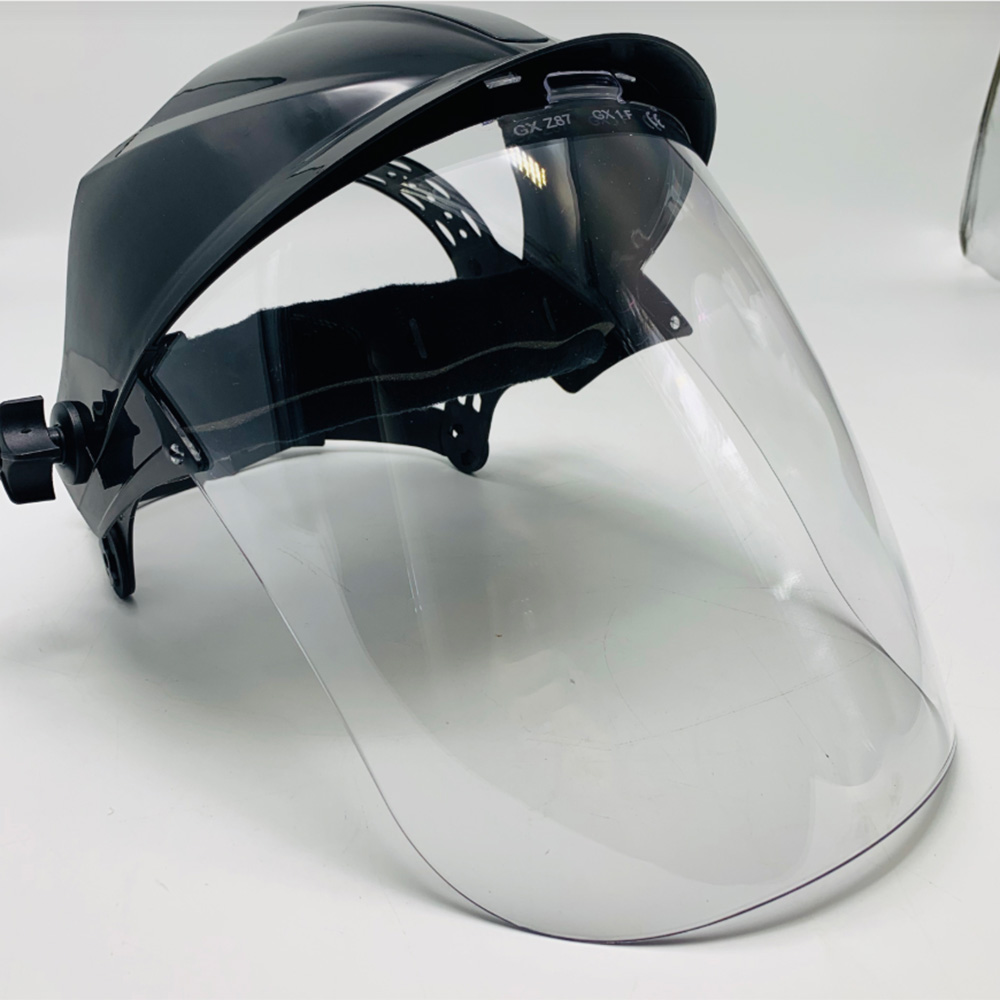
| Full Facepiece Respirator | Single unit covering entire face (eyes, nose, mouth, chin) with built-in visor | One-piece design with integrated eye protection and respiratory seal |
| Half Mask + Goggles | Half mask (covers nose and mouth) + separate goggles or safety glasses | Two independent pieces worn together |
At first glance, both seem to accomplish the same goal: protecting the wearer from inhaling contaminants and from eye irritation or injury. But the user experience, protection level, and practical challenges are very different.
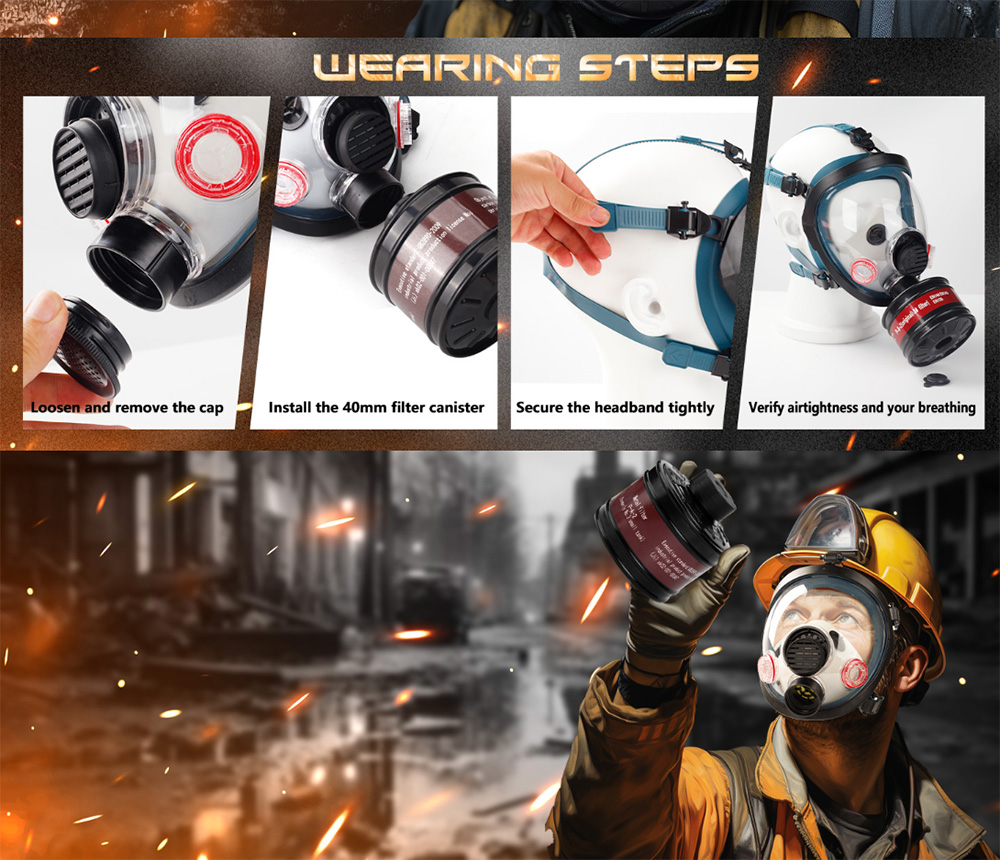
A full facepiece respirator is exactly what it sounds like – a single respirator that seals against the entire face, from the forehead down to the chin, with a large transparent visor providing full eye and face protection.
| Advantage | Why It Matters |
|---|---|
| Higher protection factor | Full facepiece respirators typically have an Assigned Protection Factor (APF) of 50 (vs. 10 for half masks) – meaning they provide 5x better protection |
| No compatibility issues | One piece – no gaps between mask and goggles, no straps competing for space |
| Built-in eye protection | The visor is impact-rated and often chemical-resistant – no separate goggles to fog or scratch |
| Better seal | The seal surface on the full face is larger and more stable, reducing the chance of leaks |
| Protects eyes from gases/vapors | Goggles only protect from splashes and particles – full facepiece protects eyes from airborne gases and vapors that can irritate or damage eyes |
| Faster donning | One item to put on – not two |
| Disadvantage | Why It Matters |
|---|---|
| Higher cost | Typically 2-5x more expensive than a half mask + goggles |
| Bulkier | More weight on the head – can cause neck fatigue over long shifts |
| Compatibility challenges | May not fit comfortably with hard hats, welding helmets, or hearing protection |
| Visor maintenance | Scratched visor means replacing the entire facepiece or expensive visor component |
| Limited field of view | Some full facepieces have narrower peripheral vision than goggles |
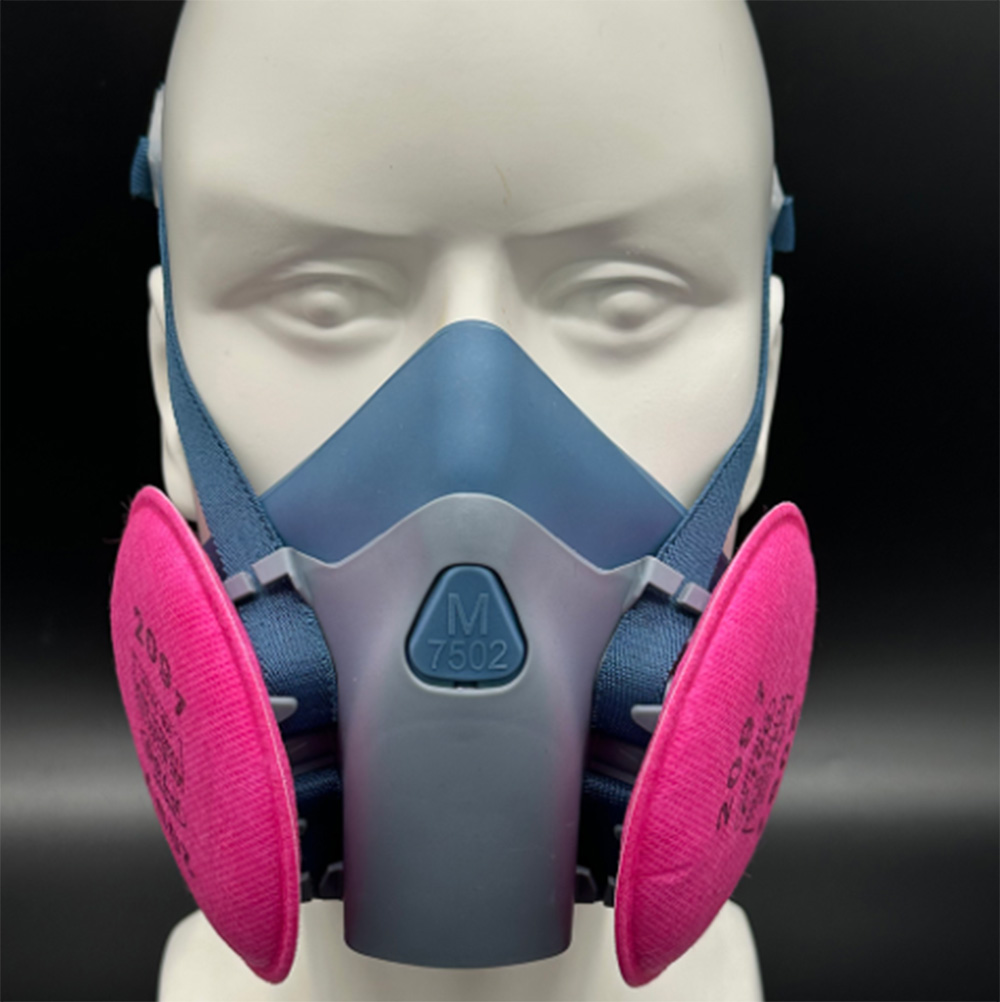
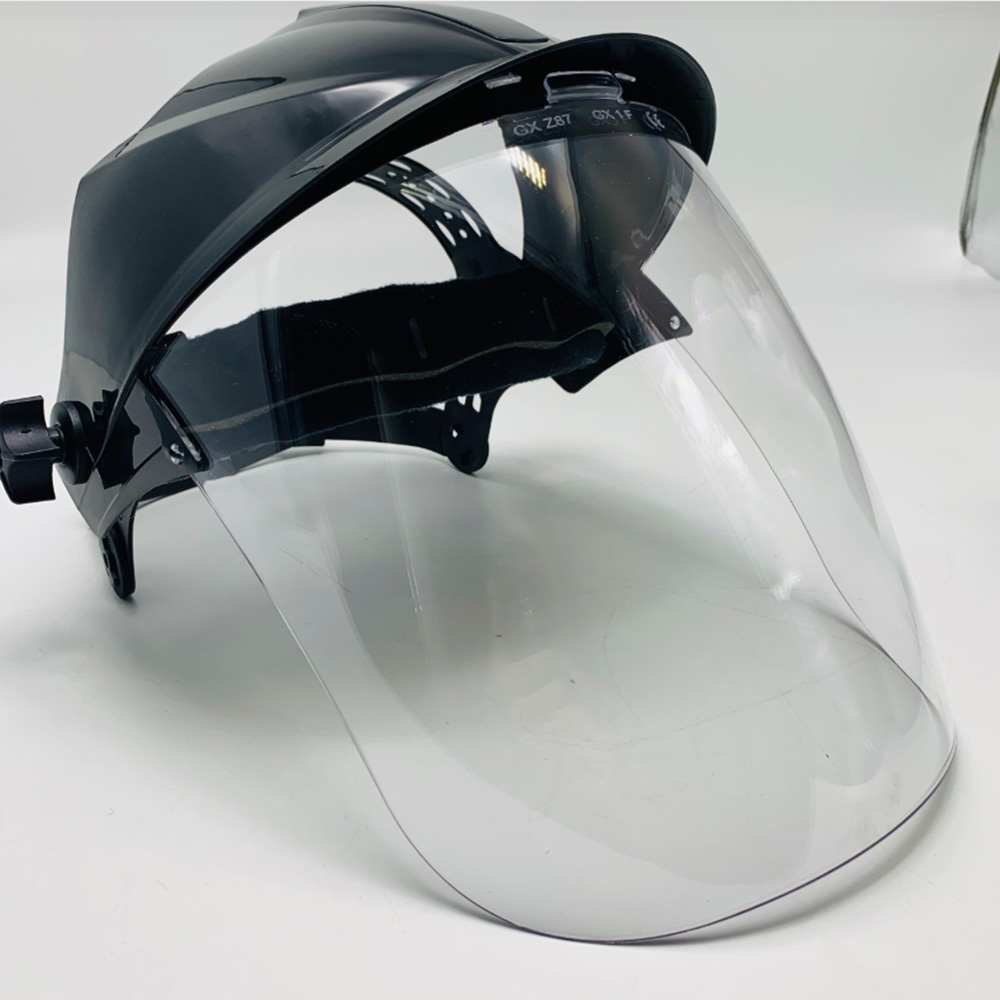
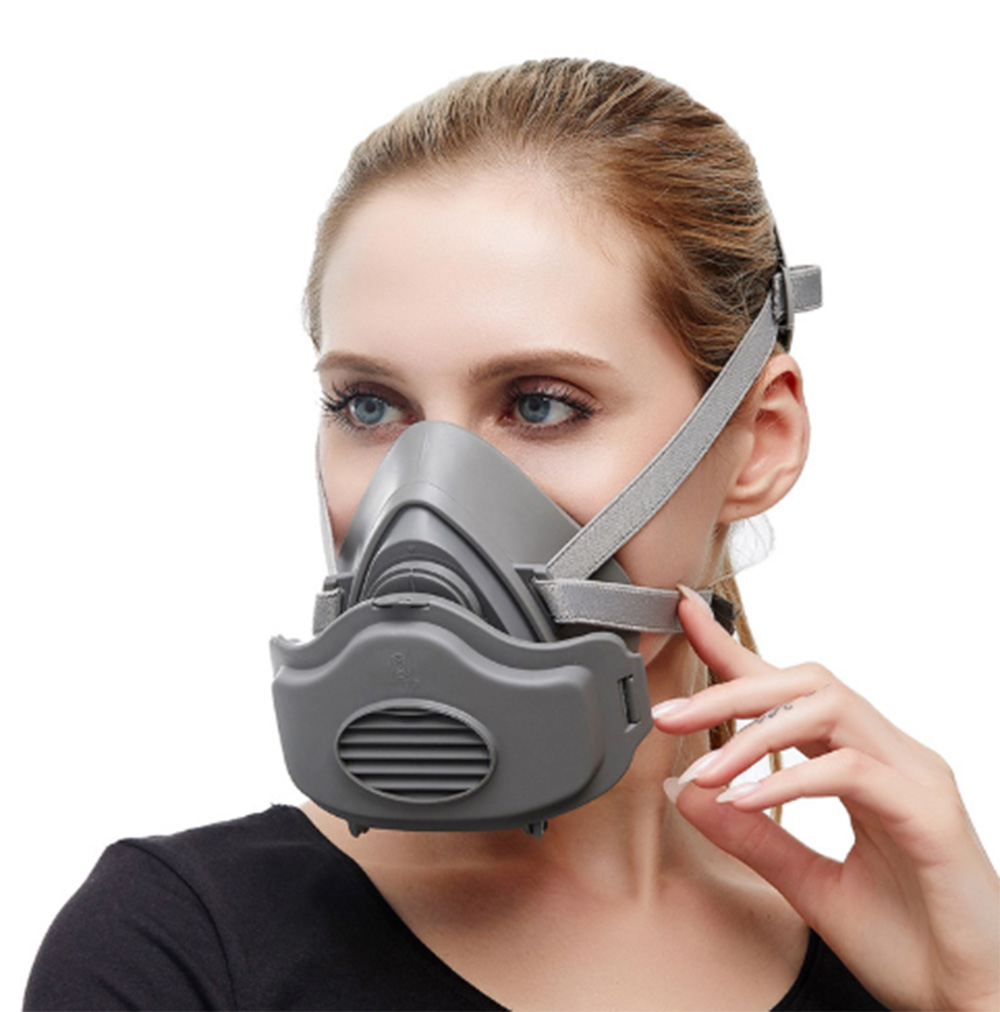
A half mask + goggles approach uses two separate products: a half mask respirator that covers the nose and mouth, plus a pair of goggles or safety glasses worn independently over the eyes.
| Advantage | Why It Matters |
|---|---|
| Lower cost | Half mask + goggles typically costs 1/3 to 1/2 the price of a full facepiece |
| Modular flexibility | Mix and match different goggles (anti-fog, tinted, impact-only, chemical splash) with different mask sizes and filter types |
| Lighter weight | Less weight on the head – preferred by many workers for long shifts |
| Easier maintenance | Replace scratched goggles without affecting the respirator; replace worn mask components without buying new eye protection |
| Better compatibility | Easier to wear with hard hats, ear muffs, and other headgear |
| Multiple users can share | Goggles can be sized separately from masks – easier to fit diverse face shapes |
| Disadvantage | Why It Matters |
|---|---|
| Gap risk | There is a physical gap between the top of the half mask and the bottom of the goggles – chemicals, particles, or debris can enter this gap |
| Lower protection factor | Half masks have APF of 10 (vs. 50 for full facepiece) – significantly lower protection for high-concentration hazards |
| Fogging issues | Separate goggles are prone to fogging, especially when exhaled breath from the mask rises into the goggle space |
| Two points of failure | Either the mask seal or the goggle seal can break – and the other won't compensate |
| No eye protection from gases | Goggles protect from splashes and particles but do not protect eyes from airborne gases or vapors that can cause eye irritation or damage |
| Straps compete for space | Mask straps and goggle straps cross over each other – uncomfortable and can compromise both seals |
| Comparison Factor | Full Facepiece | Half Mask + Goggles |
|---|---|---|
| Protection Factor (APF) | 50 | 10 |
| Eye protection from gases/vapors | ✅ Yes | ❌ No |
| Cost (initial) | $$$ | $ |
| Cost (ongoing filters) | Same (filters are often identical) | Same |
| Weight on head | Heavier | Lighter |
| Donning time | Faster (one piece) | Slower (two pieces) |
| Fogging tendency | Low (better design) | Moderate to High (gap allows breath to reach goggles) |
| Compatibility with hard hat | Moderate (some models work, some don't) | Good (more options) |
| Gap between eye and respiratory protection | None | Significant gap exists |
| Visor replacement cost | High (full visor or entire facepiece) | Low (replace only goggles) |
| Field of view | Moderate (some peripheral restriction) | Better (goggles often have wider view) |
| Works with prescription glasses | Difficult (special inserts needed) | Easier (many goggles fit over glasses) |
Full facepiece respirators are the right choice when:
| Condition | Why |
|---|---|
| High concentration hazards | APF 50 is needed for adequate protection |
| Gases or vapors that irritate eyes (e.g., ammonia, chlorine, formaldehyde) | Goggles do not protect eyes from these – you need a full facepiece |
| High risk of splash or spray (chemical transfer, tank cleaning, spray painting) | The one-piece design eliminates the gap where splashes can enter |
| Workers are trained on a single system | Simpler training – one device to learn |
| You want to minimize compatibility issues | No separate goggles to fit, fog, or fail |
| Emergency response or hazmat | Higher protection factor and faster donning are critical |
✅ Junsee Group recommendation: For chemical handling, tank entry, spray painting, or any situation where eye exposure to gases/vapors is possible – choose full facepiece.
Half mask + goggles is often the better choice when:
| Condition | Why |
|---|---|
| Low to moderate hazard concentration | APF 10 is sufficient for the exposure level |
| Heat is a major concern | Lighter weight and less facial coverage keep workers cooler |
| Workers have diverse face shapes | Easier to fit different nose/bridge shapes with separate components |
| Budget is constrained | Half mask + goggles costs significantly less |
| Workers already own half masks | Adding goggles is cheaper than replacing full systems |
| Short duration tasks | The lower investment makes sense for occasional use |
| Eye hazards are mechanical only (dust, flying particles, impact) – no chemical gas/vapor risk | Goggles provide adequate protection for these hazards |
✅ Junsee Group recommendation: For general dust, woodworking, light construction, or nuisance-level particulates – half mask + goggles can be effective and economical.
This is perhaps the most misunderstood aspect of the full facepiece vs half mask decision.
Goggles do not protect your eyes from gases and vapors.
Here is why:
A half mask only covers the nose and mouth. The eyes are protected by separate goggles that form a physical barrier against liquids and solids – splashes, dust, flying debris.
But gas molecules are tiny. They pass through the seal between the half mask and goggles, around the edges of the goggles, and through any venting in the goggle design.
If the airborne hazard includes:
Chlorine gas
Ammonia vapor
Formaldehyde
Solvent vapors
Acid mists
Any other gas or vapor that can irritate, burn, or damage eyes
A half mask + goggles will NOT protect the eyes.
Only a full facepiece – which seals the eyes inside the same positive/negative pressure environment as the nose and mouth – provides respiratory AND eye protection against gases and vapors.
Even with perfectly fitted components, the physical gap between a half mask and goggles is unavoidable.
| Gap Location | Risk |
|---|---|
| Between top of mask and bottom of goggles | Splashes, dust, or debris can enter upward toward the eyes |
| Sides of the nose bridge | The contour of the nose creates a natural gap that goggles cannot fully seal |
| Goggle vents (indirect or direct) | Many goggles have vents for anti-fog – these allow gas ingress |
In a full facepiece, the entire face is enclosed in a single sealed environment. There are no gaps between different components.
| Full Facepiece | Half Mask + Goggles | |
|---|---|---|
| Hazard | Isocyanate vapors + solvent mists + paint droplets | Same |
| Eye protection from vapors? | ✅ Yes – eyes sealed inside facepiece | ❌ No – goggles do not block vapors |
| Outcome | Protected | Eye irritation, potential long-term damage |
| Choice | REQUIRED | Not acceptable |
| Full Facepiece | Half Mask + Goggles | |
|---|---|---|
| Hazard | Wood dust | Same |
| Eye protection needed from? | Particles only | Particles only |
| Cost difference | High | Low |
| Comfort for 8-hour shift | Moderate (heavier) | Good (lighter) |
| Choice | Optional (overkill) | Recommended |
| Full Facepiece | Half Mask + Goggles | |
|---|---|---|
| Hazard | Chemical splash + vapor | Same |
| Splash can enter the gap? | No – one-piece seal | Yes – gap between mask and goggles |
| Does it meet compliance? | ✅ Yes | ❌ No (OSHA/NIOSH would require full face for vapor + splash) |
| Choice | REQUIRED | Not compliant |
| Cost Item | Full Facepiece | Half Mask + Goggles |
|---|---|---|
| Initial equipment | $150 – $300 | $30 – $60 (half mask) + $15 – $30 (goggles) = $45 – $90 |
| Replacement filters (set) | $10 – $20 (same for both) | $10 – $20 (same for both) |
| Visor/goggle replacement | $30 – $80 (full visor) | $10 – $20 (goggles) |
| Annual fit testing | $50 – $100 (mask only) | $50 – $100 (mask only – goggles not fit tested) |
| 5-year total (per worker) | $400 – $800 | $250 – $450 |
Full facepiece typically costs 50-80% more over 5 years – but provides significantly higher protection and eliminates the gap risk.
At Junsee Group, we do not believe there is a single "best" solution. The right choice depends entirely on your hazards.
| If Your Primary Hazard Is... | Recommended Solution |
|---|---|
| Dust, dry particles only (wood, grain, dry chemicals) | Half mask + goggles (or safety glasses) – cost-effective |
| Moderate dust + impact/particle eye risk | Half mask + impact goggles |
| Chemical vapors AND eye irritation risk | Full facepiece – goggles will NOT protect eyes from vapors |
| Liquid chemical splash (acid, caustic, solvent) | Full facepiece – eliminates the gap where splash can enter |
| High-concentration airborne toxins | Full facepiece – APF 50 required |
| Short duration, low hazard, tight budget | Half mask + goggles – if hazard assessment allows |
| Workers with prescription glasses | Half mask + glasses/goggles (easier fit) or full facepiece with prescription insert |
The full facepiece vs half mask + goggles decision is not just about cost or comfort. It is about matching protection to the hazard.
Full facepiece provides higher protection (APF 50), protects eyes from gases and vapors, and eliminates the dangerous gap between components. It costs more – but for many chemical, vapor, and high-concentration hazards, it is the only compliant choice.
Half mask + goggles is lighter, cheaper, and more flexible. It works well for dust, particles, and low-to-moderate hazard levels – provided there is no gas/vapor risk to the eyes.
Junsee Group offers both solutions because we know different jobs require different tools. The key is making an informed choice based on your specific hazards – not just your budget.


Your email address will not be published. Required fields are marked