
For years, workers in industrial environments have faced a difficult choice: wear a traditional mask that feels hot and restrictive, or risk inadequate protection. But there is a third option that combines the best of both worlds.
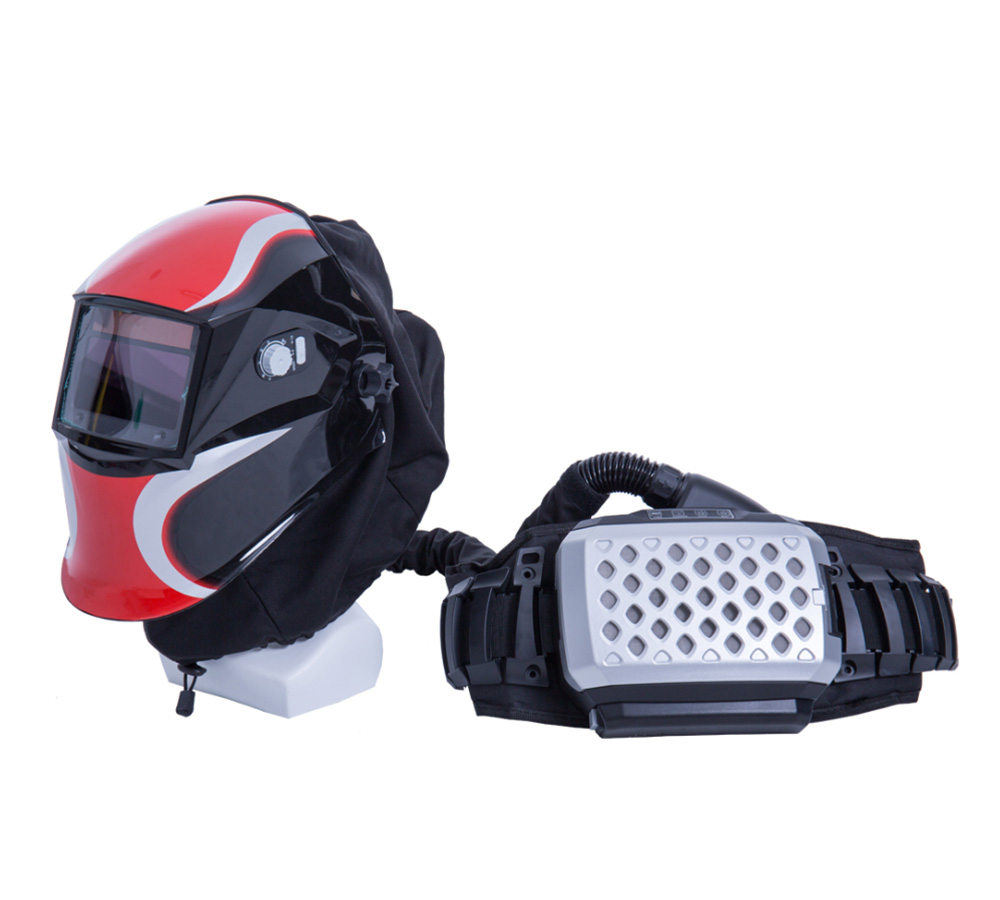
The Powered Air Purifying Respirator (PAPR) .
At Junsee Group, we believe in giving workers protection they actually want to wear. So let us break down the real differences between PAPRs and traditional masks – not just the technology, but the advantages and costs that matter to your bottom line and your workers' health.
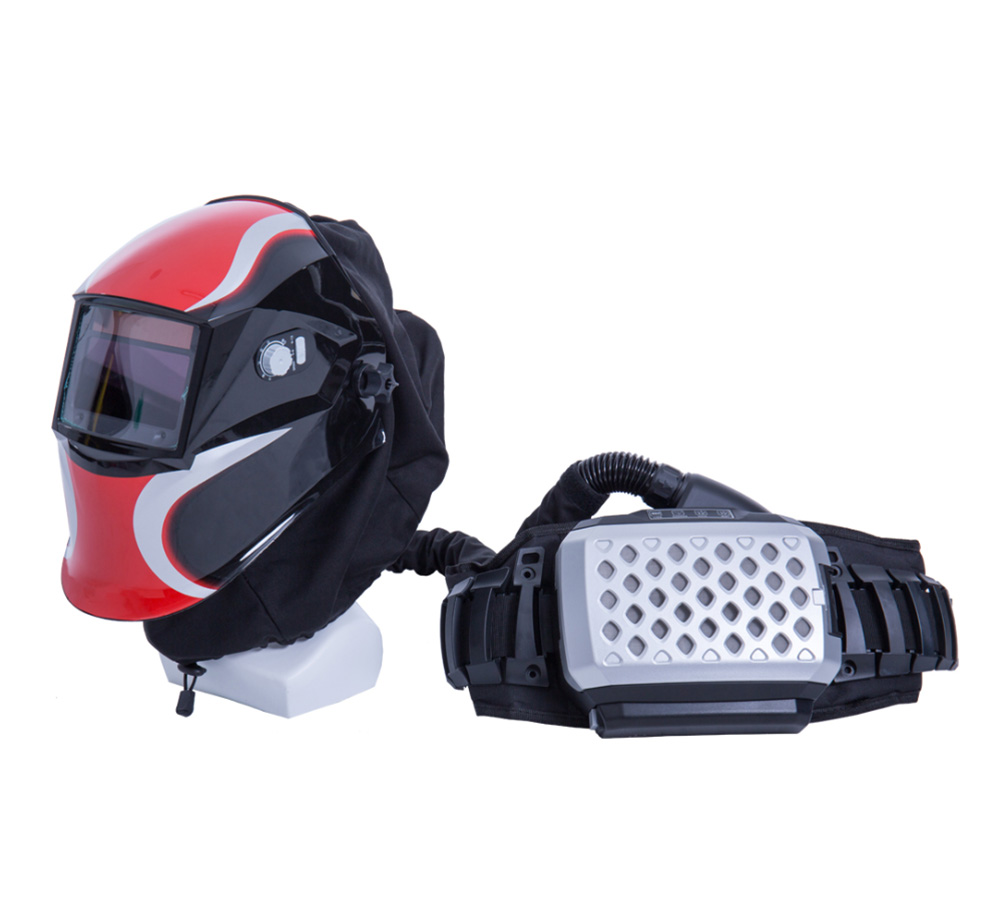
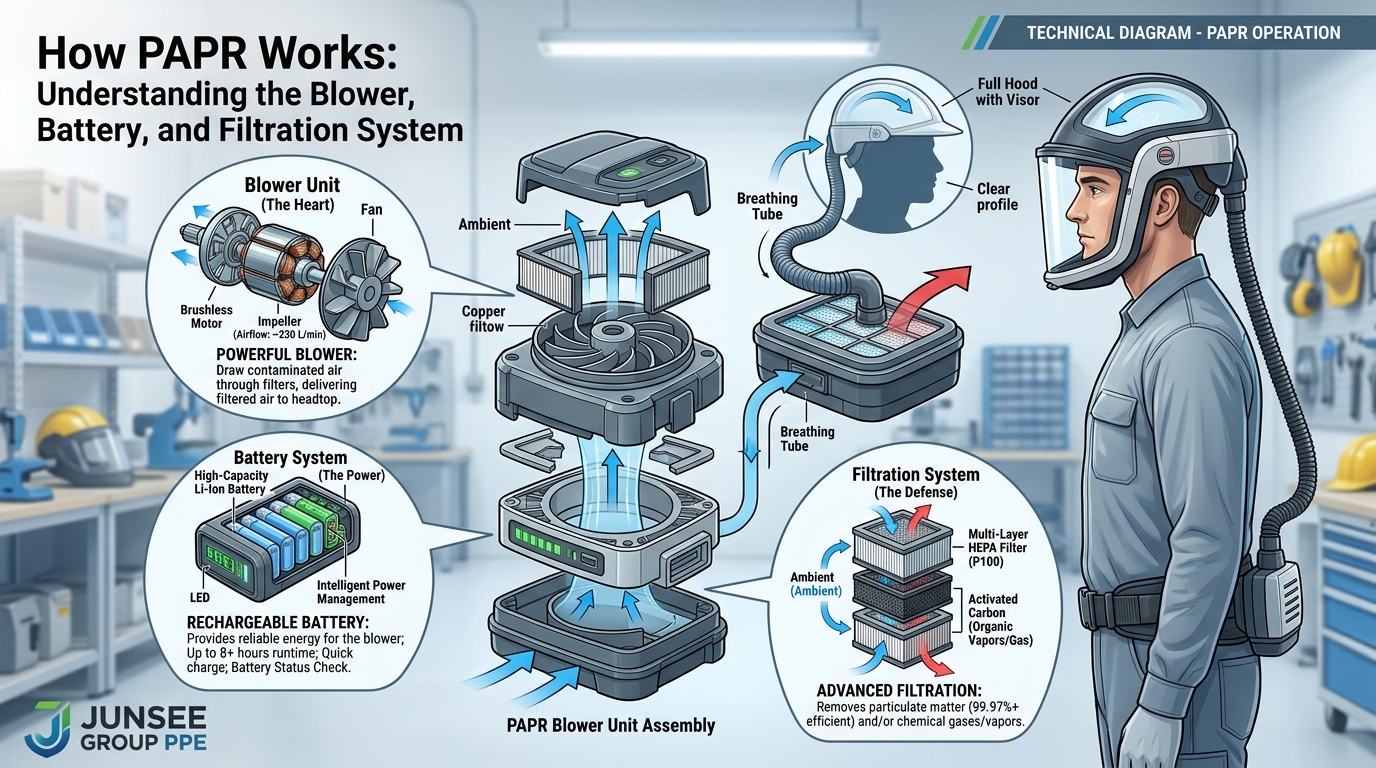
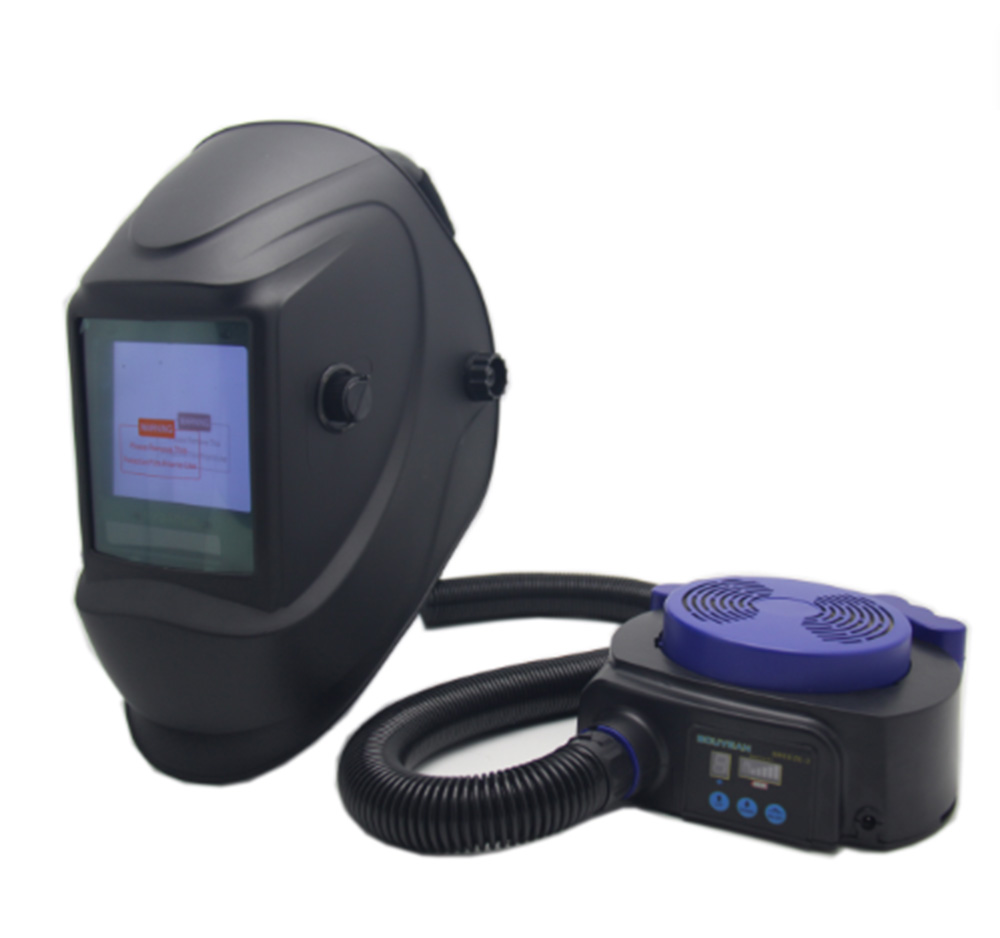
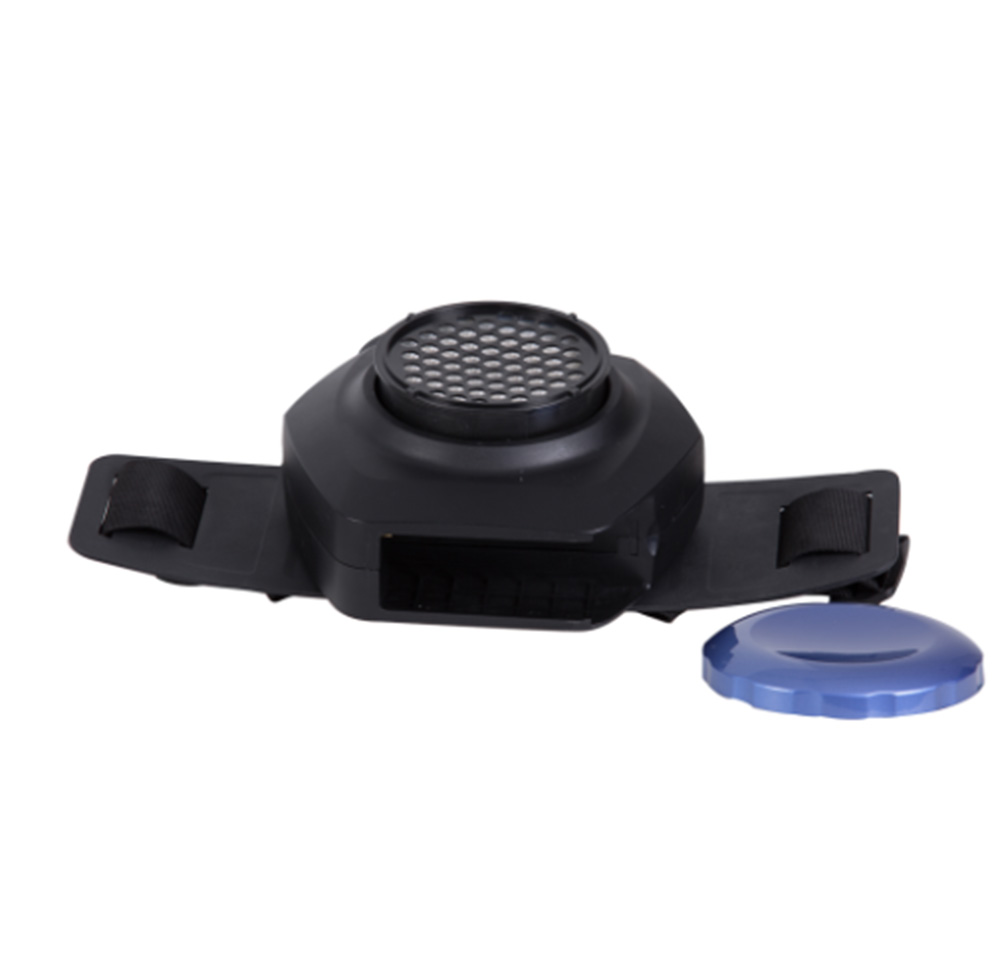
A Powered Air Purifying Respirator (PAPR) is a respiratory protection device that uses a battery-powered blower to pull contaminated air through a filter and deliver purified air to the wearer's facepiece, hood, or helmet .
Unlike traditional masks where the wearer's lungs do all the work of pulling air through the filter, a PAPR does the work for you. The result is effortless breathing and a steady flow of cool, clean air across your face .
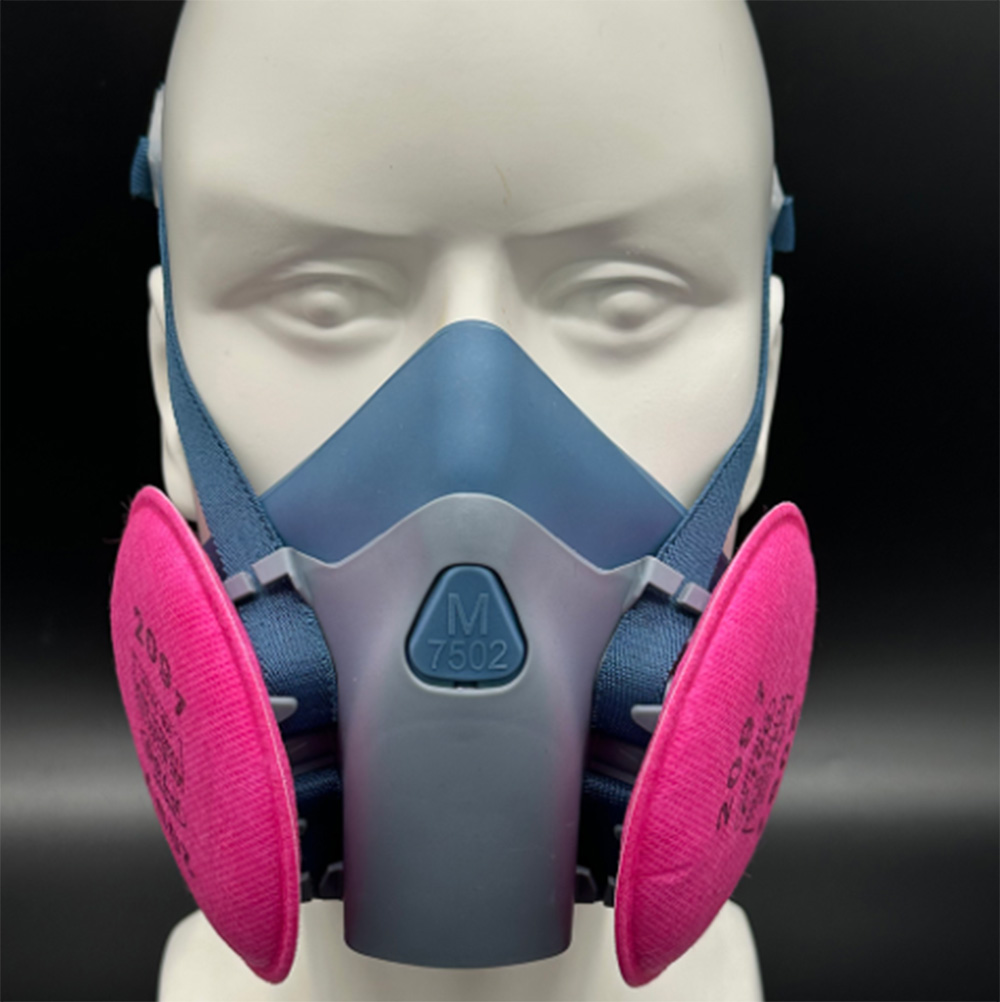
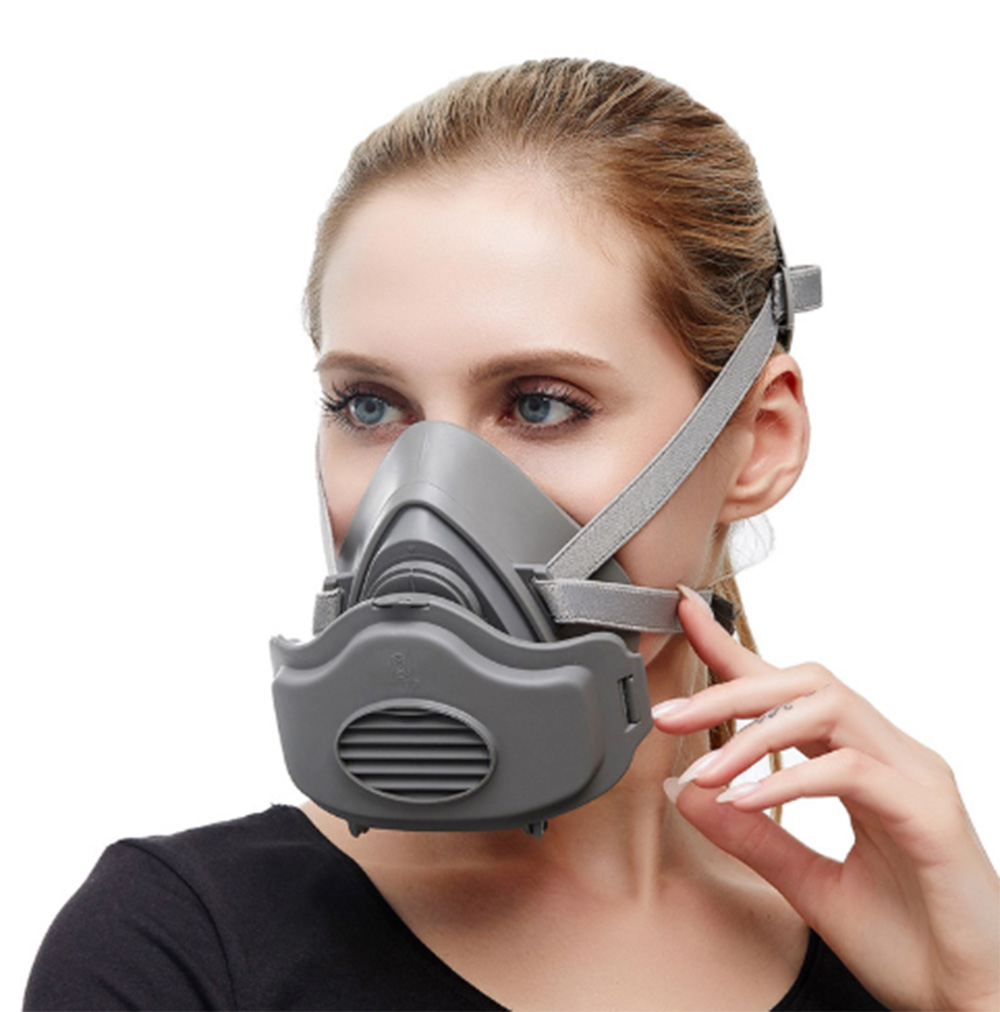
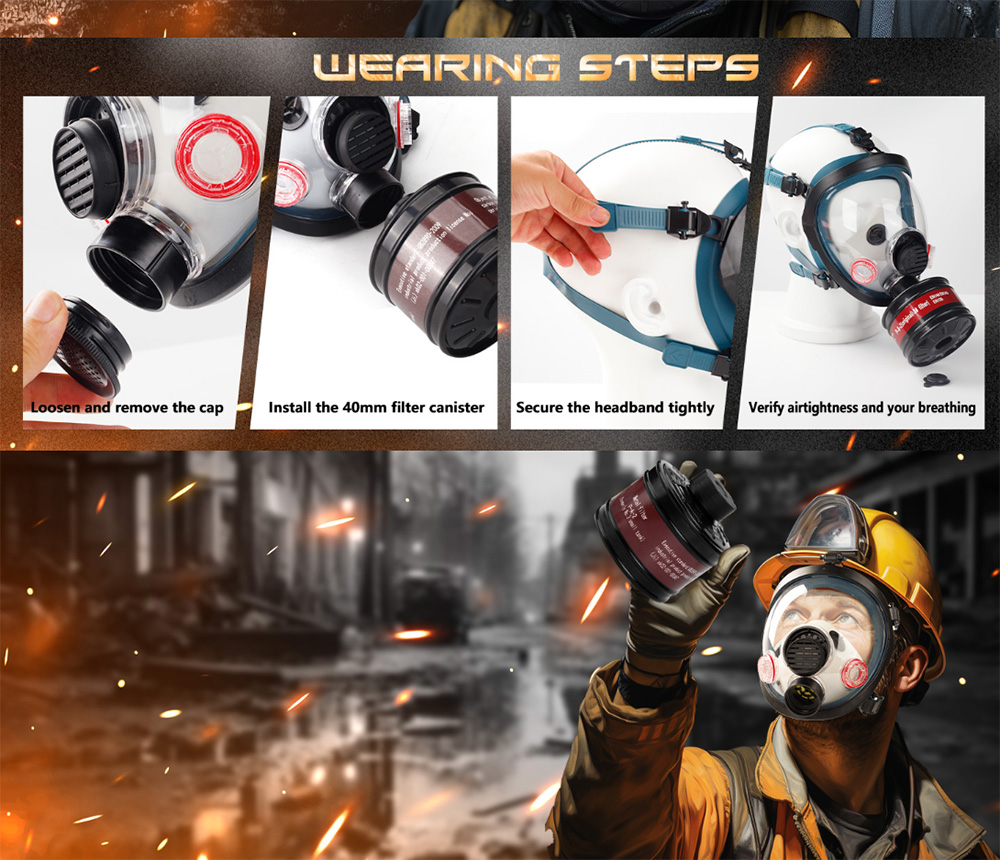
Traditional masks rely entirely on a perfect seal between the mask and the wearer's face. Any gap – from facial hair, scars, glasses, or simply the wrong size – renders the mask ineffective .
PAPRs, particularly those with loose-fitting hoods or helmets, create positive pressure inside the headpiece. This means air flows out of any gaps, preventing contaminants from getting in. Because of this design, no fit testing is required for loose-fitting PAPRs .
✅ Junsee Group takeaway: One PAPR fits virtually any worker – no more stocking multiple sizes or scheduling annual fit tests.
Ask any worker who has worn a traditional mask for 8+ hours: the heat, moisture, and breathing resistance are exhausting .
Traditional negative pressure masks trap exhaled heat and moisture, creating what one expert calls a "hot and moist micro-environment" around the mouth . As filters clog with dust, breathing becomes even harder, accelerating fatigue.
PAPRs solve this problem by:
Delivering a constant stream of cool, filtered air over the face
Eliminating breathing resistance – the fan does the work
Reducing heat stress – especially critical in hot environments like foundries and mines
One miner using a PAPR put it simply: "We love that we can actually go home at night and play with our kids" – because they are not exhausted from fighting to breathe all day .
In traditional masks, voices are muffled. Workers have to shout, repeat themselves, or remove their masks to be understood – exposing themselves to hazards.
PAPRs, especially hood and helmet styles, leave the mouth visible and allow normal speech . This is a game-changer for:
Team coordination on noisy job sites
Radio communication
Supervisors giving instructions
Emergency situations where clear communication saves lives
Traditional masks compete for space on your face. Try wearing a full face respirator and safety glasses and a hard hat – it is uncomfortable at best, impossible at worst.
Many PAPR systems are designed as integrated solutions that combine respiratory protection with head, face, eye, and even hearing protection in one unit . This means:
No gaps between different PPE
Less weight and bulk than separate components
Faster donning and doffing
Reduced snag hazards in tight spaces
This is a practical reality that many safety managers face: not all workers can or will shave daily. Beards, goatees, and stubble all prevent traditional masks from sealing properly.
PAPRs eliminate this problem entirely. Loose-fitting PAPR hoods do not require a seal against the skin, making them the only practical solution for workers who cannot be clean-shaven .
This is the question every safety manager asks. Let us break down the real cost analysis of PAPR vs. traditional masks.
| Traditional Mask (Elastomeric) | PAPR | |
|---|---|---|
| Initial equipment cost | $20 – $80 per unit | $500 – $1,500+ per unit |
| Replacement filters | $5 – $15 per pair | $20 – $50 per filter set |
| Batteries/chargers | Not applicable | $50 – $200 |
At first glance, PAPR seems dramatically more expensive. But upfront cost is not the whole story .
The most expensive PPE is the one workers do not wear.
When masks are uncomfortable, workers find ways to remove them – just for "a few minutes" – or wear them incorrectly. This is not a worker problem; it is a design problem .
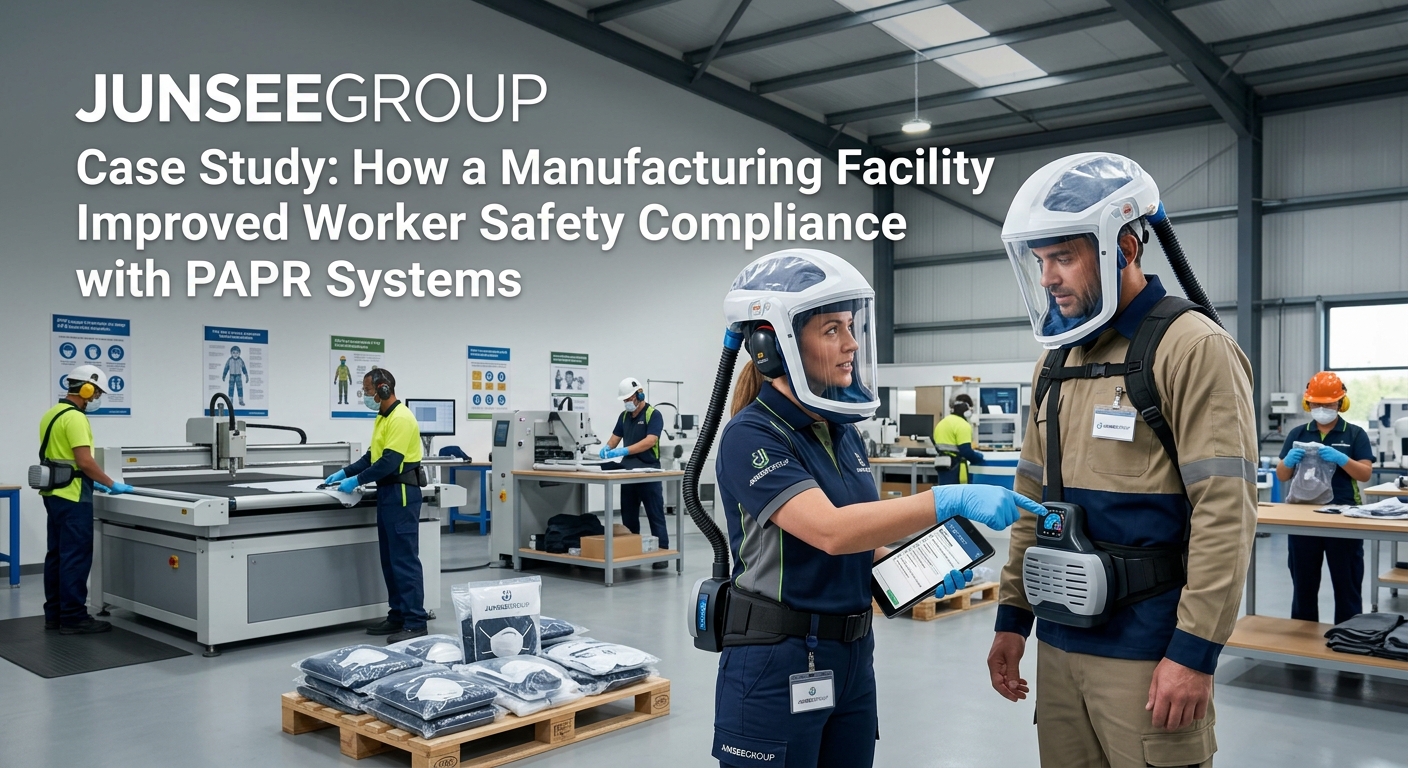
PAPRs address the root causes of non-compliance: heat, breathing resistance, and discomfort. A PAPR that workers actually wear provides 100% protection 100% of the time. A traditional mask that sits on a hook provides zero protection.
✅ Junsee Group takeaway: When calculating ROI, factor in injury prevention, productivity, and compliance – not just equipment price tags.
| Cost Item | Traditional Mask | PAPR |
|---|---|---|
| Initial equipment | $50 | $1,000 |
| Annual fit testing (5 years) | $375 | $0 |
| Filters (replaced quarterly) | $200 | $150 |
| Batteries (replaced every 2 years) | N/A | $100 |
| 5-Year Total | $625 | $1,250 |
The PAPR costs about twice as much over 5 years – not 20 times as much as the upfront price suggests. And that is before factoring in:
Reduced heat stress injuries
Higher productivity from comfortable workers
Lower compliance enforcement costs
Reduced liability from protection failures
| Scenario | Recommended Solution |
|---|---|
| Short-duration tasks (< 2 hours) | Traditional mask may suffice |
| Long shifts (8+ hours) | PAPR – comfort matters |
| High-heat environments | PAPR – reduces heat stress |
| Workers with facial hair | PAPR – no seal required |
| High-risk airborne hazards (toxic dust, chemical vapors) | PAPR – higher protection factor |
| Multiple workers sharing equipment | PAPR – no fit testing needed per user |
| Tight budget / low hazard | Traditional mask |
At Junsee Group, we offer both traditional respirators and PAPR solutions because we understand that different situations call for different tools.
But we are also honest about the trade-offs:
Traditional masks are budget-friendly and portable – suitable for short-term, low-to-moderate hazard exposure.
PAPRs are an investment in worker comfort, compliance, and long-term health – ideal for extended shifts, high-heat environments, and high-risk exposures.
We help our customers run the numbers – not just the equipment cost, but the total cost of ownership including fit testing, filters, batteries, compliance rates, and productivity impact.
PAPR vs traditional mask is not just a technology choice – it is a worker wellness and productivity decision.
PAPRs offer:
✅ Higher protection (positive pressure)
✅ No fit testing required
✅ Cool, effortless breathing
✅ Clear communication
✅ Compatibility with facial hair and other PPE
Yes, they cost more upfront. But when you factor in compliance, productivity, and long-term health outcomes, many workplaces find that PAPRs are worth every penny.
Junsee Group is here to help you make the right choice for your workers and your budget. Whether you need traditional respirators or are ready to explore PAPR solutions, we have the expertise and products to keep your team breathing easy.


Your email address will not be published. Required fields are marked