
You see them on every construction site, in every factory, and on every worker who faces overhead hazards. But how much do you really know about the industrial safety helmet sitting on your head?
Most workers put on their hard hat without thinking about what each part does, how it protects them, or when it stops protecting them.
At Junsee Group, we believe that understanding your PPE is the first step to using it correctly. So let us pull back the curtain and reveal 8 secrets hidden in every hard hat – from the shell to the suspension, from the markings to the hidden features that could save your life.
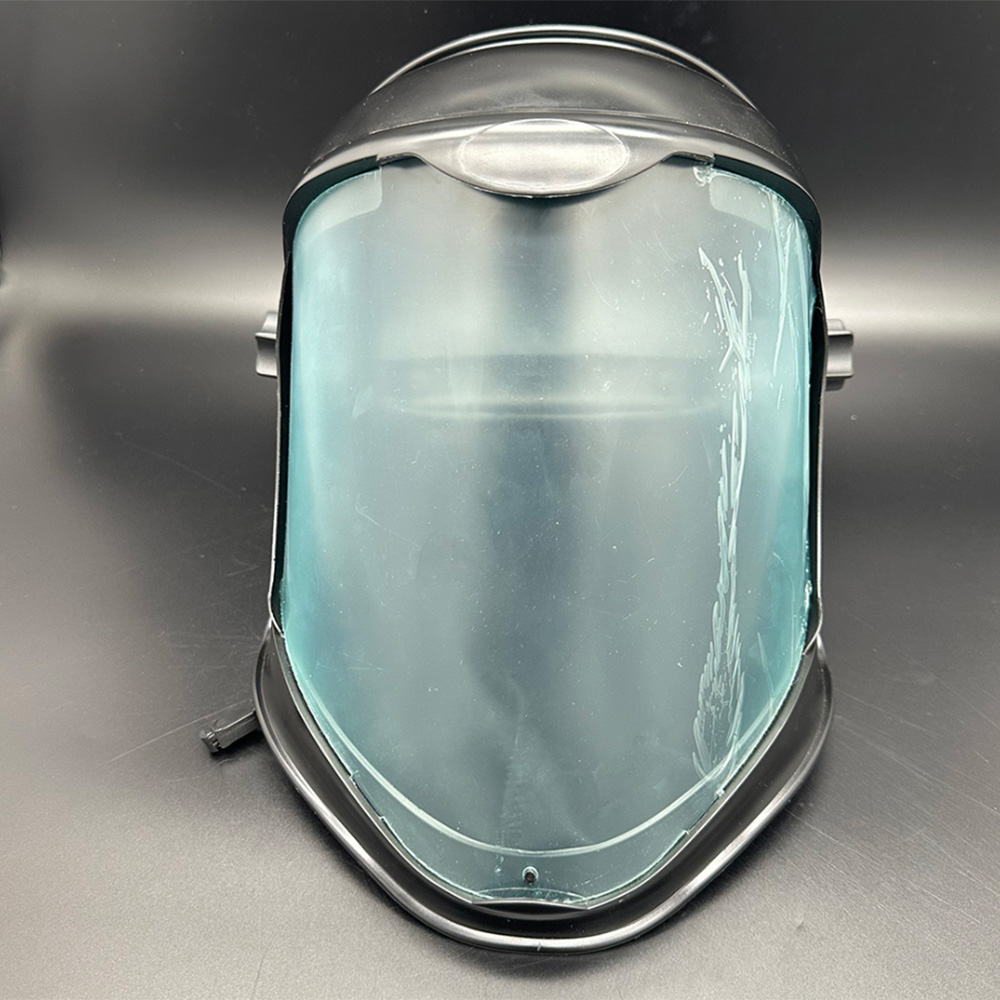
Not all hard hat shells are the same. The material determines the helmet's strength, weight, temperature resistance, and electrical properties.
| Material | Properties | Best For |
|---|---|---|
| HDPE (High-Density Polyethylene) | Lightweight, good impact resistance, low cost | General construction, manufacturing |
| ABS (Acrylonitrile Butadiene Styrene) | Stiffer than HDPE, excellent impact strength, good chemical resistance | Heavy industry, oil and gas, chemical plants |
| Polycarbonate (PC) | Very high impact resistance, excellent temperature range (-40°C to +120°C) | Extreme cold or heat, high-impact environments |
| Fiberglass | Extremely strong, heat resistant (up to 200°C+), heavy | Foundries, steel mills, welding |
| Carbon Fiber | Ultra-light, very strong, expensive | High-end applications, reduced neck fatigue |
Junsee Group secret: A cheap HDPE hard hat may protect you from a falling hammer, but it may crack in extreme cold or soften in high heat. Choose shell material based on your actual environment – not just price.
Most people think the hard shell stops the impact. That is only half the truth.
The suspension system – the webbing and headband inside the hard hat – is responsible for absorbing and distributing impact energy. Without a properly functioning suspension, the shell alone cannot protect you.
| Part | Function |
|---|---|
| Headband | Wraps around the head, holds the helmet in place |
| Crown straps | Cross over the top of the head, create space between head and shell |
| Nylon webbing | Absorbs impact energy by stretching slightly |
| Ratchet or pin-lock adjustment | Customizes fit for different head sizes |
| Sweatband | Absorbs moisture, improves comfort |
Critical fact: The gap between your head and the shell – typically 1 to 1.5 inches – is designed space. That gap allows the shell to deform on impact without hitting your skull. If you wear a hat or thick hood under your hard hat and close that gap, you dramatically reduce protection.
✅ Junsee Group recommendation: Replace the suspension system every 12 months – even if the shell looks fine. Suspension materials degrade with sweat, UV exposure, and repeated impacts.
Every certified industrial safety helmet has markings molded into the shell or printed on a label inside. These markings are not random. They tell you exactly what the helmet is rated for.
| Standard | Region | Key Requirements |
|---|---|---|
| ANSI/ISEA Z89.1 | United States | Impact, penetration, electrical (Class E, G, C) |
| EN 397 | Europe | Impact, penetration, optional: low temp, molten metal, electrical |
| EN 12492 | Europe (mountaineering/industrial) | Lateral (side) impact – required for climbing/vertical work |
| CSA Z94.1 | Canada | Similar to ANSI with additional cold temperature requirements |
| Marking | Meaning |
|---|---|
| Type I | Top impact protection only |
| Type II | Top and side impact protection |
| Class E (Electrical) | Tested to 20,000 volts |
| Class G (General) | Tested to 2,200 volts |
| Class C (Conductive) | No electrical protection |
| LT | Low temperature rating (-30°C/-22°F) |
| HV | High visibility (reflective material) |
Junsee Group secret: Many workers assume all hard hats protect against electricity. They do not. Class C hard hats offer no electrical protection and may even conduct electricity. Always check the marking.
Most hard hats on the market are Type I – they are designed to protect against impacts straight to the top of the head. They are not tested for (and may not protect against) impacts to the side, front, or back.
Type II hard hats include side impact protection. They are tested for impacts from the top, front, back, and sides – making them significantly safer for:
| Industry | Why Side Impact Matters |
|---|---|
| Construction (falling objects can strike from angles) | Objects can glance off structures and hit from the side |
| Oil and gas (tight spaces with protruding equipment) | Workers turn their heads – impacts come from all directions |
| Mining (low ceilings, moving equipment) | Lateral strikes are common |
| Arborists/tree work (falling branches rarely fall straight down) | Branches swing and strike from the side |
| Rescue and confined space | Workers must tilt and turn heads in tight spaces |
✅ Junsee Group recommendation: If your workers are exposed to hazards that can come from any direction – not just straight down – choose Type II hard hats with side impact protection.
In many workplaces, chin straps are treated as optional or annoying. But in certain situations, a hard hat without a chin strap is worse than no hard hat at all.
| Situation | Why |
|---|---|
| Working at heights (ladders, scaffolding, aerial lifts) | If you fall, your head will move rapidly. A hard hat without a chin strap can fly off before impact. |
| High wind environments | Wind can blow the hard hat off your head |
| Looking up or down repeatedly | Changing head angle can dislodge an unstrapped helmet |
| Working near moving machinery | A loose hard hat can be knocked off by equipment |
| Rescue and emergency response | Movement is rapid and unpredictable |
| EN 12492 certified helmets (mountaineering/industrial) | Chin strap is required for certification |
The math: A hard hat that falls off before impact provides exactly zero protection. A simple chin strap ensures the helmet stays where it belongs – on your head.
Here is a secret that many safety managers know but few enforce:
Hard hats do not last forever.
Plastic degrades. UV radiation breaks down polymer chains. Heat, cold, chemicals, and even sweat accelerate aging. An old hard hat can become brittle and crack on impact – or soft and deform without absorbing energy.
| Condition | Recommended Replacement |
|---|---|
| Normal indoor use (factory, warehouse) | 5 years from manufacture date |
| Outdoor use (construction, utility) with UV exposure | 2-3 years from first use |
| Extreme conditions (chemical exposure, high heat) | 1-2 years or sooner |
| Suspension system only (if shell is undamaged) | 12 months |
Look inside the shell for a date stamp – typically a dial with an arrow pointing to a specific month and year, or a molded code like "22Q3" (third quarter of 2022).
Junsee Group secret: Many workers assume hard hats are good "until they break." By then, it is too late. Replace hard hats on a calendar schedule, not a damage schedule.
Those rectangular slots on the sides of many industrial safety helmets are not just for mounting headlamps or face shields. They serve important safety functions:
| Accessory | Safety Purpose |
|---|---|
| Face shield visor | Protects eyes and face from impact, splash, or welding arc |
| Ear muff attachment | Integrated hearing protection (better seal than stand-alone muffs) |
| Headlamp | Keeps hands free while illuminating dark work areas |
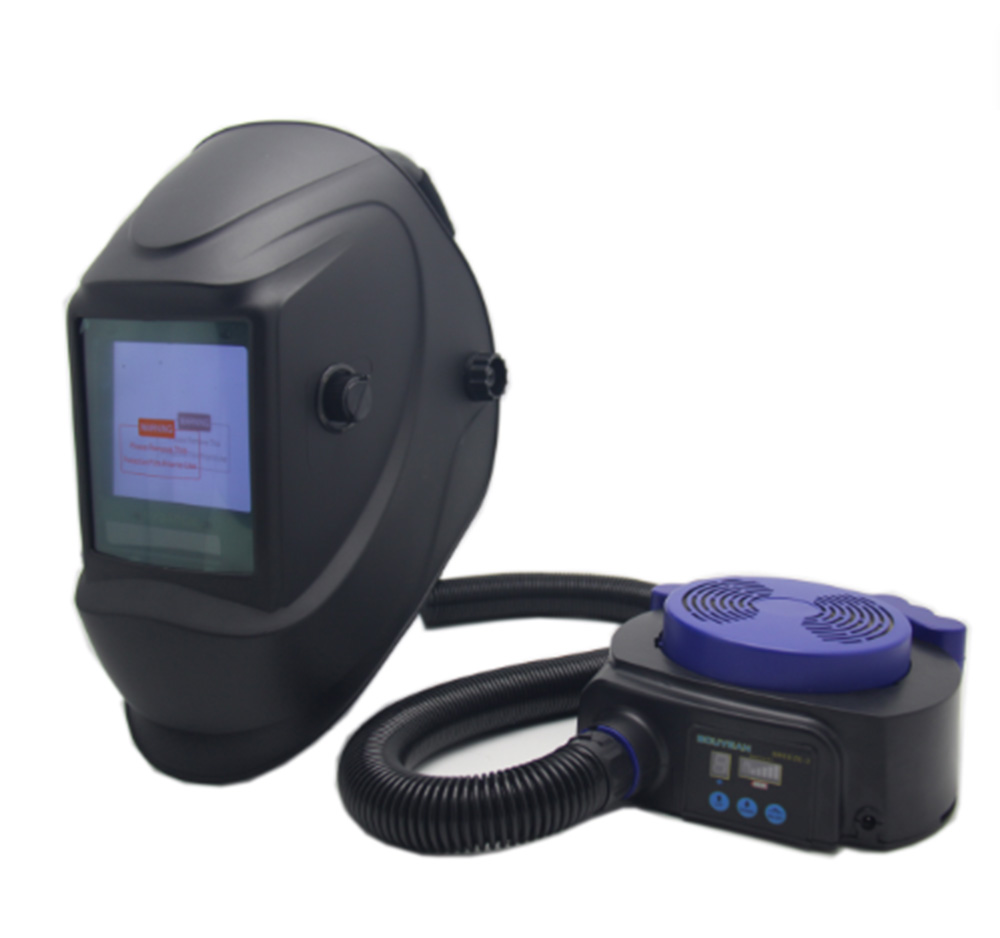
| Welding helmet adapter | Allows welding helmet to pivot up without removing hard hat |
| Communication headset | Two-way radio integrated into helmet |
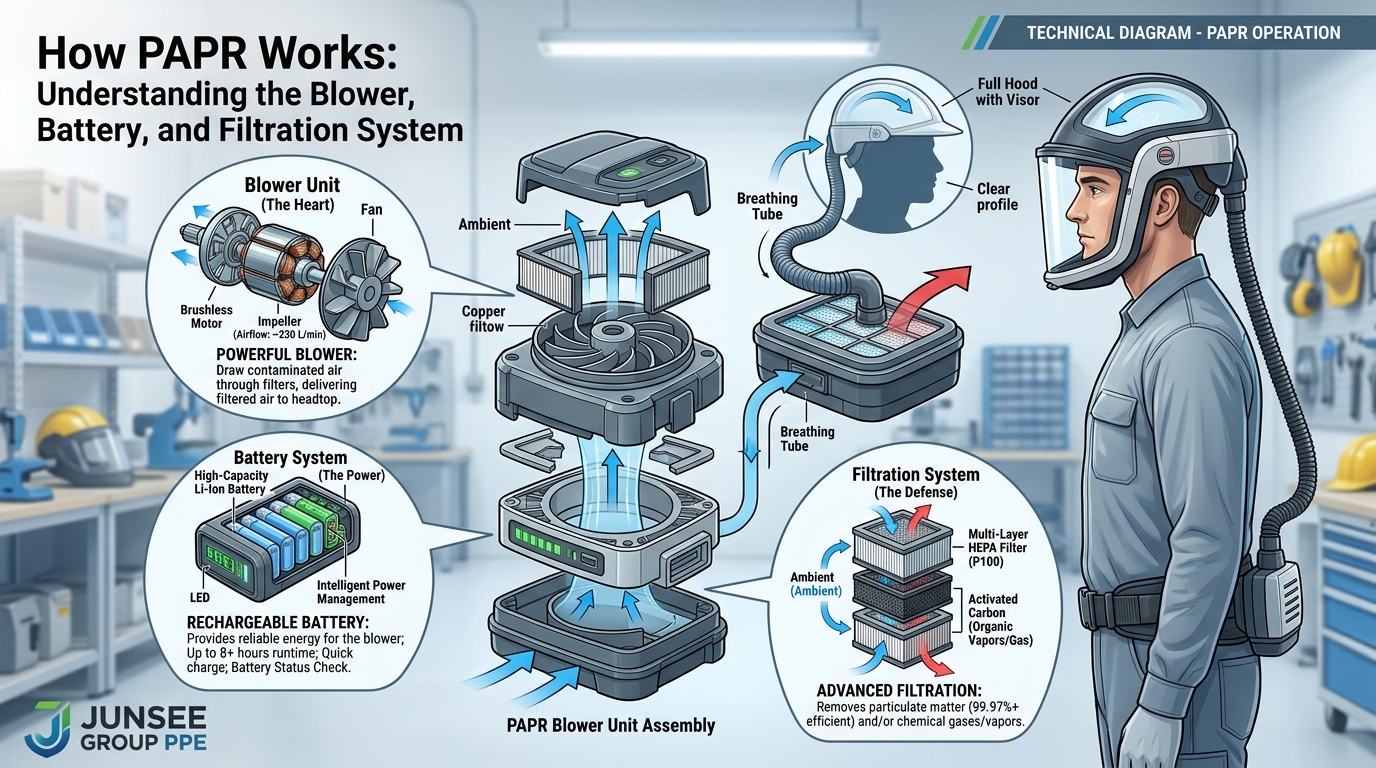
| Cooling fan (PAPR) | Powered air-purifying respirator attachment for respiratory protection |
Critical warning: Not all accessories are compatible with all hard hats. Using an accessory that was not designed for your specific helmet can:
Create leverage that reduces impact protection
Add weight that fatigues the neck
Interfere with the suspension system
Void the helmet's certification
✅ Junsee Group recommendation: Always use accessories that are certified for your specific hard hat model. Do not drill holes, modify, or attach unauthorized components.
Many workers unintentionally destroy their own protection. Here are four common mistakes – and how to avoid them.
| Problem | Consequence |
|---|---|
| Many paints contain solvents that attack plastic polymers | Shell can become brittle or soft – reducing impact protection |
| Paint adds weight | Changes impact dynamics |
| Paint hides cracks | You cannot see damage |
| Improper paint can affect electrical insulation | Class E or G helmets may lose certification |
Solution: Only use manufacturer-approved paints – or better yet, buy hard hats in your desired color from the factory.
| Problem | Consequence |
|---|---|
| Prolonged UV exposure from sunlight through glass | UV degrades plastic – shell becomes brittle |
| Heat buildup on dashboard (can exceed 70°C/160°F) | Heat accelerates aging and can soften some materials |
Solution: Store hard hats in a cool, dark place – a locker, cabinet, or tool bag. Never leave them on car dashboards or rear window decks.
| Problem | Consequence |
|---|---|
| Acetone, benzene, gasoline, paint thinner, or strong degreasers | These chemicals attack the polymer structure of the shell and suspension |
Solution: Clean hard hats with mild soap and warm water only. No solvents, no abrasives.
| Problem | Consequence |
|---|---|
| Any hole through the shell creates a stress concentration point | The shell will crack at the hole on impact – failure is guaranteed at that point |
| Drilling voids all certifications | No ANSI, EN, or CSA certification remains |
Solution: If you need ventilation, buy a factory-vented hard hat designed with reinforced vent holes that maintain impact strength. Never drill your own.
| Secret | Key Takeaway |
|---|---|
| #1 – Shell material | Match material to your environment (HDPE, ABS, PC, fiberglass, carbon) |
| #2 – Suspension system | Replace every 12 months – gap between head and shell is critical |
| #3 – Markings | Read certification codes – know what your helmet is rated for |
| #4 – Side impact | Type II helmets for hazards from any direction |
| #5 – Chin strap | Essential for heights, wind, and any job where helmet could fall off |
| #6 – Expiration date | Hard hats expire – replace on schedule, not after damage |
| #7 – Accessory slots | Use only certified accessories – never modify |
| #8 – Don't paint, bake, solvent-clean, or drill | These destroy protection |
At Junsee Group, every industrial safety helmet we manufacture or supply is designed with these eight secrets in mind. We build hard hats that:
✅ Use the right shell material for the application
✅ Feature comfortable, durable suspension systems
✅ Carry clear, permanent certification markings
✅ Offer Type II side impact options for high-risk environments
✅ Support certified accessories (face shields, ear muffs, headlamps)
✅ Include manufacturing date stamps for proper replacement scheduling
But we also believe that the best hard hat in the world only protects if you understand it, maintain it, and replace it on time.


Your email address will not be published. Required fields are marked