

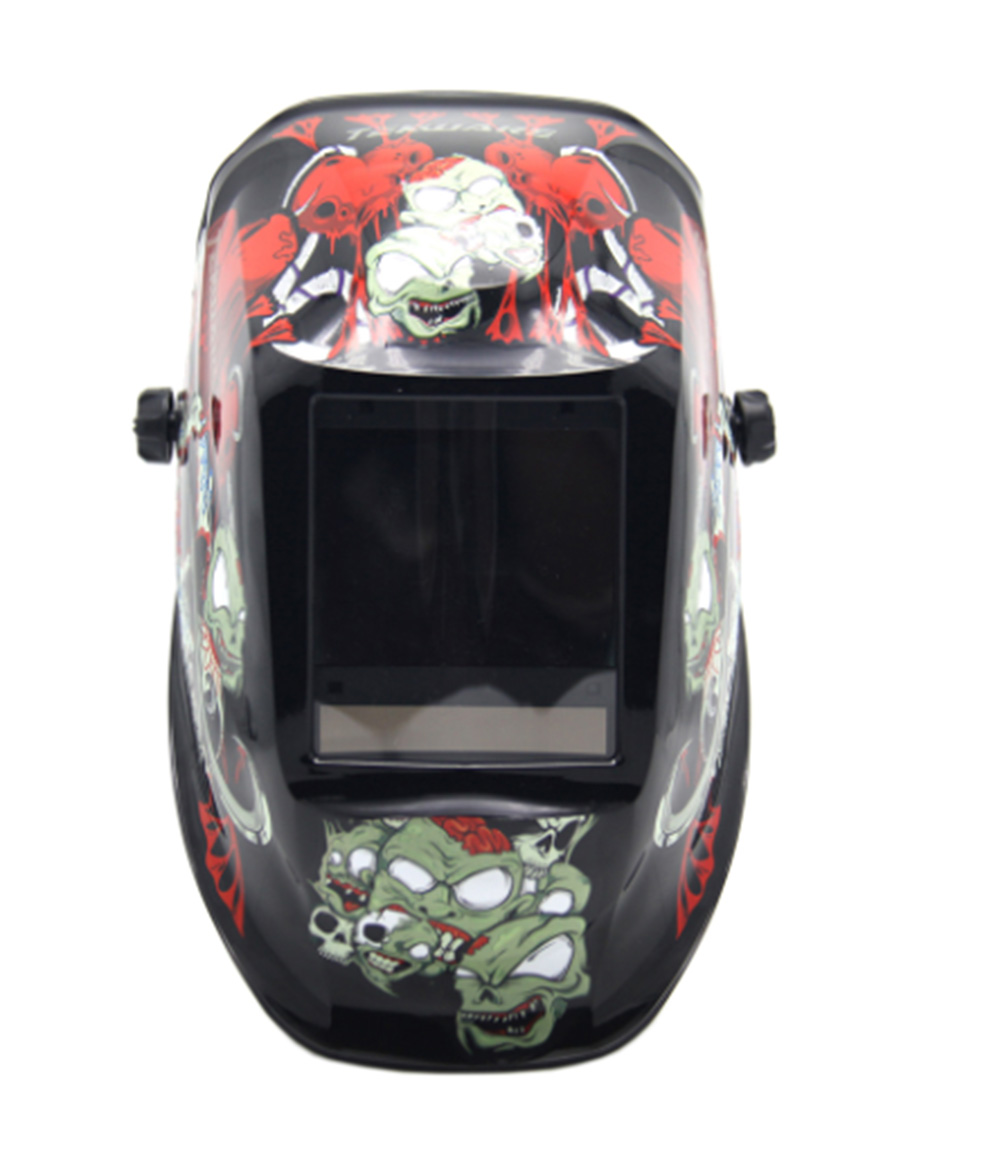
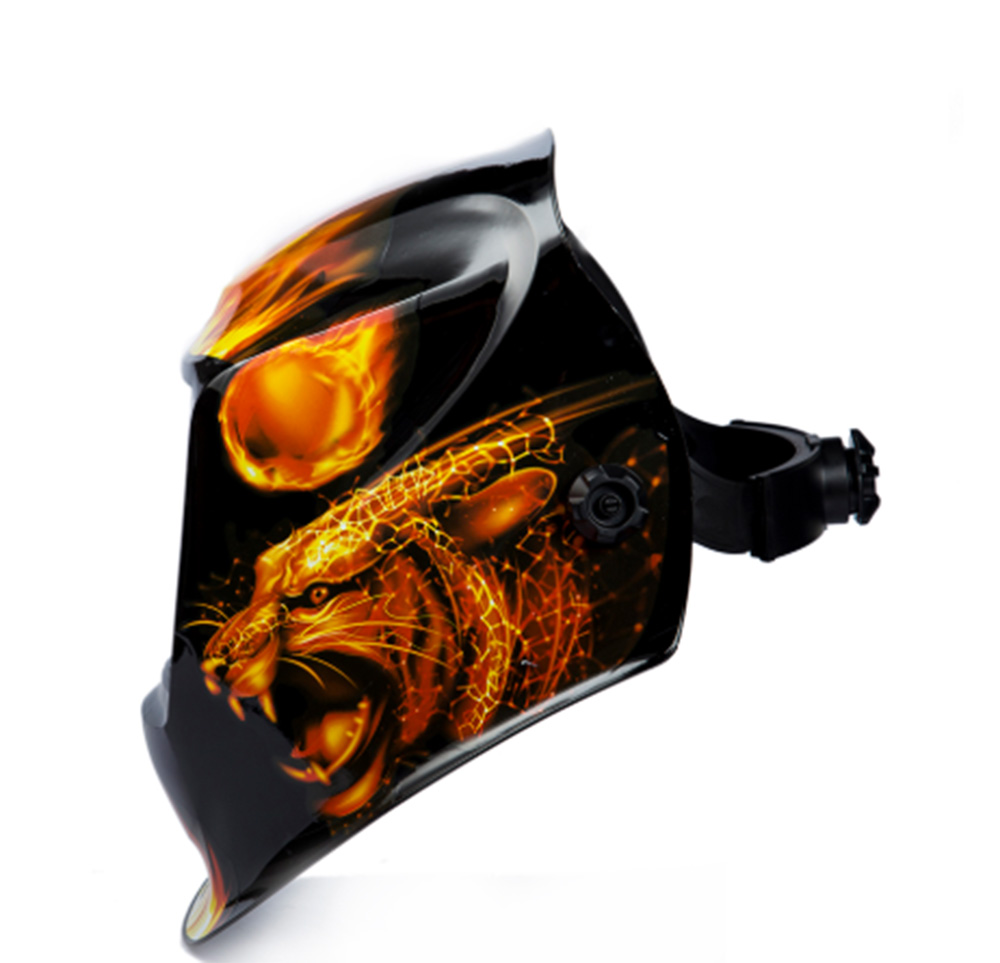
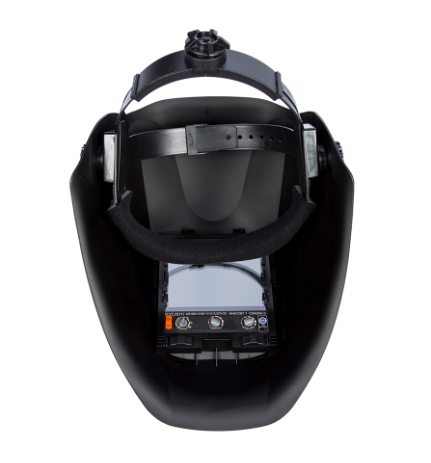
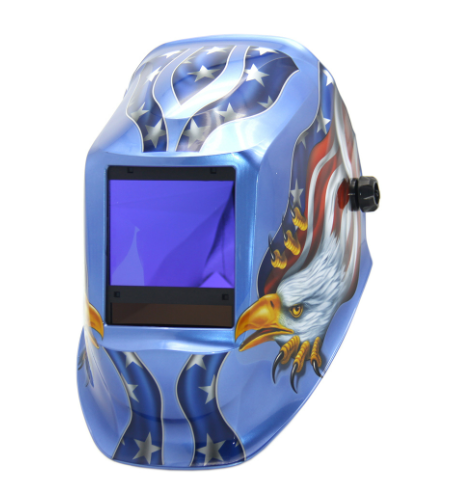
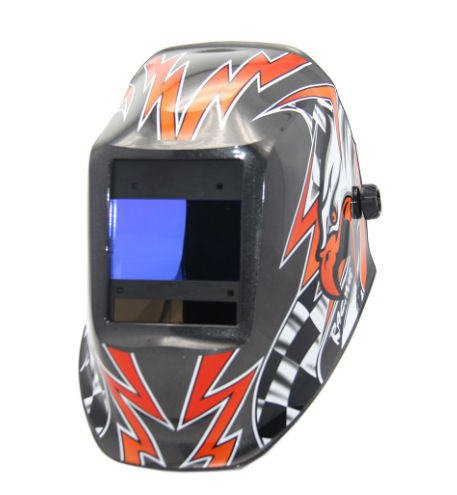
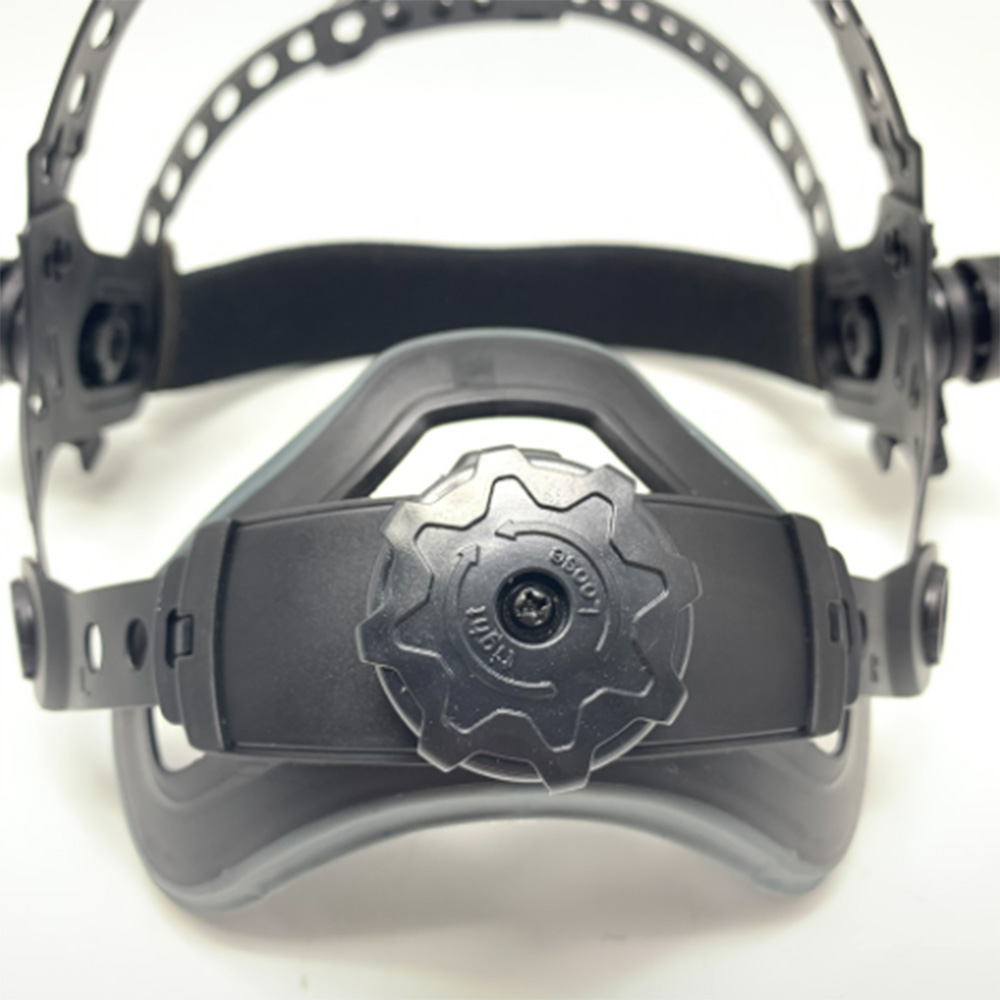
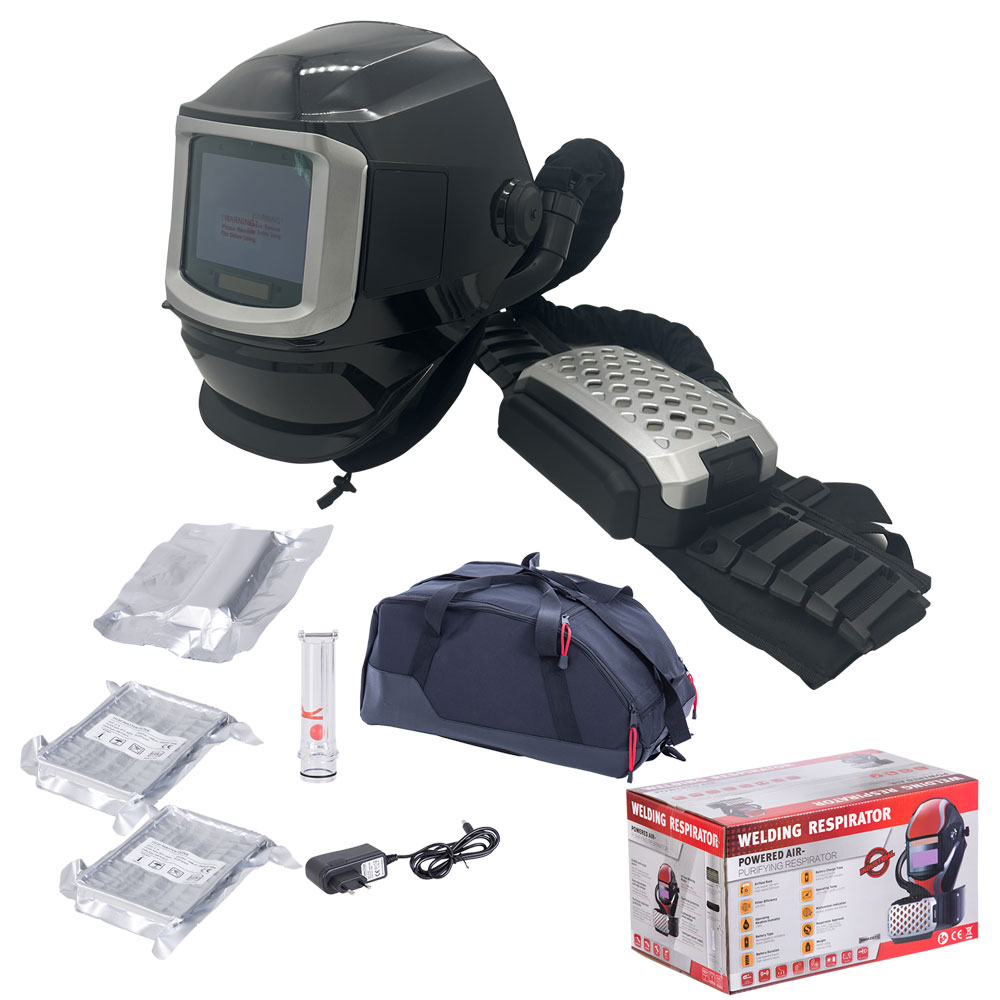
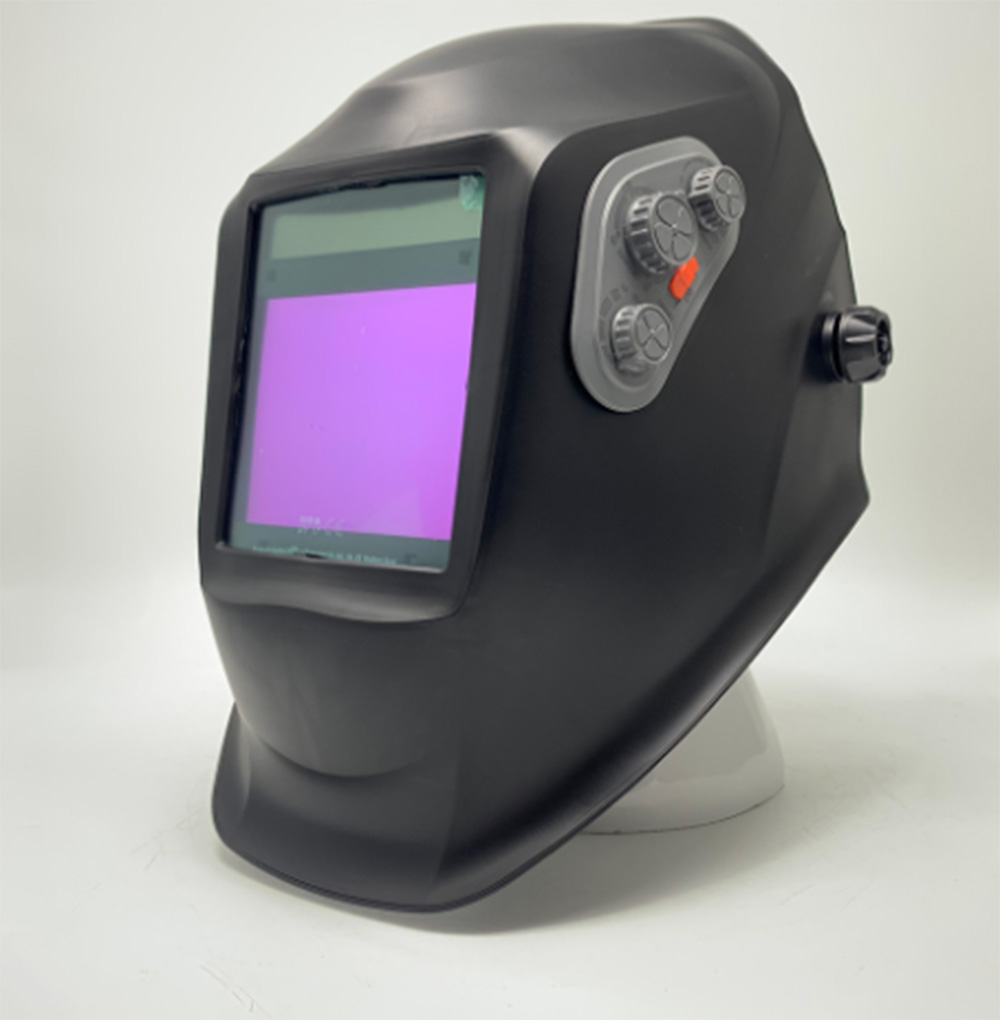
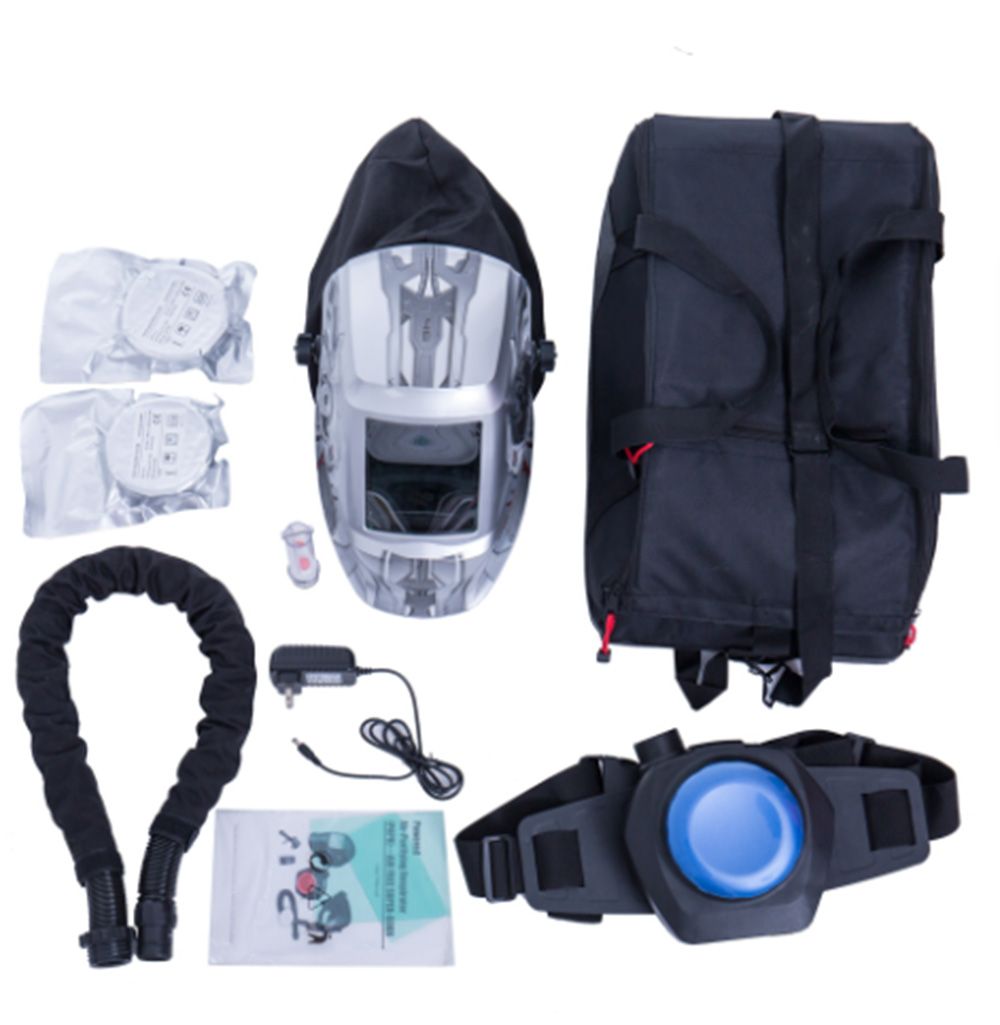
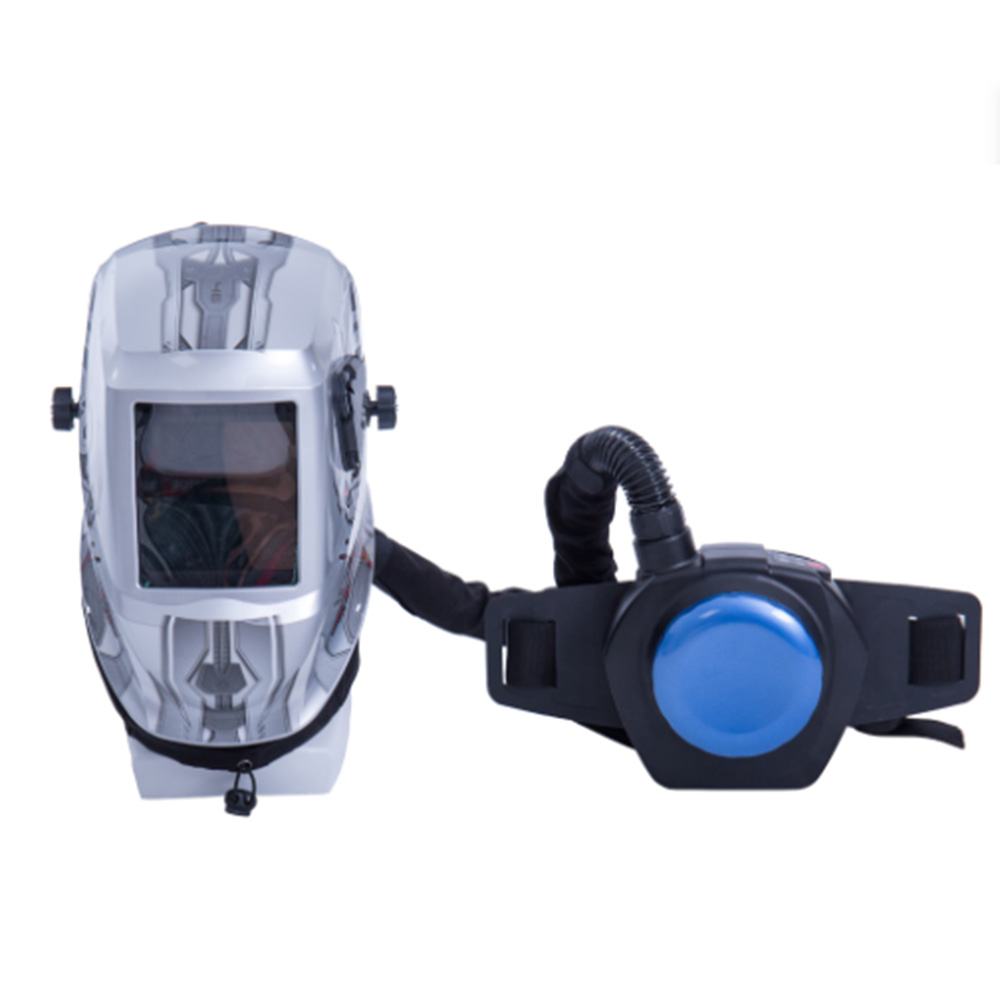
In industrial welding environments—spanning structural steel fabrication, shipbuilding, pipeline construction, and automotive manufacturing—an Auto Darkening Filter (ADF) is the critical line of defense protecting a welder's eyes from intense ultraviolet (UV), infrared (IR), and visible arc radiation. Modern professional auto darkening welding helmets almost universally rely on a hybrid dual-power architecture combining a photovoltaic solar panel with one or two replaceable CR2032 lithium coin cell batteries.
Despite its ubiquity, a widespread misconception persists across workshops: many buyers assume the solar cell actively recharges the CR2032 coin battery. In reality, CR2032 lithium manganese dioxide cells are non-rechargeable primary batteries, and attempting to trickle-charge them would violate basic electrical safety standards. As a specialized Chinese manufacturer of industrial Personal Protective Equipment (PPE)—including EN 379 and ANSI Z87.1+ auto darkening welding helmets, Powered Air-Purifying Respirators (PAPRs), and full-face respiratory systems—junseegroup breaks down the exact circuit engineering behind how the solar path and CR2032 battery path divide the workload inside a high-performance ADF.
1. Why Hybrid Power Architecture Is Essential for Professional Welding PPE
A professional-grade Auto Darkening Filter must perform two fundamentally different electrical tasks with absolute reliability:
- Instantaneous High-Current Transient Switching: When an arc strikes, optical photodiodes must detect the light spike and drive liquid crystal (LC) cells from a light state (typically DIN 3 or DIN 4) to a dark shade (DIN 9 to DIN 13) within 0.04 to 0.1 milliseconds (1/25,000s).
- Continuous Steady-State Holding & Microcontroller Logic: Once darkened, the ADF must maintain a precise, flicker-free voltage across the liquid crystal layers while powering shade/sensitivity/delay adjustment circuits, low-TIG amperage amplifiers, and digital LED/LCD interfaces.
Relying exclusively on a solar panel creates a dangerous vulnerability during low-amperage TIG welding, out-of-position welding where the solar panel is shadowed by pipework, or the critical first millisecond of arc ignition before ambient light stabilizes. Conversely, relying solely on a coin cell without solar load-sharing drains battery capacity rapidly during high-duty-cycle production shifts.
2. How the Two Power Paths Actually Divide the Electrical Load
Inside a junseegroup engineered ADF circuit board, an intelligent power-management integrated circuit (PMIC) with Schottky isolation diodes routes current from both sources independently—preventing reverse current flow into the non-rechargeable CR2032 cell while maximizing energy efficiency.
A. The CR2032 Lithium Battery Path: Ignition, Shadow Protection & Logic Memory
The 3V CR2032 lithium manganese dioxide coin cell (typically rated at 210–240 mAh with a wide operating temperature range from -20°C to +70°C) acts as the precision baseline and peak-impulse power source:
- Standby & Wake-Up Readiness: Powers the ultra-low-quiescent-current optical arc sensors (consuming mere microamps) so the helmet remains continuously armed even when pulled directly out of a dark locker.
- Sub-Millisecond Arc Ignition Surge: Supplies the immediate voltage boost required to twist the nematic liquid crystal molecules at the exact microsecond of arc strike—before the solar cell’s output voltage stabilizes.
- Shadowed & Low-Amperage TIG Operation: Takes over 100% of the load when welding at 2–5 amps (where arc light intensity is too weak to energize the solar array) or when welding inside confined tanks and structural cavities where the solar strip is obstructed.
- User Settings & Grind Mode Control: Sustains microcontroller memory for shade selection, sensitivity calibration, delay timing, and low-battery diagnostic warnings.
B. The Photovoltaic Solar Panel Path: Continuous Arc-Sustaining Power
Positioned directly above the viewing window, the amorphous or monocrystalline silicon solar strip harvests intense visible and near-infrared energy radiated directly by the welding arc itself:
- Steady-State Liquid Crystal Sustaining: Once the arc is established (typically generating 3.5V to 5.5V from the solar array), the solar path assumes up to 80%–90% of the continuous holding current required to keep the LCD shutter locked in its dark state.
- Battery Load Offloading: By clamping the DC bus voltage slightly above the CR2032’s 3.0V nominal output via diode steering, the solar cell automatically isolates the lithium battery during active MIG/MAG, Stick (MMA), and high-amp TIG welding—extending CR2032 service life from a few hundred hours to over 2,500–4,000 operational hours.
3. Engineering Comparison: Power Path Division Across Welding Phases
The table below illustrates how power allocation dynamically shifts across each phase of a typical industrial welding cycle in a dual-power ADF:
| Welding Operational Phase | CR2032 Battery Role | Solar Panel Role | Safety & Performance Outcome |
|---|---|---|---|
| Standby / Dark Storage | 100% Active (Microamp sensor monitoring) | 0% (Inactive) | Instant readiness in dark workshops |
| Arc Strike (0.00 – 0.05 ms) | Primary Surge Provider (Drives rapid LC twist) | Ramping up | Eliminates flash-burn & eye fatigue |
| Continuous High-Amp Welding | Standby / Isolation Mode | 85%–95% Primary Load | Maximizes CR2032 battery lifespan |
| Low-Amp TIG (<10A) / Obstructed Arc | 100% Fail-Safe Backup | Minimal / Insufficient output | Zero accidental lightening (un-darkening) |
| Post-Weld Delay & Grind Mode | 100% Active (Controls fade-out delay) | Dropping to 0% | Protects eyes from glowing weld pool |
4. Critical Engineering Standards: EN 379, EN ISO 16321-2 & ANSI Z87.1+
When industrial safety managers and PPE distributors evaluate auto darkening helmets, power-circuit reliability directly determines compliance with international optical safety standards:
- EN 379 & EN ISO 16321-2:2021 Optical Clarity & Switching Consistency: Dual-power voltage regulation prevents voltage sag across the LCD layers, maintaining top-tier 1/1/1/1 optical clarity ratings (optical class, diffusion of light, variations in luminous transmittance, and angle dependence) across varying ambient temperatures.
- Passive UV/IR Protection Fail-Safe: Even if a CR2032 battery is completely depleted or damaged in extreme conditions, junseegroup ADFs incorporate permanent dichroic UV/IR interference coatings rated to DIN 16—ensuring harmful radiation is blocked at all times.
- Tool-Free Replaceable Battery Architecture: Unlike sealed-battery helmets that must be discarded once internal cells degrade, replaceable CR2032 battery compartments allow welders to swap cells in seconds, lowering Total Cost of Ownership (TCO) for industrial fleets.
5. Conclusion: Partnering with junseegroup for Certified Welding & Respiratory PPE
Understanding how solar panels and CR2032 coin cells divide electrical duties inside an auto darkening helmet highlights why circuit architecture, sensor sensitivity, and replaceable power designs matter in heavy industrial environments. By separating peak arc-ignition power from continuous arc-harvested holding current, dual-power ADFs deliver both sub-millisecond eye protection and multi-year battery longevity.
As a dedicated Chinese PPE manufacturer specializing in certified EN 379 / ANSI Z87.1+ auto darkening welding helmets, welding PAPR systems, and full-face industrial respirators, junseegroup provides OEM/ODM engineering, strict optical testing, and turnkey safety solutions for global distributors and industrial enterprises. Contact our technical team today to configure high-performance welding and respiratory protection systems for your market.
Your email address will not be published. Required fields are marked